Pemberton Quiz January 2013

January 9, 2013

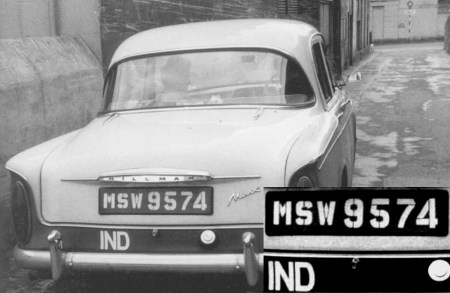
Who can identify the plate on this 1950 Hillman Minx, taken by Member EU83 John Pemberton  c. 1951?

January quiz M-3139

January quiz      M-3139     Pemberton archive

He though it was Madeira, yet HOPED it might be Macao!    I cannot agree with either – but cannot offer an alternative.

The  separator dash  is  odd…….

Answers/ideas, please, in the box below.

FEBRUARY 2013  UPDATE M-3139

NO-ONE CAME UP WITH AN ANSWER ON THIS, BUT MORE RESEARCH BY THE WRITER HAS ESTABLISHED THAT IT IS A NORMAL MADEIRA PLATE FROM THE POST-WAR SERIES, WHEN THE NUMBERS WERE NOT DIVIDED BY THE CLASSIC PORTUGUESE DASH, BUT THE SINGLE LETTER ‘M‘ WAS!      AZORES USED  ‘A‘  IN THE SAME WAY AT THAT TIME.


SIAM until 1939, then Thailand, but SM oval kept until 1956

January 8, 2013

Which of us ever thought we might see a photograph of a car from pre-1956 Thailand, when the international oval was ‘SM’?    Well, Europlate member no. 83,  John Pemberton, started noting strange plates when he went up to Oxford University in 1937 and though his thousands of records of the intervening years are in written logs, he did take some black-and-white photos from time to time, many of which are now important historical records of plates never to be seen again.

John, who is in his nineties, and still spotting whenever he goes out in a car, has passed his album to the RPWO Blog for scanning, so that we can all share his gift to the recorded history of our odd pursuit.

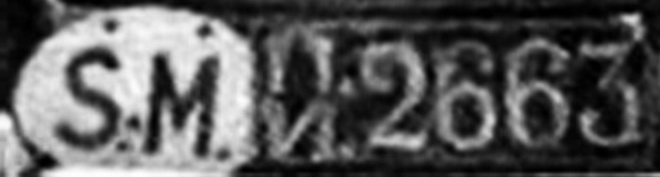
Let us first show his Siamese picture, taken in Denmark in Amalienborg, Copenhagen in 1947.     The style of the plate is exactly as described in RPWO:

 (y)     1940s    plates were 390×110 mm (or 270×90 mm for motorcycles) and the registration consisted of two small Thai letters vertically aligned being a code for the province (see Table 1, column 2), followed in Bangkok and Chon Buri by a Thai letter and four numerals, or in other provinces, by five numerals.

Postwar Siamese plate on an unknown car type.

Postwar Siamese plate 2663

The 2 Thai letters abbreviate Krung Thep, the short-form Thai ceremonial name for Bangkok – and meaning City of Angels according to King Rama III.

Siamese car of unknownmake,  in Denmark 1947

Siamese-registered Hanomag 1300 ‘Autobahn’ model, made between 1938 and 1941, seen in 1947 Denmark by member Pemberton.   Note that unique oval!

The same day, John saw a 1947 New Jersey plate off  Radthusplads, also bearing Stockholm reg. A 34351.    It seems that it was then common for foreign tourists to carry both their home plate and a visitor plate during their tour in Europe, as several of John’s shots depict such doubled plates.

Addendum    It transpires that countries which were not signatories to the International Traffic Convention, could not circulate freely on the roads of the member countries while using their own plates.     Among others, the USA and Canada were late to join and until about 1955, had to obtain some temporary plates of the country they were visiting, as they entered at a port or other frontier.   Britain had its ‘Q’ series, France its TT.    Sweden and Switzerland  gave them normal plates.     Full details of the Conventions are being assembled currently, by our former president, Bernt Larsson.

Sweden, A 34351 with N.J.1947 still mounted.

Below:  Another example of doubled plates is Zurich 28560 with 1946 Virginia, too,on a new Oldsmobile, in 1946 London.   Possibly from the US consulate/embassy in Switzerland…

(USA)(Va46)_487.842_JP1946

More of John’s sightings will be coming to the Blog shortly.


Indian plates using Hindi

December 30, 2012
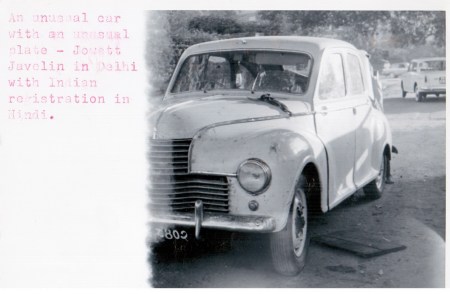
1965 Delhi sight of (part of) a Hindi-scripted plate - uncommon at that time.

1965 Delhi sight of (part of) a Hindi-scripted plate – uncommon at that time.#

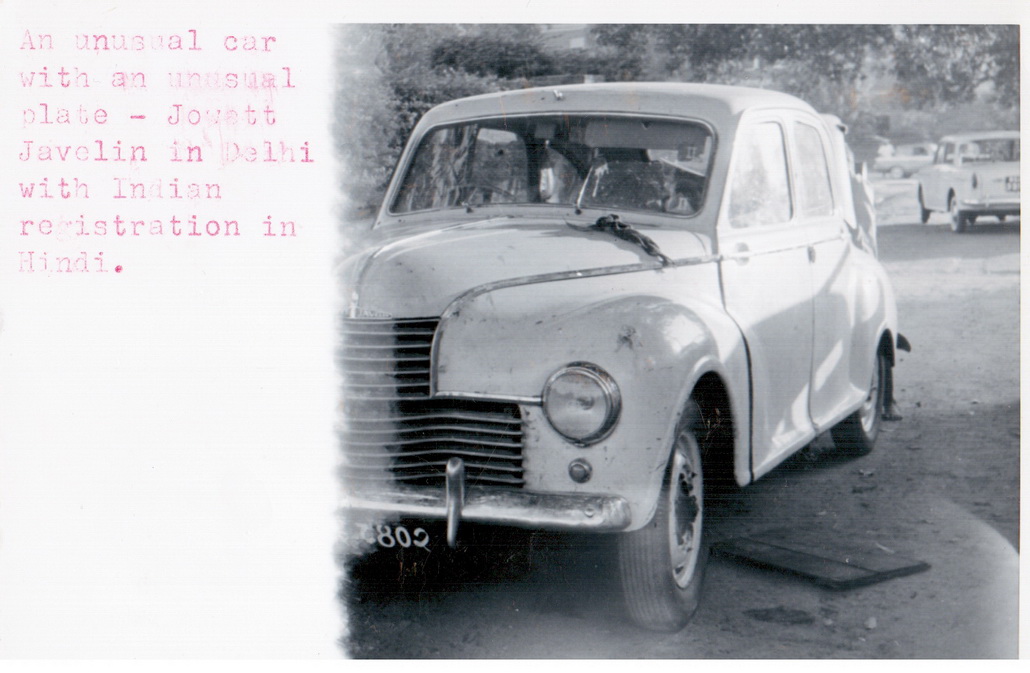
In support of a member’s sighting of an Indian Jeep in London in the 1950s, bearing Hindi scripted plates, we see another example in 1965 New Delhi, snapped just as a camera came to the end of a roll of film.    The Jowett Javelin was quite a rare car in Britain, using a flat-four water-cooled engine and many advanced features.     It would have been very difficult indeed to keep a 1951 car like this, still running in India in ’65!

The sight of an Indian car in Britain was – and remains – a rarity.     Of the handful I saw, royal household red plate with silver letters  ‘PALITANA 1’  was on a red Ford Mustang belonging to Prince Shiv and was shown in the Daily Mail circa 1957, though no photo by me.    This Hillman Minx however was captured in Plymouth one day in 1964

Madras-registered Hillman in 1964 Plymouth.

Madras-registered Hillman in 1964 Plymouth.

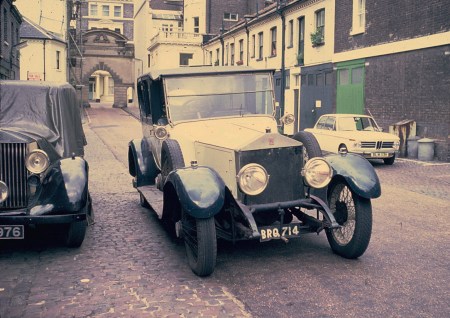
and a Bihar-registered early Rolls-Royce in a London mews:

BRQ 734 - one of the last grand cars to be permitted to leave India for international collections.

BRQ 714 – one of the last grand cars to be permitted to leave India for international collections.

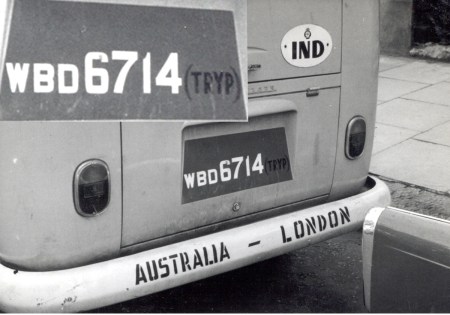
and a type never reported before or since, seen in Earls Court, London, in the 1960s, using West Bengal plates in white on red and marked with (TRYP).

WBD 6714 - VW Kombi overlander in 1960s London, with an unexplained plate type.

WBD 6714 – VW Kombi overlander in 1960s London, with an unexplained plate type .

I have concluded that an Australian overlanding team was arriving by ship at Calcutta  (WB was for West Bengal until 1973) and was required by the customs at port of arrival to mount temporary transit plates, perhaps because they could not show documentation proving paid-up overseas licencing.   (Bad luck!)   They might have had to buy a carnet to transit India and the abbreviation TRYP on a red numberplate (rear only)  might have indicated the temporary nature of the registration.   It was all painted in the exact style of the period, the letters shorter that the numerals…..

The only red plates in India then were those of the princely states’  ‘royal family’  and the trade plates for dealers, of which DLH 267 M appears in RPWO/India/Historical Notes http://europlate.org.uk/countries/hai-kyr/ind/ind-hist.htm


Pemberton quiz

December 19, 2012

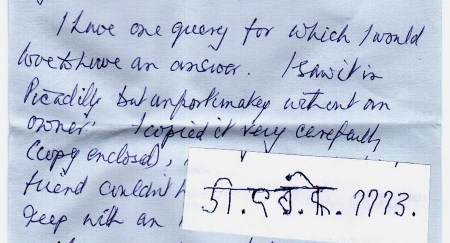
Member John Pemberton saw a Jeep in Piccadilly, London, in the 1950s, and having no camera, transcribed its Bengali/Nepali/w.h.y. script.     Can one of our specialists identify that plate?

John Pemberton's unidentified spotting.

John Pemberton’s unidentified spotting.

Nepal has been suggested.    A Nepali looked like this:

(NEP4)(p Lv)_Ba1Pa6509_cuf_VBjb (NEP3to4)(commv)_U.Kaa.A530_cu_VB19651208 (NEP3a)_BaA5126_cu_ITpl-vb


Surprisingly, at March 2013, no readers have ventured any more suggestions – where are those accumulated years of experience???? (VB)

Now see a good suggestion from EU 575 below….


added 30/8/2015:

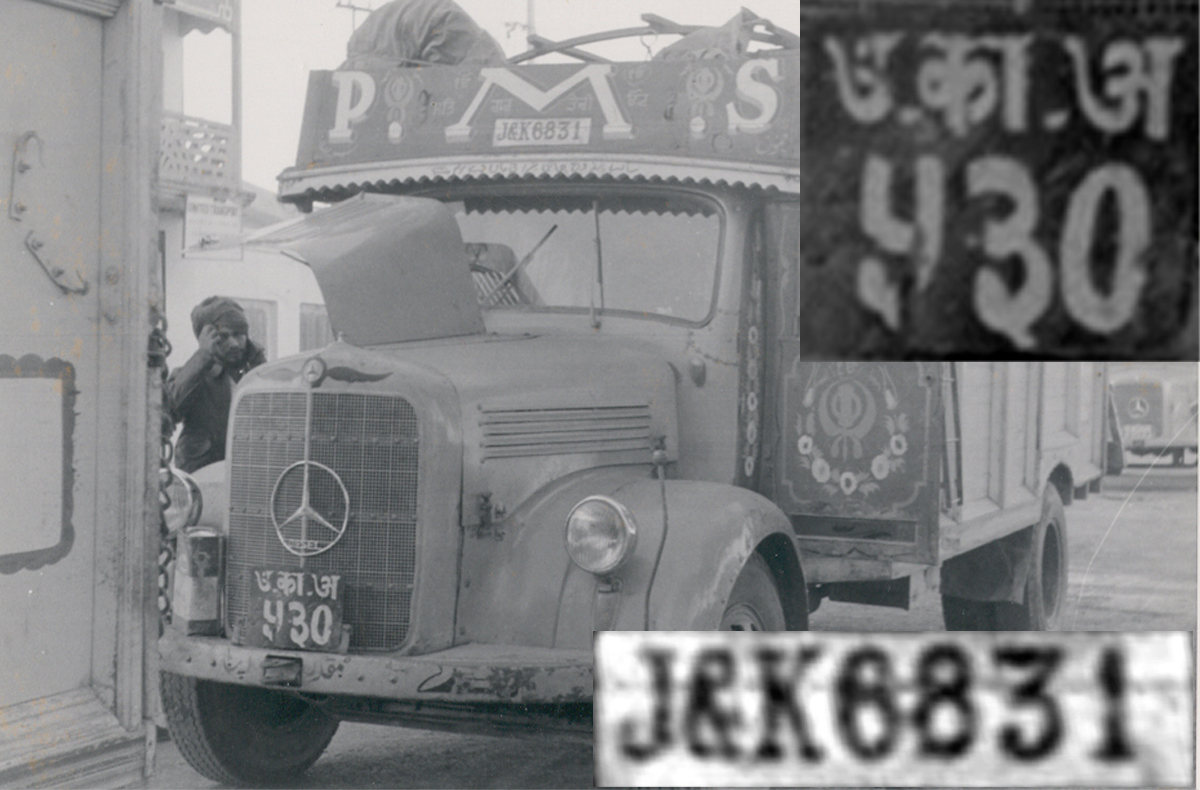
J&K 68  --  The dual-plated lorry on which the writer hitch-hiked from Patna to Kathmandu in 1965, carried Nepali and Jammu & Kashmir commercial plates.

J&K 6831 — The dual-plated lorry on which the writer hitch-hiked from Patna to Kathmandu in 1965, carried Nepali and Jammu & Kashmir commercial plates.

AQ failed photo of a Jowett Javelin in New Delhi in 1965 shows Hindi script, then most unusual.    VB archive

A failed photo of a Jowett Javelin in New Delhi in 1965 shows Hindi script, then most unusual.                           VB archive


Zambia re-plating

December 14, 2012

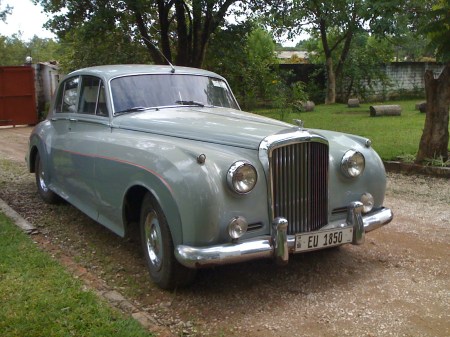
This Bentley S1 picture has been sent to us by  non-member Wayne Kennerley, an avid student of old cars in Southern Africa.

1950s Ndola District re-made in current style.

EU 1850 – 1950s Lusaka District re-made in current  Zambian style.

We see an example of  the original Northern Rhodesia series which ran from the inception of registrations there in the 1920’s, up to 1963.      This 6-cylinder Bentley S1 model was built from 1955-59 so if brought to Rhodesia new, this S1 would have received it’s EU  (Lusaka/Mumbwa) 1850 plates  in the original British style – but this car has replaced its plates in the format of the new 2000 > Zambia system of black on reflective white, pressed alloy.

Contemporary Lusaka motor-sportsmen with their Triumph TR4s on EA (Lusaka) plates.

Early 1960s Lusaka motor-sportsmen with their Triumph TR4s on (almost consecutive) EA (Lusaka & Mumbwa) plates, in the original design.

Thanks, Wayne.     Rare pictures.

** Any interesting Zambian items available from  RPW members??


Southern Africa historic

December 6, 2012

A fine collection of photos from former Nyasaland, Northern and Southern Rhodesia are to be found at this web-site link:

http://www.classiccarsinrhodesia.co.za/Makes/SWA.html

There are other African countries represented too, and gen on many interesting cars.   Some examples are here:

L=Livingstone, Northern Rhodesia in 1956.

L=Livingstone, Northern Rhodesia in 1956.


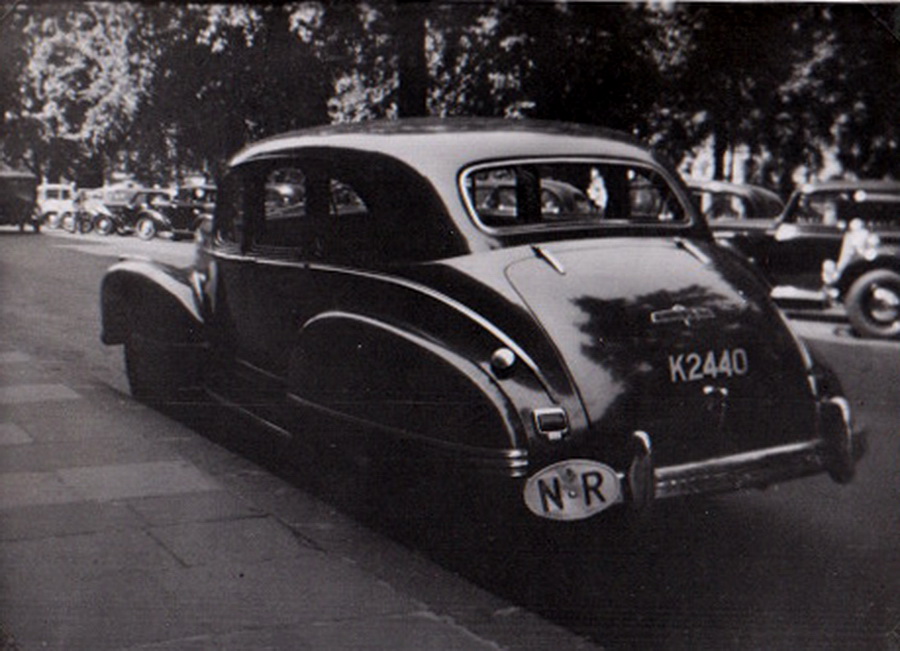
K 2440 is the Lusaka code in the former Northern Rhodesia which became Zambia upon independence in 1964.     Unknown car.  Pemberton archive

K 2440.   K was the Lusaka code in the former Northern Rhodesia which became Zambia upon independence in 1964. Unknown car. Pemberton archive.


RA 790.  A & RA = Belingwe & Shabani (now Mberengwa) in Zimbabwe.  Peugeot 404.

RA 790. A & RA = Belingwe & Shabani (now Mberengwa) in Southern Rhodesia-Zimbabwe.        Africa’s car – the Peugeot 404.

Morris Mini-Moke in police service, Southern Rhodesia 1960s.

G/T PW=Govt. Passenger car -Wee.     S. Rhodesia 1960.  Classiccarsinrhodesia archive


Southern Rhodesia registration 483, estimated 1905

Southern Rhodesia registration 483, estimated 1905

There is not much known of the numeric-only Rhodesian plates which the first vehicles used.    South Africa used identical plates at the time – note this Transvaal example below:

465 is a Transvaal issue 1900-1910 approx.

465 is a Transvaal issue, 1900-1910 approx.

And, from Western Australia:

Numeric-only WA 414

1900s numeric-only Western Australia’s  4140

It seems that many (Empire)  jurisdictions didn’t expect the expansion of motorcar populations, and thought a simple numeric format would suffice!

Evidence that Britain  also influenced early China plates is shown here:

China 1928, reg. 808

China 1928, reg. 808

Enjoy the Classic cars in Rhodesia website!   http://www.classiccarsinrhodesia.co.za/Makes/SWA.html


Colony of North Borneo ((CNB) until 1963)

November 17, 2012

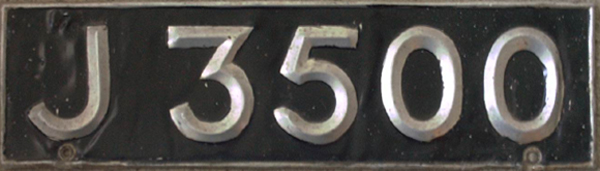
Member John Pemberton EU83, a venerable nonagenarian from Suffolk, has reminded me that he has a plate, J 3500, from one of the the little-seen British colonial enclaves of  Borneo island, now known as Sabah state in Eastern Malaysia.     Independent  in 1957,  Malaya later combined with the former British territories in Borneo island, Sarawak and (then) the Colony of North Borneo to form Malaysia in 1963.    To see a plate from British Borneo (or from Labuan Island – a onetime Straits Settlement)  in those times was a rare sight indeed.

I have written to him thus:

Mr. P. – You write of having a ‘CNB’ numberplate, J 3500 – the CNB only identifying the Colony of North Borneo as it was designated between 1955  and 1963*, when it assumed (PTM) – six years after Malaya’s 1957 independence from Britain.   After another ten years, in 1967, the Malaysian  (PTM) international oval changed to (MAL) and vehicles from (by now, Sabah) would show the (MAL) oval IF they ever travelled outside Borneo or mainland Malaya – most unlikely.

British North Borneo 1950s-60s.     J=Jesselton (now Kota Kinabulu).

You sent me a photo of J 3500, and I have it my Sabah archive as above: Glorious!     You say that the late Roger Anderson passed it to you in 1976.   Did he ever say what vehicle it came from?   Did he see it in Britain?     John P replied verbally that a very old friend and an early spotter obtained it ‘out East’ in the 1950s, but was unsure of its origin.

The writer DID see Sabah once in London on a Mini, in 1963*, and fortunately, photographed it for posterity:

J 6186    1963 sighting in London of Jesselton (J) Morris Mini-Minor.    Showing the new Perseketuan Tanah Melayu (PTM) oval, which, since 1958, had replaced  (FM) (Federation of Malaya).   Until 1963 the oval  for this region would have been (CNB)          Brumby archive

I have now visited Sabah twice and collared quite a few of these earliest plates on photo – it’s a jurisdiction where old cars are kept running,  and, happily, the authorities don’t force owners to shed their original plates whenever a system change occurs.

Although, when Mainland Malaysia recognised that it’s newly-acquired Bornean territories, Sabah and Sarawak were already using regional codes identical to their own, Sabah hurried to add a suffix ‘S’ to their existing registered vehicles, (and Sarawak added a ‘Q’ suffix) to distinguish them, should vehicles move between Peninsular Malaya and north Borneo (now East Malaysia).   The Mini above would have adopted J 6186 S.

Newly-registered cars in Sabah first adopted an ’E’ (for East Malaysia) preceding their town code (E J-Jesselton, E S-Sandakan etc.)    In Sarawak, they added a ‘Q’ suffix to existing plates and a ‘Q’ prefix to new registrations.    The ‘J’ for example, which could have come from Johore (Peninsular Malaya) or from Jesselton (Colony of North Borneo/Sabah).

Until these changes had been implemented,  at that confused time, a PTM-ovalled car seen abroad after 1963, registered  ‘K’ nnnn could have been registered in Kedah (Peninsular Malaya), Kudat (Sabah) or Kuching (Sarawak)!       ‘T’ could come from Trengganu  (PM) or Tawau, and ‘S’  from Sandakan (Sabah), Singapore (old) or Sibo (Sarawak).

Little wonder the licensing authorities had to act!

The post -1963 Sabah plates had an ‘S’ suffixed to their original registration. K=Kudat, S=Sabah.   Most plates were re-made from scratch, for appearance.    Brumby archive

NEW vehicles were issued with the usual codes and a new ‘E’ prefix:

The Sabah system from 1963.   Later, having issued to 9999, a serial suffix A and B would be needed, in three of the Sabah registration districts – EJ-A, EJ-B, ES-A, ET-A.    Brumby archive


Eastern Malaysia – Sandakan – with serial suffix A 3024.    Brumby archive

There are still, dumped in kampongs, a few of the single-letter plates to be seen.   And photographed.     Some plate collectors would buy them off the village headman and take them away, but I like to leave them in their context, in case another member should chance by in years to come!

~~~~~~~~~~~~~~~~~~~~~~~~

Mr. P – It is so evocative to read that in your early spotting day, you saw Danzig Free City plates – and India, including Jammu & Kashmir!     Did you take photos of any of them in those times?

LATER  (John Pemberton passed his album in January 2013 to the Club, as a result of this enquiry,  and the 80 or so pictures will be progressively released on the Blog.

Any other unseen material out there, readers????

BORNEO ADDENDUM

The remarkable sight on two Jesselston-registered VW 1500s in London in 1969.   Note their numbers.

The remarkable sight of two Jesselton-registered VW 1500s in London in 1969. Note their numbers.     Brumby archive

p.s.   Does anyone have a picture of a Colony of North Borneo oval (CNB) or a State of North Borneo oval (SNB)????      We assume a few were made.


1955 Pakistan

September 30, 2012

PAKISTAN AFTER 1947 INDEPENDENCE


Denis Fowler is a retired diplomat who served in Iceland, Nepal, and Pakistan amongst other places.

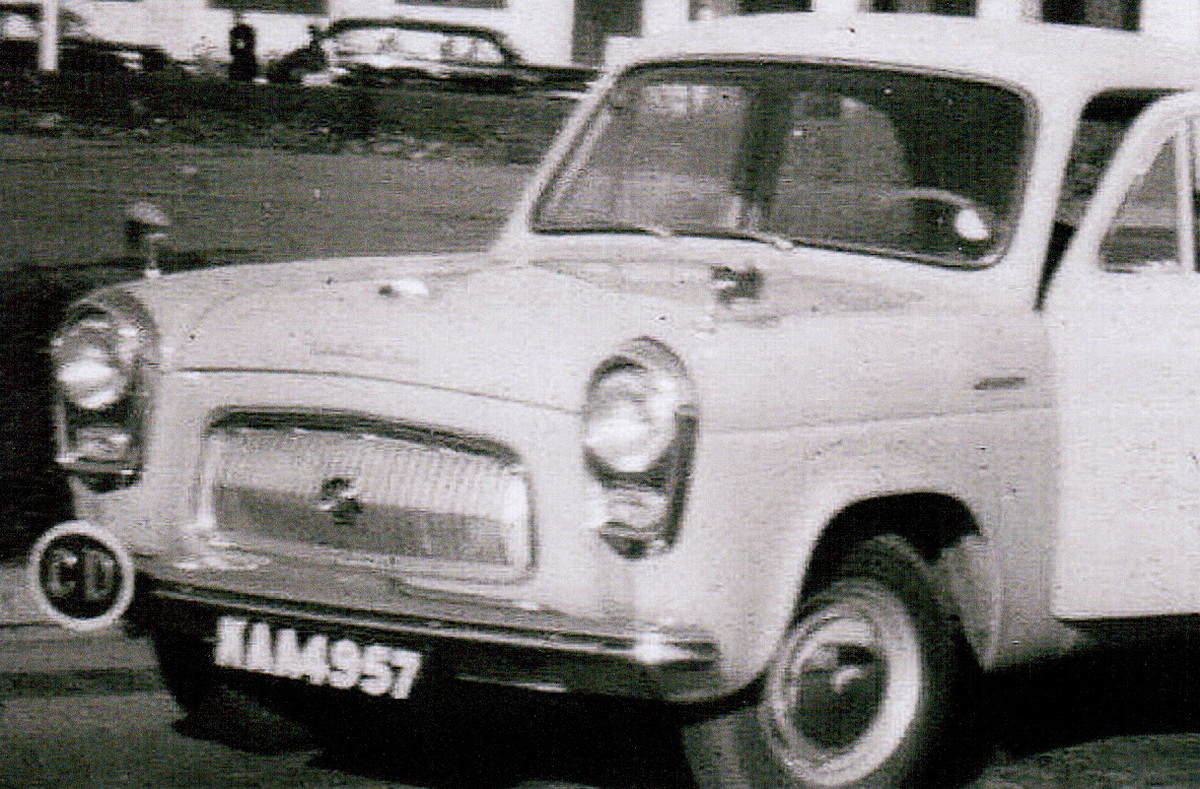
He has kindly trawled his old photos and slides and sent this (slightly fuzzy) shot of his Ford Prefect, on standard  KA (Karachi) Pakistan plates, but identified as a diplomatic vehicle by the CD oval, which had silver letters on a dark green background and a white rim.    He adds that he bought the Prefect from UK Ford dealer Lex via  the tax-free Home Delivery Export Scheme in August 1955, and ran it for a couple of months before handing it back to Ford for shipment to Karachi.

He knew that upon becoming a republic in March 1956, Pakistan was planning to switch from driving on the left to the right, and so he ordered the new Ford in Left-Hand-Drive, but after he arrived in November 1955, the plan was scrapped for this extraordinary reason:  camel-drawn carts were then used to take the imported goods from Karachi docks to all parts of Pakistan, by day and by night, with their drivers sleeping much of the time.

It became recognised that the animals could not be trusted to walk unattended on the ‘wrong’ side of the road to that to which they had  been accustomed for generations.    It would have caused accidents and chaos, and so the new republican government never proceeded with its plan – which had probably merely been a symbolic act of casting off their imperial yoke, and not of any actual practical value.

We hope to see further pictures from Dennis’ delving in to his photos and slides!

His daughter spent periods in Zimbabwe, Malawi and Bolivia and his son drove back to Britain from Nigeria in a Landcruiser.    They have been asked to inspect their albums for period plate shots!
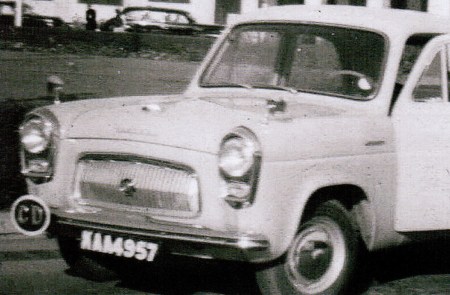
1955 British Ford 100E Prefect in Karachi, 1956. KAA 4957


Readers are advised to ask for such pictures of any old pals who once served abroad.    They are a unique record of extinct plate types, and will not generally be recognised as being of interest to their heirs, when they inherit parents’  old photo albums and transparencies/slides.      Sad to think how many great pictures are thrown out in house clearances…..


————————————————————————————————————————————————

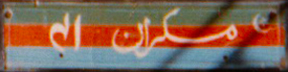
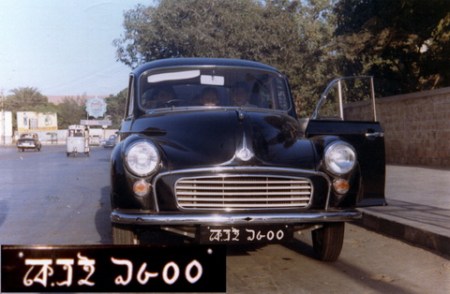
Below is an unusually-plated Morris Minor, also in Karachi, but shot by me (VB)  in 1965, and which for years I had never properly identified.

Apparently the Urdu script reads ‘Mashriq’ 41  – any ideas, anyone?
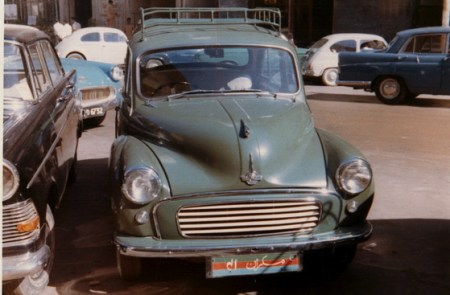
ANSWER from Europlate member Kurt Leothold  –

 “The word  correctly translated is: MAKRAN, a province from Baluchistan, Pakistan (Gwardar).”

Wikipedia notes: Makran Division (Persian: مکران ) was an administrative division of the Balochistan Province of Pakistan, until the reforms of 2000 abolished the third tier of government.    Districts of Makran Division included GwadarTurbatMand and Panjgur.

Makran is the ancient name for Baluchistan and was an exclave of Oman until 1958, when Pakistan bought it from the Sultanate of Oman.

So – thanks to Kurt, a 47-year-old puzzle eventually explained!      (The low number 41, the colours and the style of the plate would indicate that it was a Morris Minor of the Khan/Sultan’s fleet – or possibly of some high-ranking State official.)

~~~~~~~~~

Finally, one of the very few Pakistan plates seen in Britain since 1947 Partition – a VW Camper from Quetta in Baluchistan, sporting a PAK oval provided by the Karachi Automobile Association.     Seen in Kensington Church Street, London in 1964, by VB.
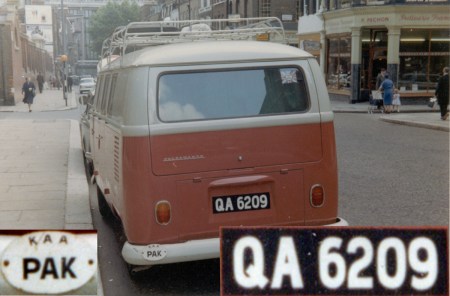
QA 6209, a Quetta plate in 1964 London.

More finally, I parked my Peugeot 404L  next to a pair of diplomatic VWs in Rawalpindi in 1968.     That same CD system is still in use in Pakistan, 44 years later!

I doubt if the airline offices are still intact, as such places have become targets for angry mobs fretting about cartoons and daft films.       It was a peaceful and pleasant country then, with the Moslem population kind and hospitable……
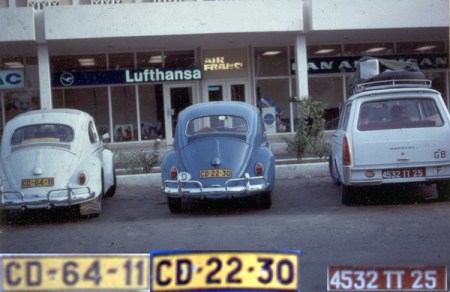
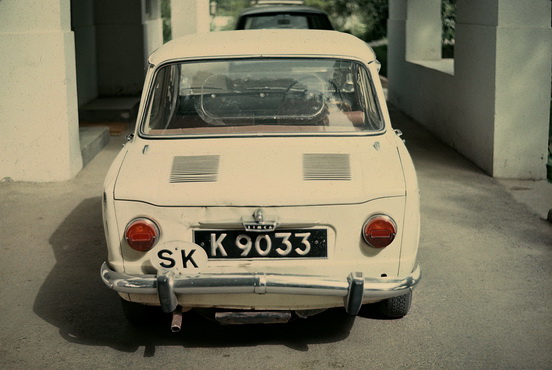
BELOW: When EU38 visited the newly-built British High Commission in Islamabad to collect my mail from the Poste Restante service they used to offer travellers, I was amazed to come across a car from Sarawak – the first I had ever seen!   And as used to be the convention, it showed the international oval SK, as supplied by the Kuching office of the AA.

How unusual to see a vehicle from Borneo in the ‘stans!
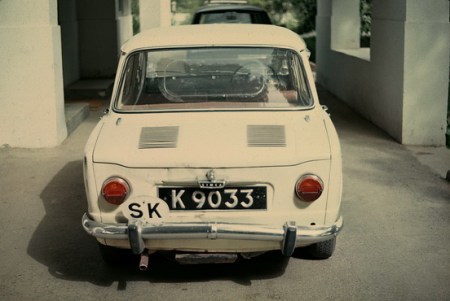
Sarawak K 9033 outside the BHC, Islamabad, 1968.   K=Kuching.
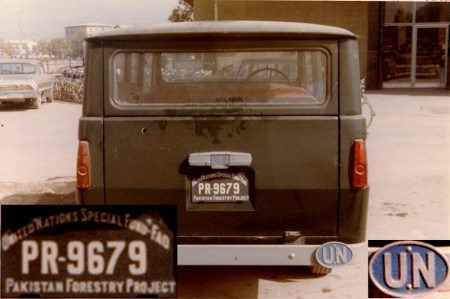
 

(PAK1)('47~)(un)_PR9679_comp_VB1965_resize

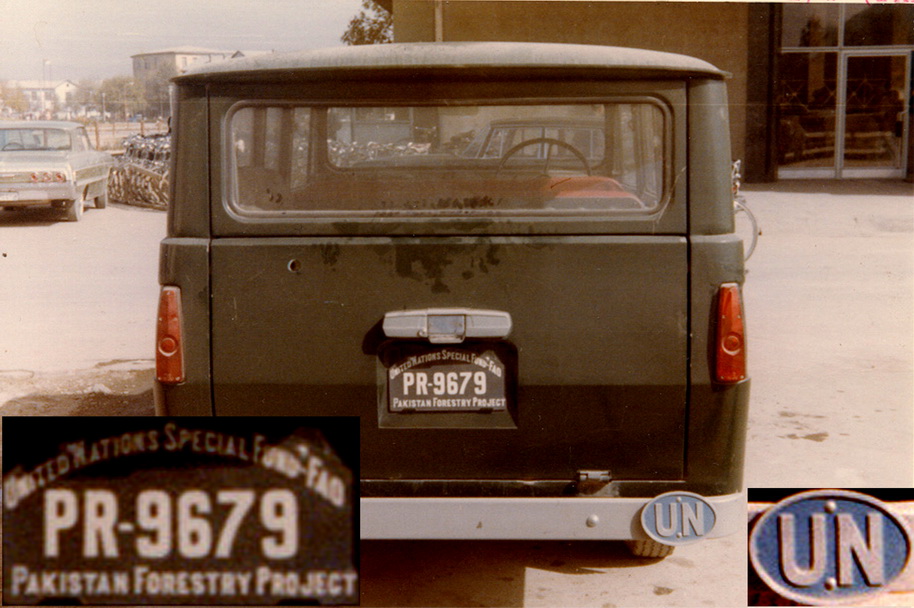
PR-9679  —  Seen in Karachi in 1965, this Jeep with United Nations connections, belonged to the Pakistan Forestry Project and was registered in Peshawar in the regular series.                                 Brumby archive 1965
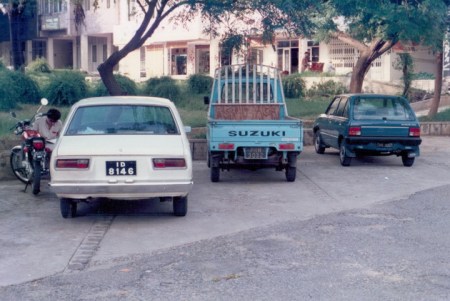


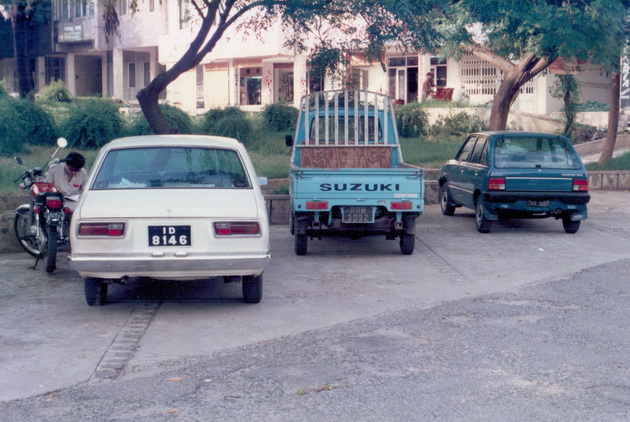
ID 8146 ID was the newly-created  code for the 1960’s-built new capital city of Islamabad (PeaceTown),  when this photo was taken in the 1970s, on a Datsun 1200.      There were still very few  such fully-imported cars in neighbouring India, due to the shortage of foreign currency with which to buy such, yet Pakistan seems always to have imported  from anywhere without difficulty, even though it must have been even shorter of money.      Previously, British Ford 100E Anglias were built there from parts sent from Dagenham. and Morris Minors were assembled in India, alongside the eternal Morris Cowley a.k.a. the Hindustan Ambassador, Indian production of which 1955 design finalised in 2013!.      The Suzuki pick-up is from Peshawar – PRH 3032.    Soon such Japanese products displaced the British-built vehicles  which had held sway from 1900.                  Brumby archive 1970s (Capt. Pointon-Taylor)
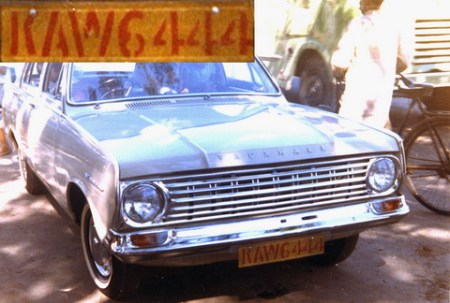
 

KAW 6444  --  red-on-yellow Karachi Trade-plate on a new British Vauxhall Victor, there in 1965.     Brumby archive.
KAW 6444 – red-on-yellow Karachi Trade-plate on a new British Vauxhall Victor, there in 1965.                        Brumby archive.


(PAK1a)('47~)_KAE9800 Urdu_comp_VB_resize

KAE 9800 — It was unusual to see an Urdu-scripted plate in Pakistan in the 1960s. This oddity is seen in Lahore in 1965, on a Morris 1000, registered in Karachi.                            Brumby archive 1965


Unknown African and French IT plates

September 29, 2012

In the 1970s, a much-travelled pal of mine, Murray Bailey, photographed this yellow on green IT plate 008-IT-22, but he forgets where, only that it was in West Africa.       It may be Senegal, but confirmation welcomed!     What a shame the moped behind is not in full picture, to give us a clue…

Senegal – or elsewhere??

About 1963, I saw this American car in London, IT 0623.    It could have been from any of the overseas French territories of the period – but which??

IT=Importation Temporaire

Unidentified temporary Importation plate for a French territory-1960We used to think that all the green IT plates we  saw were French Diplomatics, and only learned much later that they were given out to any category of foreigner who was in a country temporarily (possibly with the vehicle let in without payment of import taxes).    Aid personnel and non-diplomatic embassy staff were among the groups registered so.


If they really were diplomats or consular officials, they would carry a separate oval plate or even have the letters CD or CC made into their IT plate.       (Were the French IT plates coded for the users’ country of origin, then

French Temporary Import of Diplomatic vehicle, in Paris, 1960s.    The zeroes probably indicate the ambassadorial car…  The boot/trunk  label on this American-made 1950s Ford Sedan tells us that this was a manual gearbox car with an optional overdrive, before automatic transmission became standard on all US cars.

A non-diplomatic temporary importation to France, in  1964 London, on a then-ubiquitous Renault 4L.

And finally, just for interest….

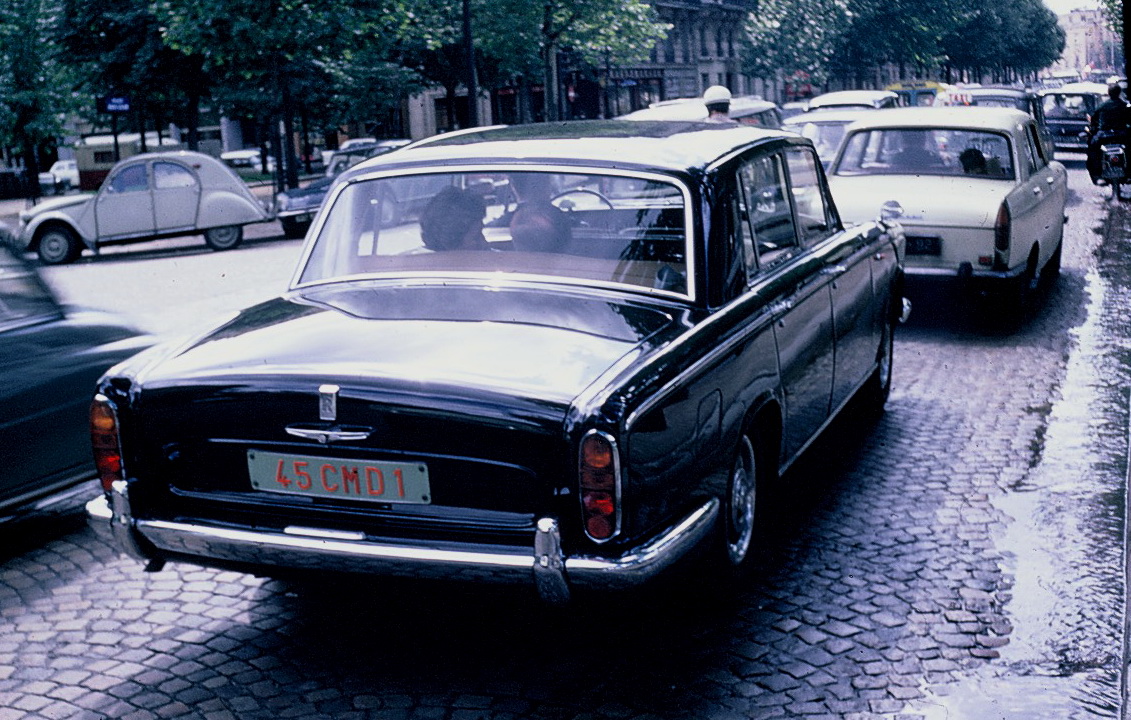
The R-R Silver Shadow of the British Ambassador in Paris 1970s.


All the Same?

September 27, 2012

Is it just me, or is the influence of  Herr Utsch* and the computer slowly creating a homogeneous plate system?    Against the wishes of their voters, these countries have removed the regional codes and given new vehicles a soulless computerised tag, some of which are almost identical.

The ex-Soviet  ‘stans have other examples of lookalike plates, so thank goodness they all include the country codes within the new plates.


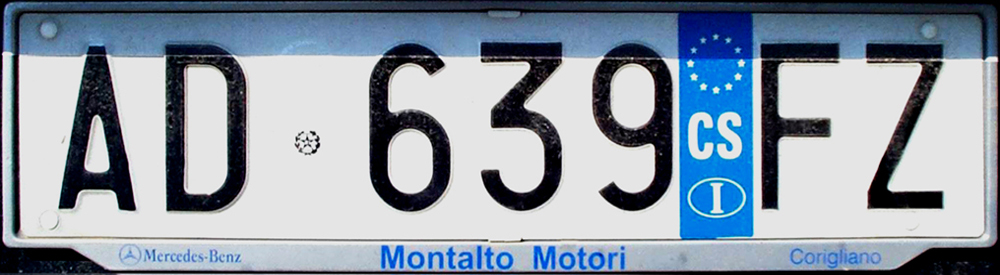
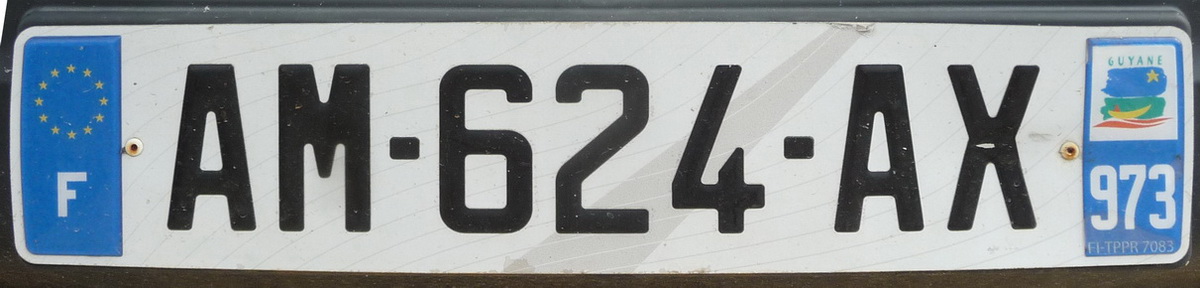
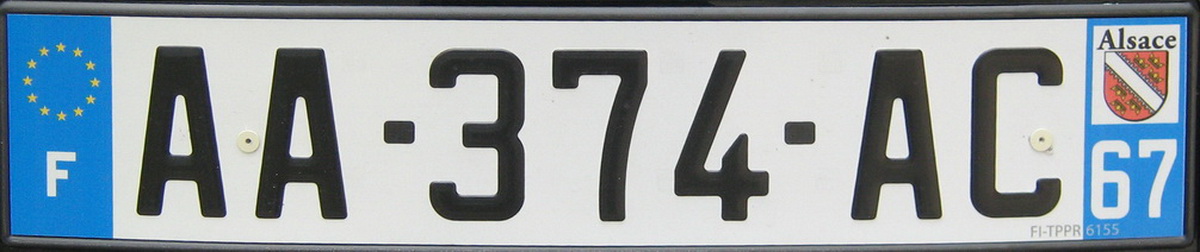
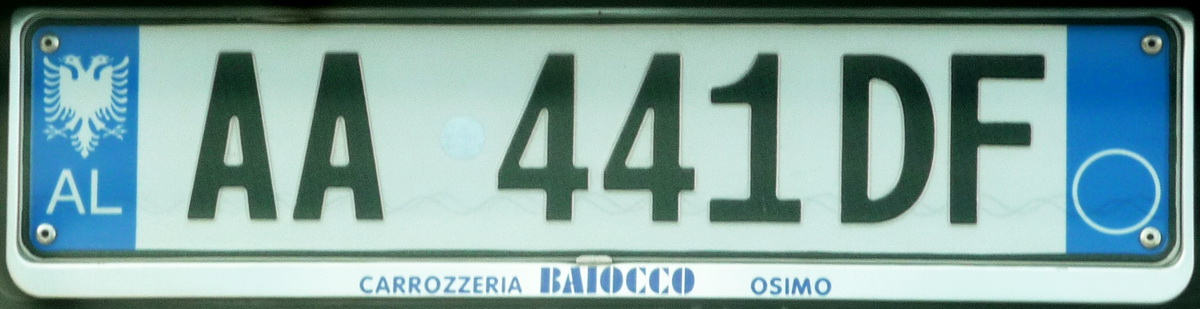
Here we compare current plates issued  by Italy, France, French Guiana and Albania.   No much difference, is there?
Italia

Italia

French Guiana

French Guiana

France

France

Albania

Albania

*  The German Utsch company has devised a popularly-received design-and-build licence-plate package for the many countries which are modernising their various national departments and systems, but which  know little about the complexities of modern motor vehicle registration.    The Utsch system donates a country such as Zimbabwe a plate-stamping machine and some rolls of alloy sheet which they ally with various colours of 3M adhesive nylon(?)  tape.    Subsequent shipments of the consumable metal and plastic have to be paid for, of course, and that is how Utsch eventually make some money from the idea.      I suspect that actually, the German government pay for the original machine and material for the first few plates, and give them by way of international aid to the recipient states.    

I hear that the privilege of supplying Zim with the new style replacement plates was given to Robert Mugabe’s sister, as a sure-fire way of her making loads of dough.    Every vehicle in the country had to change plates within six months, or very severe penalties ensued.     When she ran out of the sample sheets, she hadn’t kept enough pocket-money  to pay for the next supply of materials, and so the diktat that everybody must change plates by a certain date, melted away in the confusion which is Africa.       Later she must have borrowed some more money from someone – or came by some more aid from a generous donor – China is courting Zimbabwe for its minerals –  and the system has recommenced.

The thing I don’t understand is that Utsch must have made the system security watertight , so that for example, duplicates could not be made and sold under the counter.    That would not suit many – or most – of the world’s developing nations’  Transport Ministers and senior personnel.    Vehicle licencing has always been a marvellous cash cow for the head of department given the job – but ‘poor’ people are by necessity, exceedingly inventive, and can usually find a way to make a small profit, even from a highly efficient German scheme!

Incidentally, what a waste of the unfortunate citizens’ money, to force re-plating for no good reason……