Portuguese WEST AFRICA – Angola

February 2, 2013

Our sleuth Pemberton checked the alleys and boulevards of Oxford, London, and, once, Kopenhagen, in his quest to capture rare species for us during 1938-1957, after which he seems to have lost his camera!     This London photo has come out so poorly that we can hardly read the plate at all, but print it we must, as it is perhaps the only example of Angola ‘plates-on’  we will ever see from that single-letter  period (Series 1, 1930 to 1950s).    Note  that the numbers seem not to be separated by the Portuguese dashes –  L – 7234.     Can you read it?*

The vehicle is a Nash Ambassador of a model which ran from 1942 (production commenced 1945), to 1949.

L 7234 from Luanda in 1940s London.  No international oval, but a cast-alloy AM}ANGOLA surmounts the plate.

L-7234 from Luanda in 1940s London.     No international oval, but  a cast-alloy                                             ANGOLA surmounts the plate.    Now see below.    Pemberton archive

~~

March 2013.  This is the remarkable result of special editing by Antonio Barragan of Placamundi.   He thus brings to light an image of a very rare plate indeed - L-7234 Angola.    Pemberton archive.

*March 2013. This is the remarkable result of special editing by Antonio Barragan of Placamundi. He thus brings to light an image of a very rare plate indeed – L-7234 Angola.              Pemberton archive.

~~~~~~~~~~~~~~

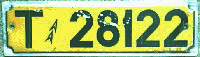
Below:     The only Angolan ever seen in Britain by the Kettering  team was this Borgward  Isabella Kombi (station-wagon) in 1958.   Though the letters ‘PAN’ for the international oval had been allocated to Angola,  only the Portuguese ‘P‘ was ever seen.    The Angolan area coded here by the letter ‘T‘ has never been discovered**.      The status of Angola from 1951 altered from a Colony to an Overseas Province of Portugal, and Portugal itself was then governed by the dictatorship of Antonio Salazar.    A bit of a mess, one way and another…..

Some time during the late 1950s, this next plate series (National series 2) had been introduced,  now comprising three letters – the first always ‘A‘, then a letter  for the registration district, and a serial letter, followed by two numbers, a dash, and two numbers (in the traditional Portuguese way), all serial.     So this car, ATE 01-69, was from Angolan area T, car no. E 169.    ‘T’ must have been a remote, low-registry zone (see new data below).  

ATE 01-69 in 1958 Kensington, London.

ATE 01-69 in 1958 Hyde Park Gate, Kensington, London.   The good-quality  German  Borgward Isabella was produced from 1954 to 1962.     Brumby archive

Many expatriates fled the long civil war which ensued after the 1973 Independence, and for a time, there were a few evacuees’ Angolan plates to be seen in Europe – mostly in Portugal, of course – but this Mazda made it to Paris in 1976.   As usual, its international oval ties it to European Portugal, not to the ephemeral ‘PAN’.

a 1976 escapee from the civil war, gat his car to Paris.   Regional code A was for Luanda, the capital.

AAD 70-12    A 1976 escapee from the civil war, got his car to Paris.      Regional code A was for Luanda, the capital.    Brumby archive.

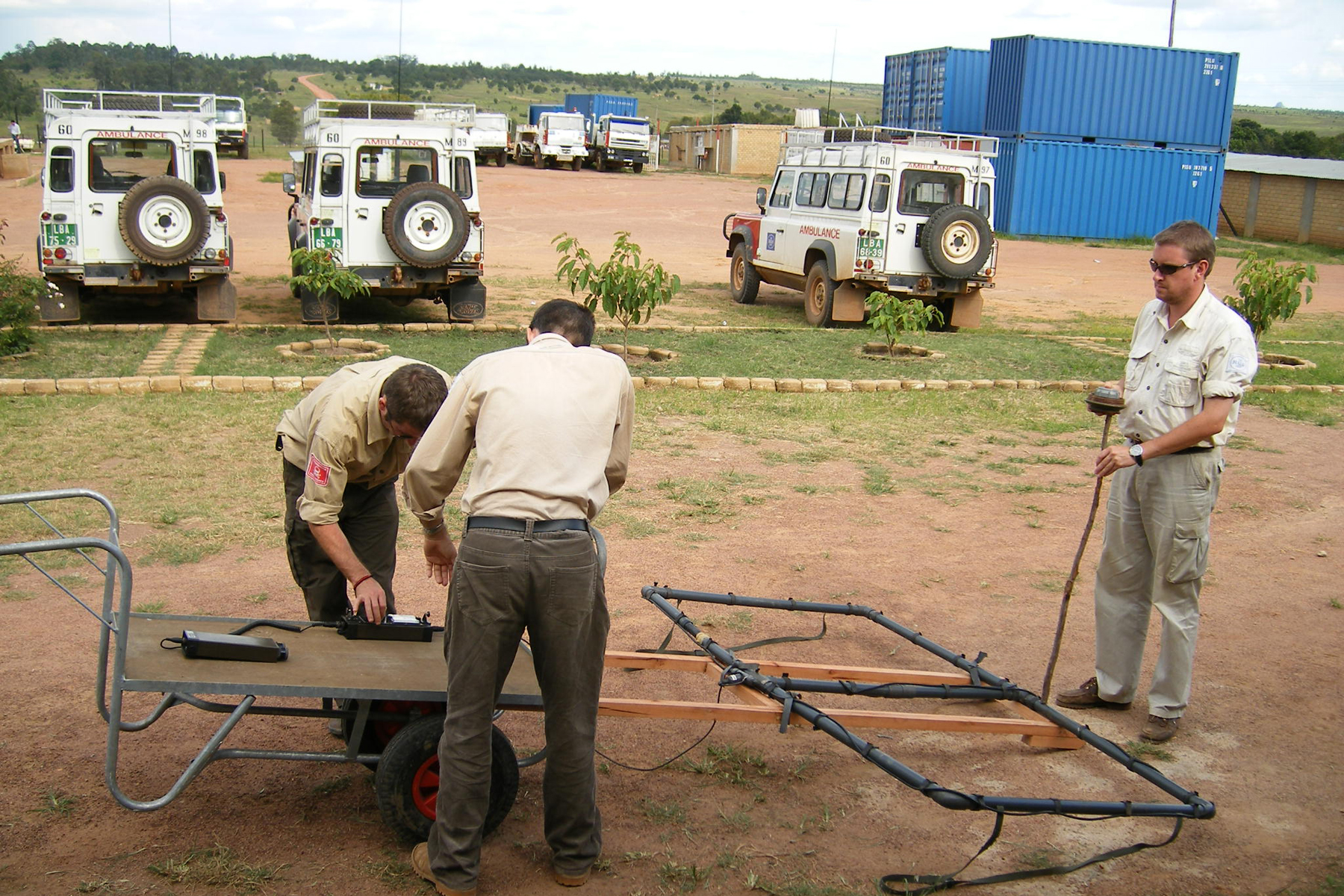
Below:     A recent technical aid visitor to Angola,  to mop up the millions of landmines, was Peter Renwick, who passed us these pictures of the international efforts to restore the ruined country.    The green plates are given to International Agencies who import aid vehicles duty-free, perform their allotted tasks and re-export them, or pay some duty and leave them behind for re-registration.

designed to dispel explosions under the truck, these specialist vehicles are given duty-free import status during their project.

Designed to dispel explosions under the truck, these specialist 4wd vehicles are given duty-free temporary import status during their Angola project.   LD=Luanda.                  Brumby archive via Peter Renwick

Angolan Autoroute A1.

LBA-33-38     Angolan Autoroute A1.     Scratched Russian ZIL truck.         Newly-unemployed driver.   c.2002.   LB=Lobito.             Brumby archive.

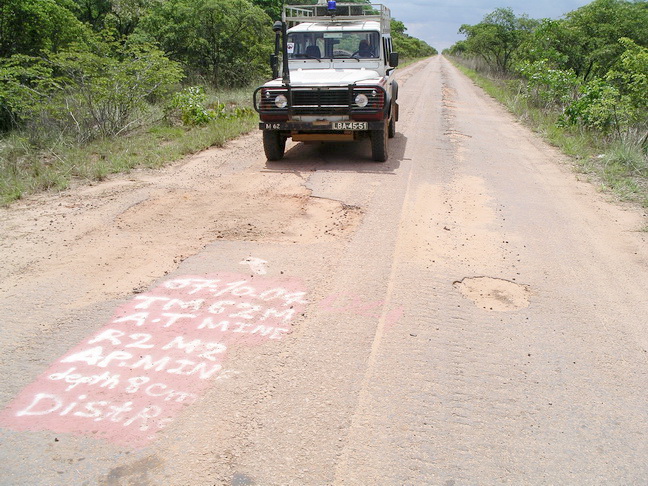
We can get an idea of mine-clearance from these photos from 2008.

We can get an idea of mine-clearance and equipment from these 2008 photos. Brumby archive via Peter Renwck
(ANG3)(0tax)KK.Menongue-CC mines removed_resize (ANG4)_LD-17-12-AE_comp_VBpr_resize (ANG3)(0tax)_vario_VBpr (ANG3)(0tax)_LDI-42-55_comp_VBpr


Zim or Zam?

February 2, 2013

There is surprisingly little foreign traffic to be see circulating in South Africa, so when you see something, you stop to shoot it, just like big game(!)

However, I have been confusing myself more than usually this week as I squeal to a halt, and make for a rare Zambia plate shot in the university city of Grahamstown.

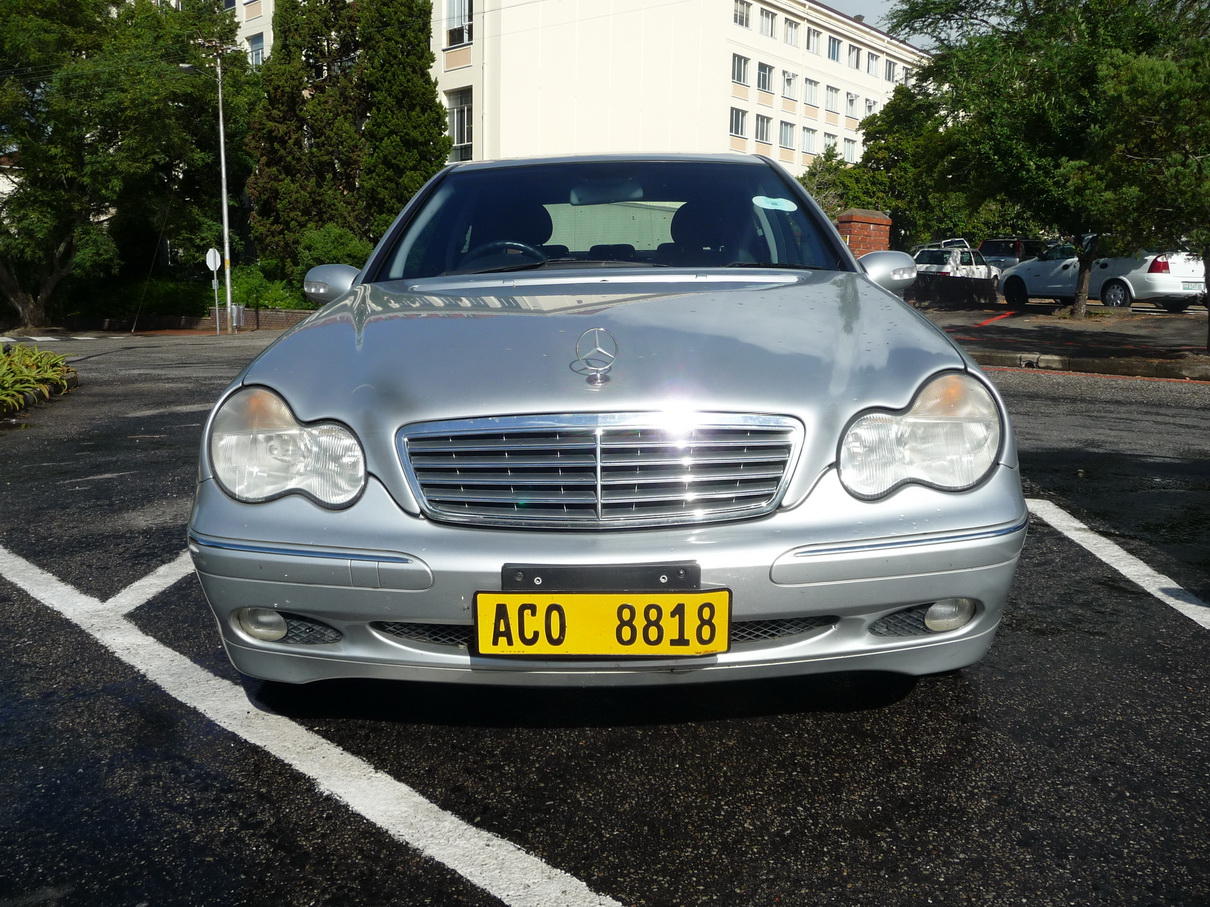
Clearly a Zambian Mercedes, registered at Ndola (C) and yellow has been seen before.....

Clearly a Zambian Mercedes, registered at Ndola (C), standard font – and yellow has been seen before …..

Another  Ndola-like (CO) Zambian, and this one in the right colour, too.

Another Ndola-like (CH) Zambian, and this one in the right colour, white.       Seen in East London (not the Cockney one).

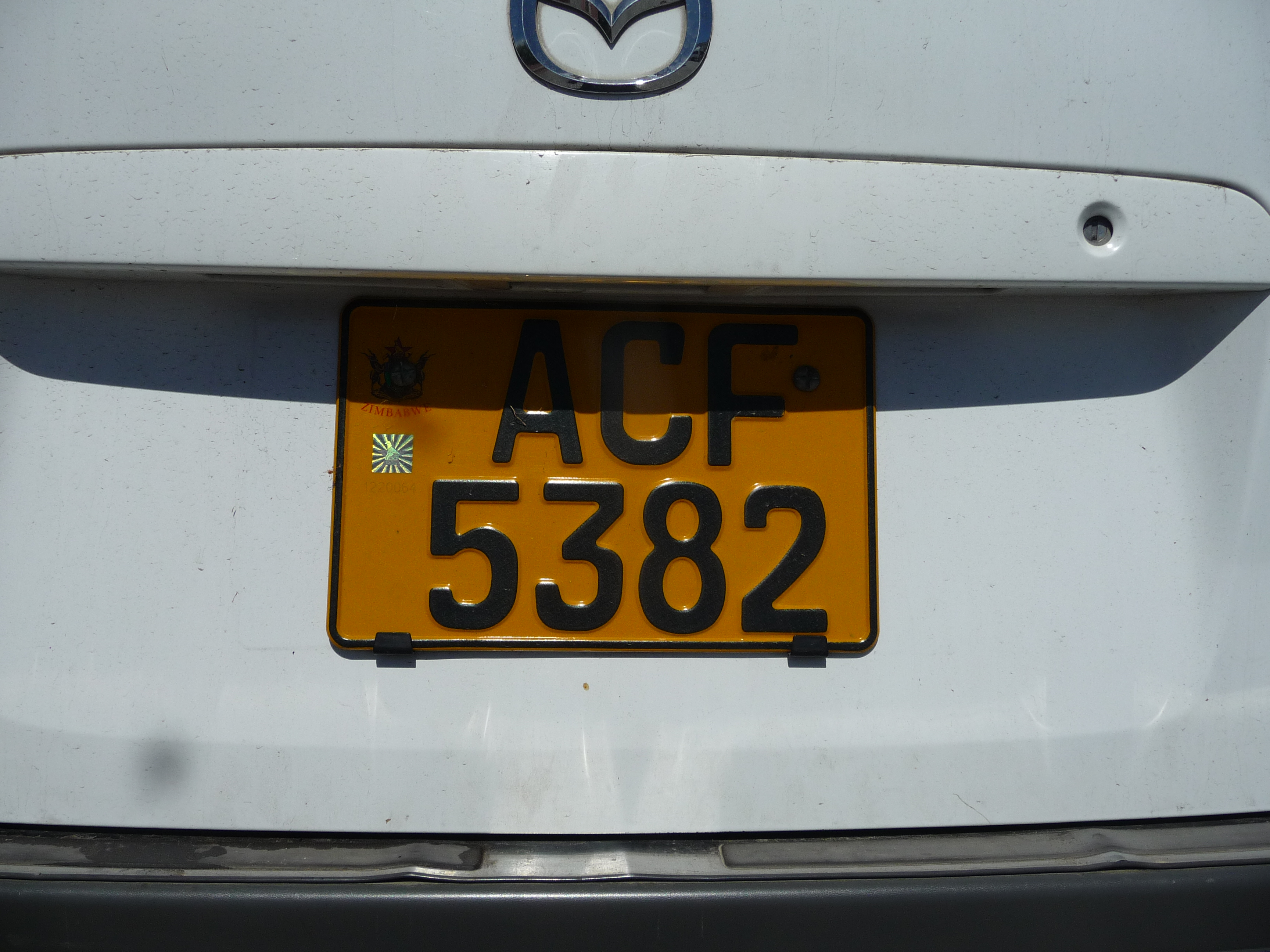
Now the Zimbabwean bird shows itself on ACF 5832 and ZAM look like ZIM now,

But now the Zimbabwean bird shows itself on ACF 5832 and those ZAMs look like ZIMs now.     Both neighbouring countries are issuing almost identical plates!

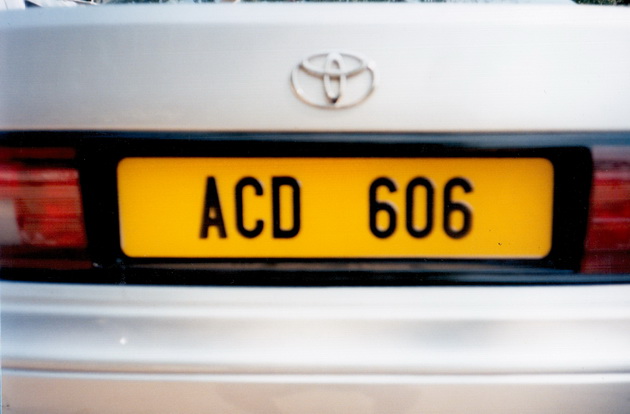
ACD 606 IS a Zambian!    Not a lot of difference, is there?

ACD 606 IS a real Zambian seen in 2000                          ACO 8818 – Not a lot of difference, is there?

But to be quite fair, a REAL current Zambian does show the ZAM shield

(but then, so SHOULD the Zimbabwean.)

Current 2013 Zambian, with 'J' coding Livingstone registration district.

Current 2013 Zambian, with ‘J’ coding Livingstone registration district.

Well – I’m happy I got that off my chest…..

:::::::::::::::::::::::::::::::::::::::::::::::

Any of you willing to share any of your old photos, in particular?     Magazine Editor Paul wants your new and recent ones, but Blog’s History  Corner welcomes shots of plates long gone.      

Why not scan a few and send some in to the Blog now…….


Mozambique now and then

February 1, 2013

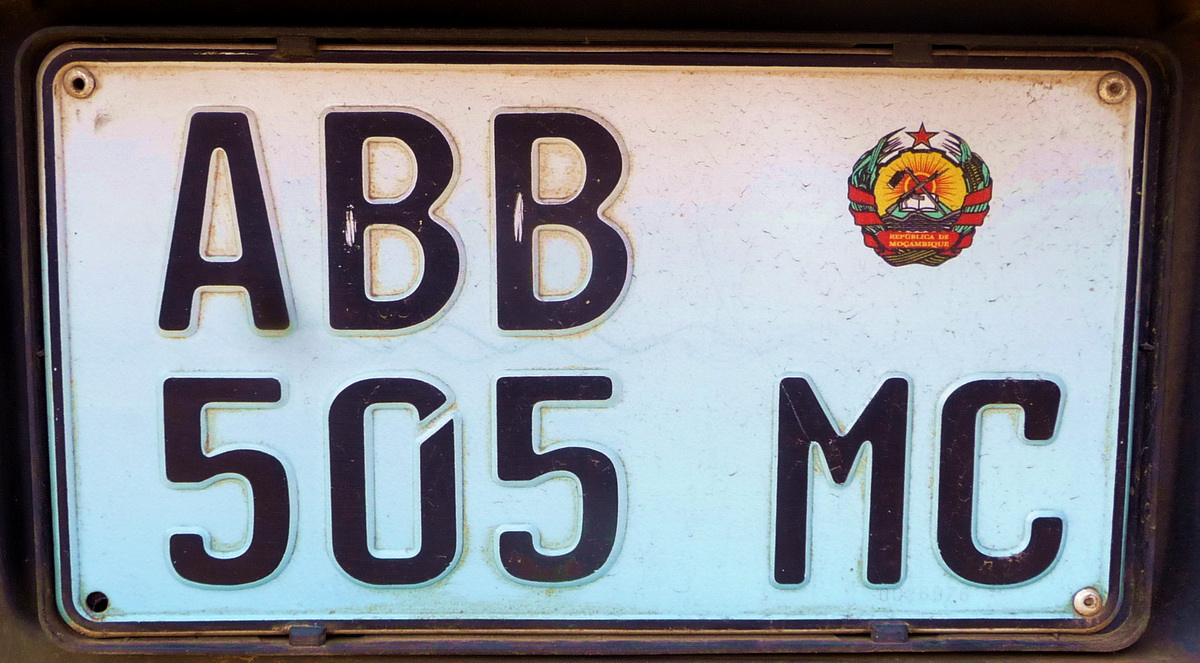
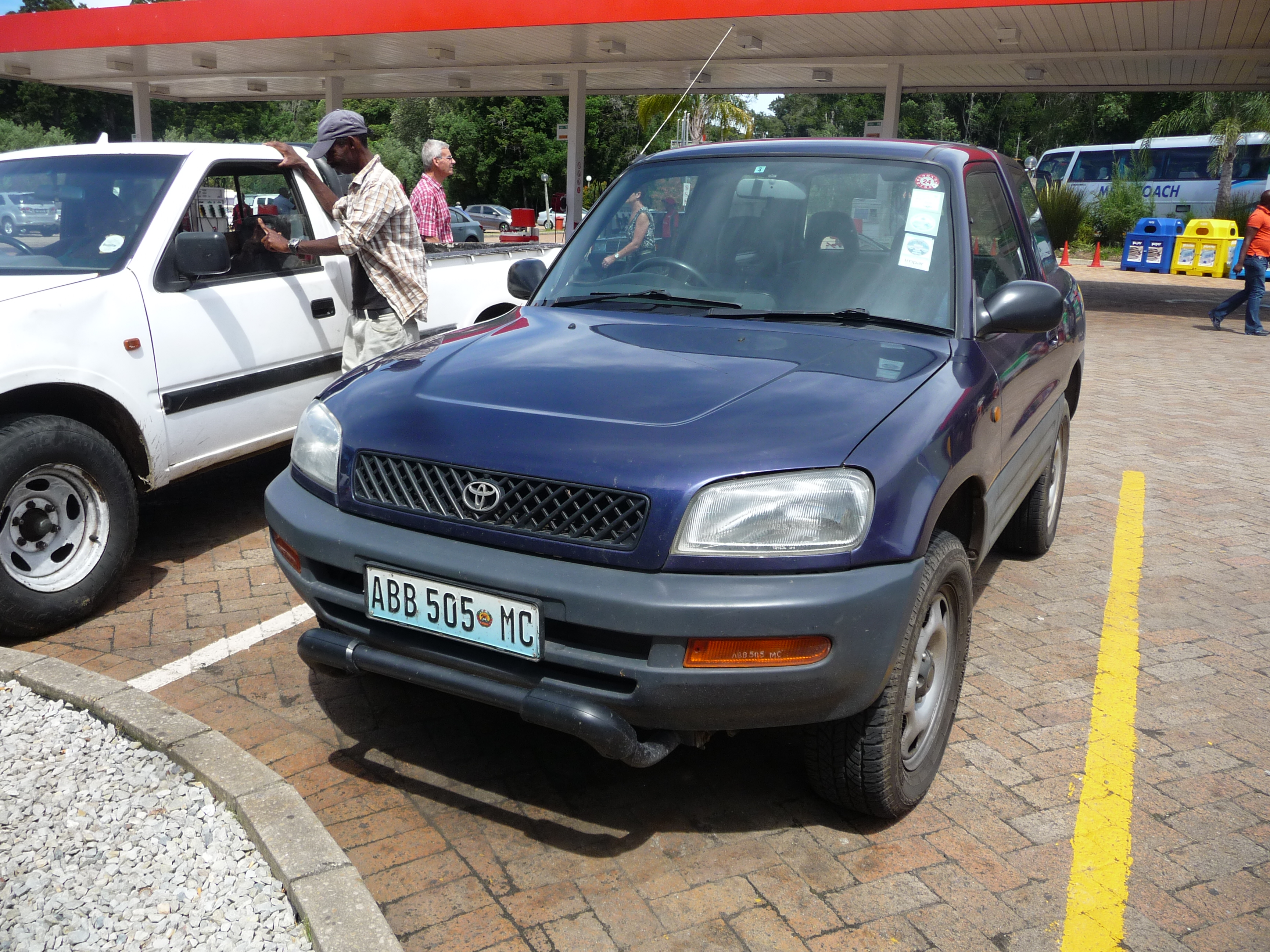
VB thought he would share some of John Pemberton’s limelight with this former Portuguese East Africa posting, first by showing the first new-series Mozambiquian plate I saw this morning, at the Tsetsekama Gorge viewing-point, in the Eastern Cape province of South Africa.     Luckily the car was stationary, enabling enough camera time to gather the details.    The three letters and three-numbers are serial, and the final two letters are the regional code – in this case MC for Maputo (City).    The lady driver thought the new series had been running for 4-5 years, though 2-3 may be more accurate.      The plates are clearly manufactured in South Africa and they closely resemble current ZA practice – just as the new Swaziland plates do, too.

(MOC3)_ABB 505 MC_c_VB2013

Cappark Find - New MOC srs.

Car-park Find – new-ish  MOC srs. from Maputo City.

The shield detail from the new MOC plates.

The shield detail from the new MOC plates.

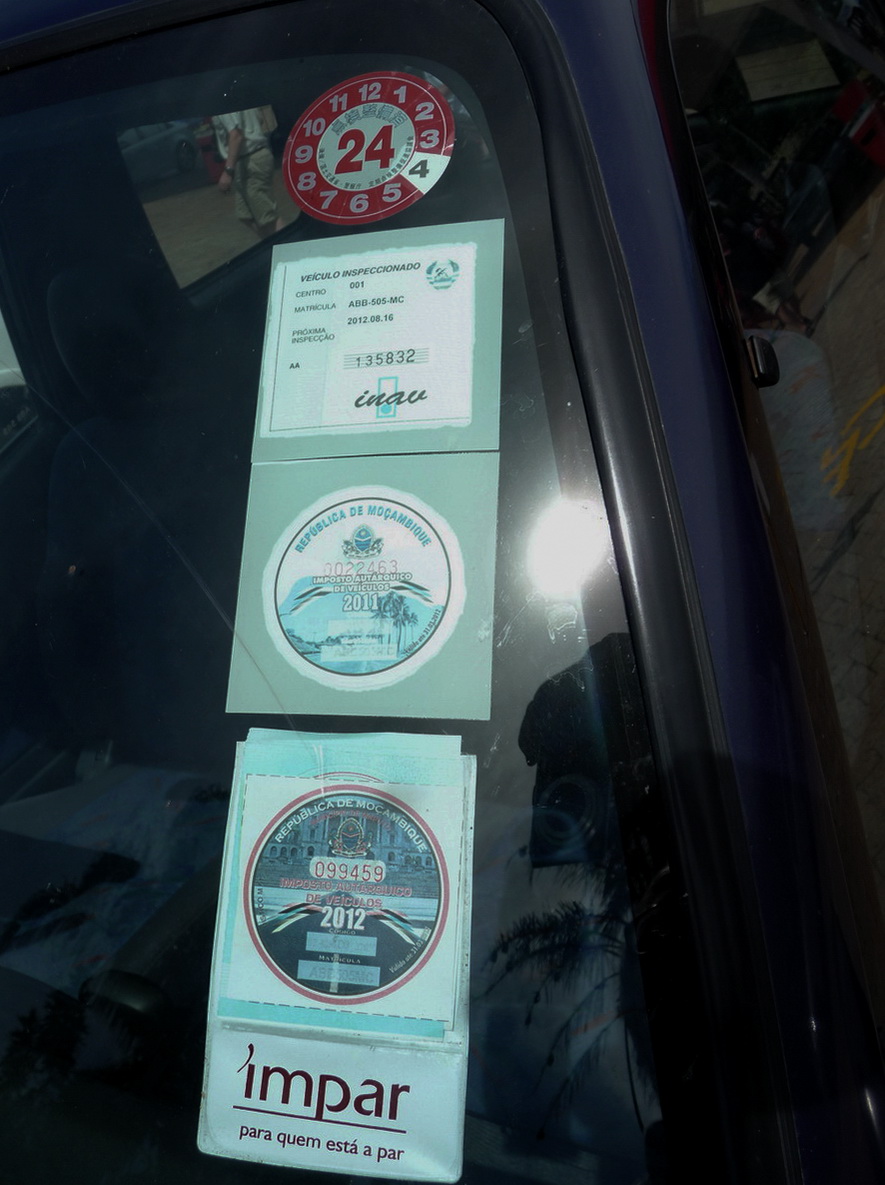
tax documents and all windows etched to foil thieves.

All the windows etched to deter thieves.

Below:

Tax documents for 2013 MOC.

(MOC3)_ABB 505 MC_tdisc_VB2013_resize

But this is in 2013………………

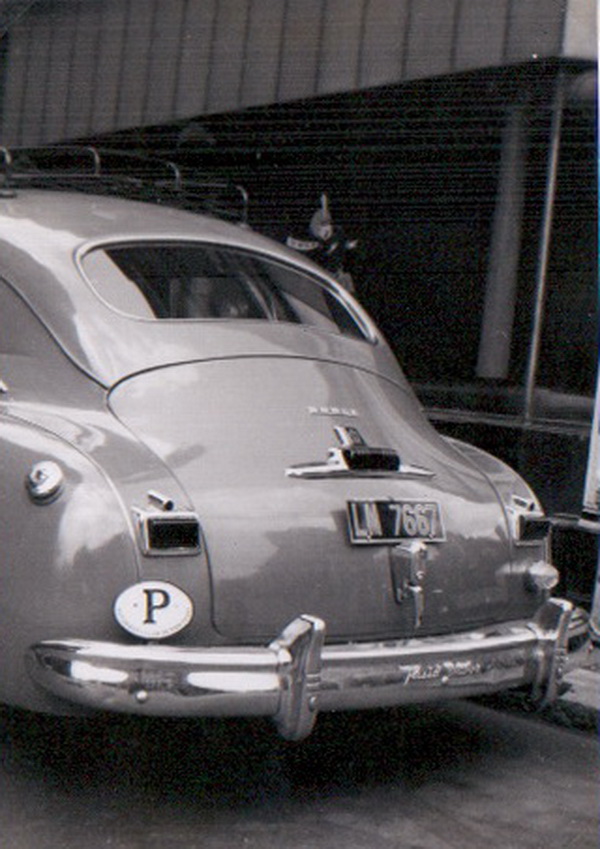
65 years ago, if we had  trudged round London  with JP, we would have found a Lourenco Marques registration on a big American (Dodge?) car, LM 7667.     This was from the original Portuguese East Africa plate type which commenced in 1930 and was issued until 1957, when the LLL-NN-NN series began – example below.

LM 7667 visiting London after the war, using the official 'P' which Portugal used for all its overseas territories.

LM 7667 visiting London after the war, using the official ‘P’ which Portugal used for all its overseas territories.   Although Mozambique was issued MOC  no sighting has ever been reported.    JP archive.

The only other photo of the LM code on a vehicle is this, and the origin is unknown….

colour slide tak

Colour slide taken in Lourenco Marques/Maputo by an unknown spotter, perhaps in the 1960’s.   VB archive.

This Beira-registered Ford Model A (c. 1932) stands in Johannesburg's Museum of Transport and gives us our only photo of Beira plates on the car.

This Beira-registered Ford Model A (c. 1932) stands in Johannesburg’s Museum of Transport and gives us our only photo of Beira plates on the car.

This BMW 3.0 SCi was captured on Madeira in 1978.  MBE 11-93 was coded B for Beira, the second city and a popular holiday place before independence in 1975.

This classic BMW 2000 CSi was captured on Madeira in 1978.     MBE 11-93 was coded B for Beira, the second city and a popular holiday place before Mozambique’s independence in 1975 and subsequent fall into chaos..                VB archive.


More European ancients (Part 2)

January 26, 2013

Some more of John Pemberton’s photos of European plates seen in postwar Britain…..

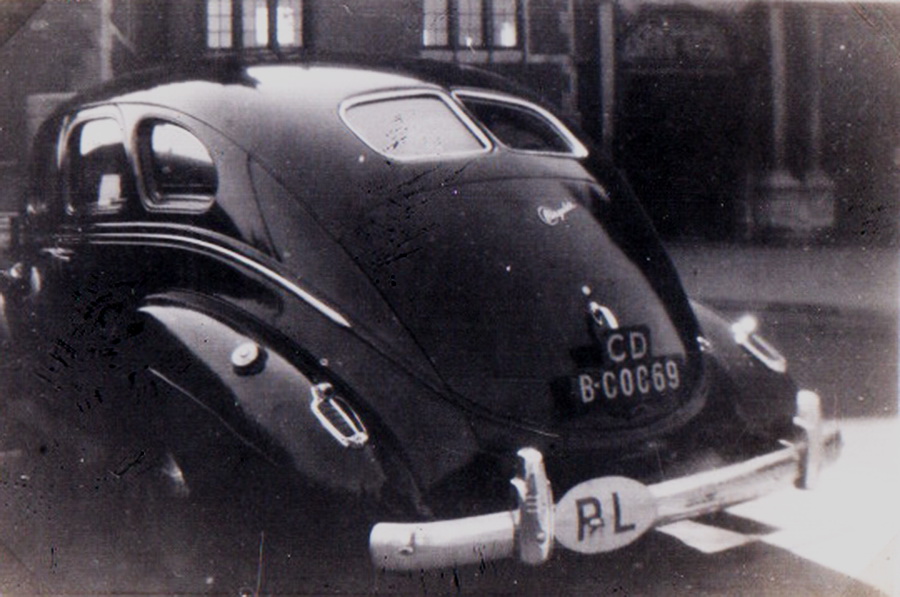
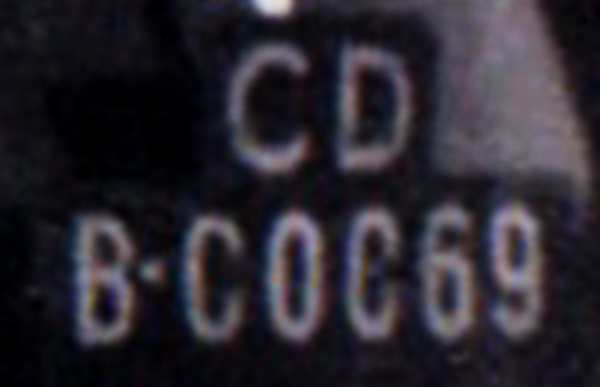
Can anyone throw light on the Polish Diplomatic (Chrysler Airflow?)  reg. B 00069(?)  (pictures 3 & 4)

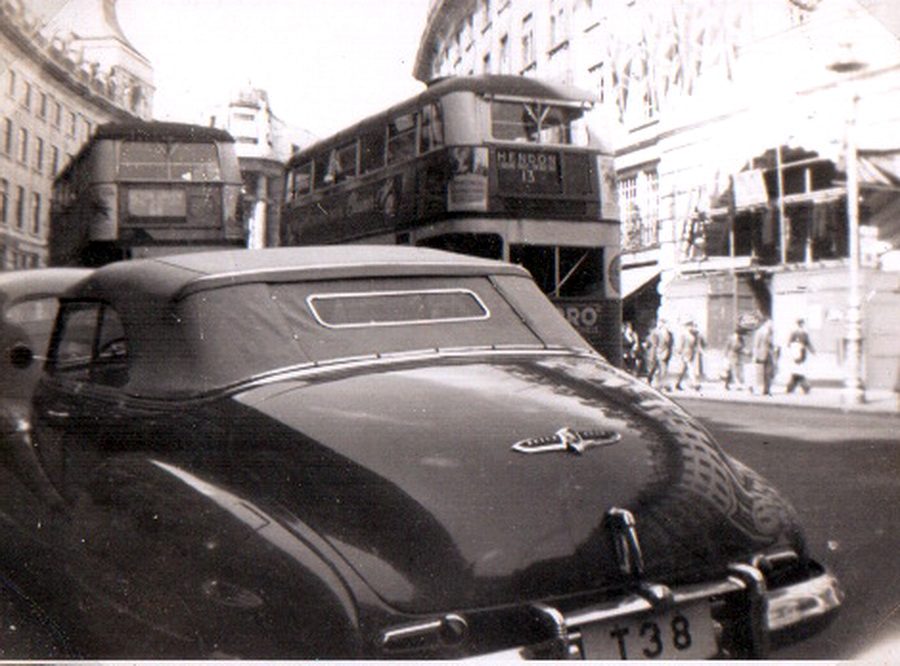
And T 38, Picture 7, which John has identified as Greek – but is it???

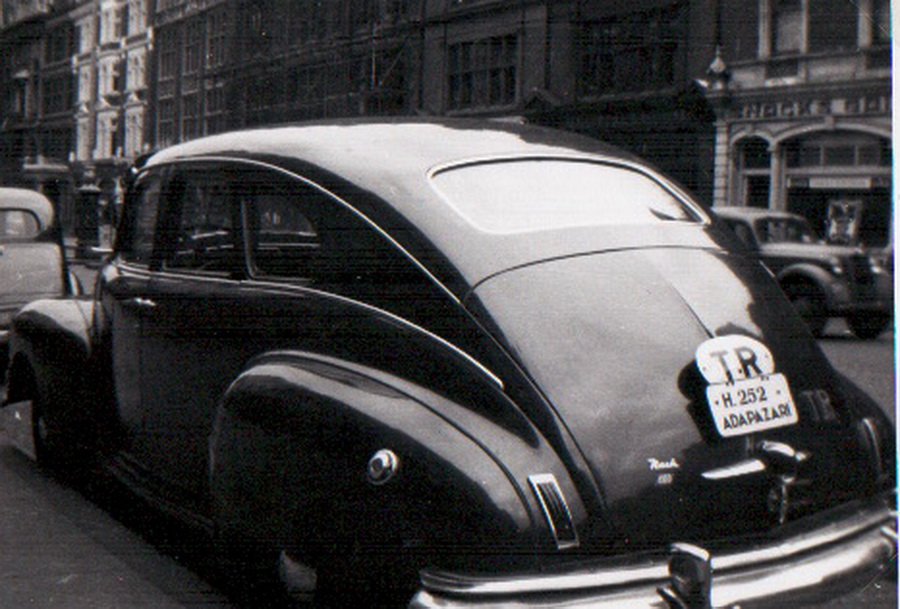
(TR)_H 252_JPvb

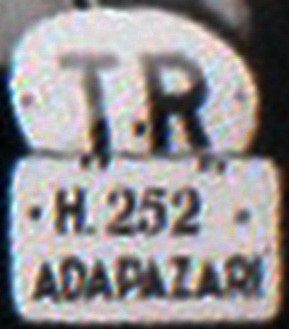
An American Nash from Adapazari, Turkey in 1950s London, snapped by J. Pemberton.

(TR)_H.252_cu_JPvb

(PL)_B-C 0069_JP1940svb

(PL)_B-C 0069_cu_JP1940svb

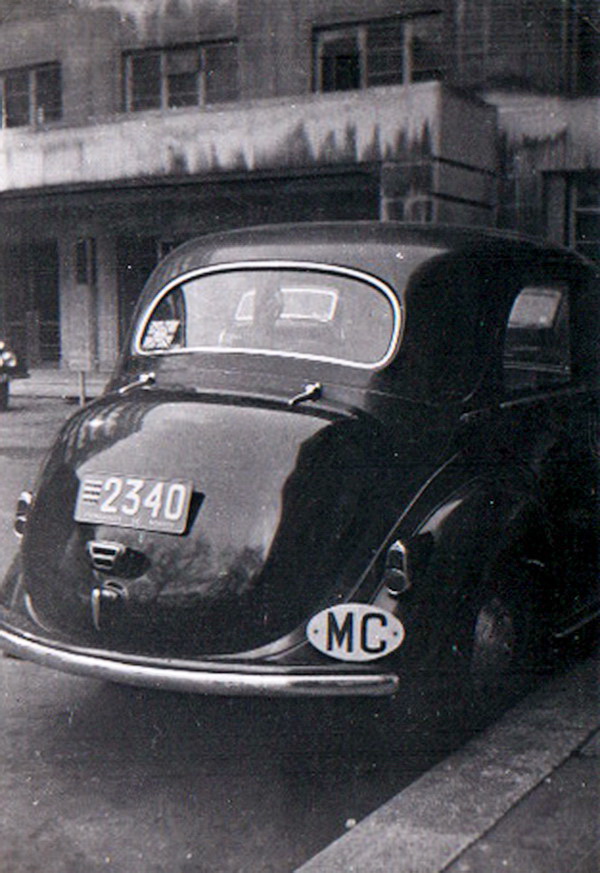
(MC2)_2340_JPvb

2340 – The window displays a ‘Visitor to Britain’ flag on this Monegasque unidentified car, shot by John Pemberton c.1950.

(IS)_R-4793_JP1940svb

R is the code for Reykjavik, Iceland, on a Jeep Waggoneer, early 1950s. Pemberton archive

(GR)(0tax)_T 38_jp1940vb

IF this T 38 is a Greek plate, as John believes, might it be a Thessaloniki temporary importation customs registration?       Seen Upper Regent Street, London circa 1950.

(F2b)(28-50)(exp)_373-TT 8H_JPc1940vb

373-TT 8H – An American Packard visiting France temporarily in the 1948 has been given a set of Temporary Transit plates at the port of entry – H for Cherbourg, 8 for 1948 (or 1938).       This series ran from 1933-1955.   Very possibly, the car also carried it’s original American plate at the rear, as was the habit of the time.    Pemberton archive

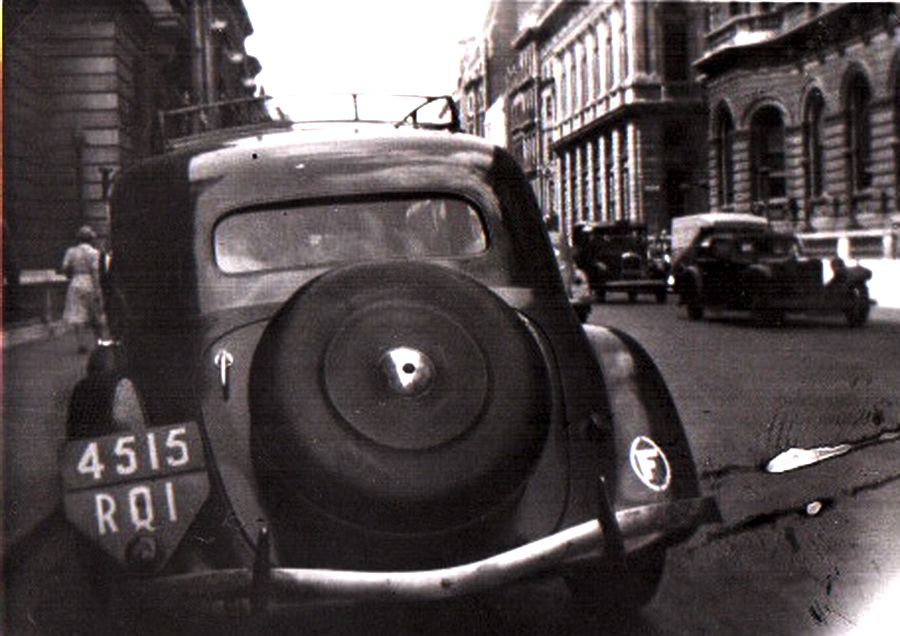
(F2b)(28-50)_4515 RQ 1_JPvb

4515 RQ 1. A Citroen Light 15 from Departement of Ain (1), seen in London in the early 1950s. This series started in April 1950, but using only 3 serial numbers – this has four – 4515 – why?                  Pemberton archive

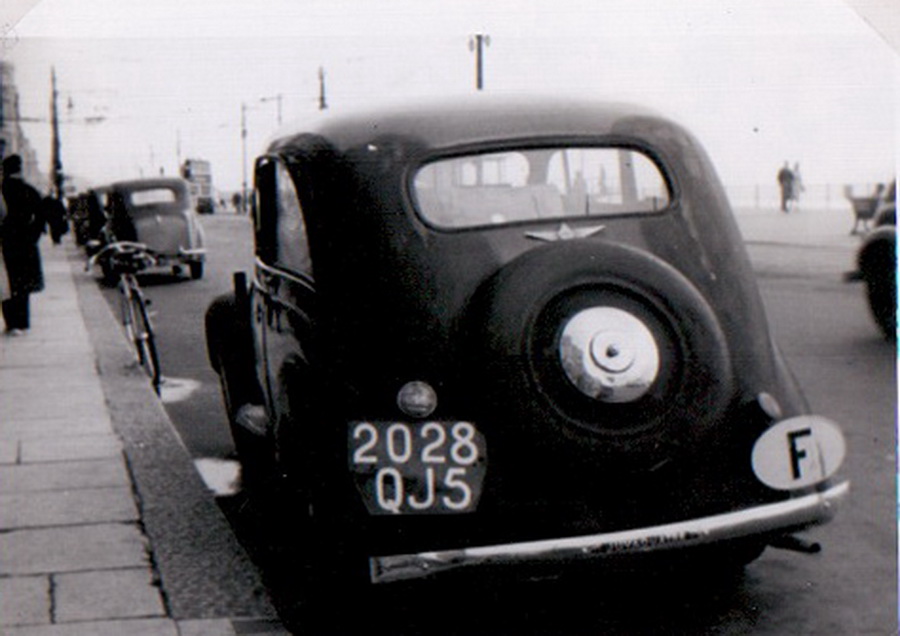
(F2b)(28-50)_2028 QJ 5_JPvb

2028 QJ 5 – 5 was from Hautes-Alpes (Gap) from 1950 to August 1951, when 05 replaced the single 5. This plate has a four-serial registration 2028 , though three numerals were the norm until June 1965…… (Francoplaque?) Pemberton

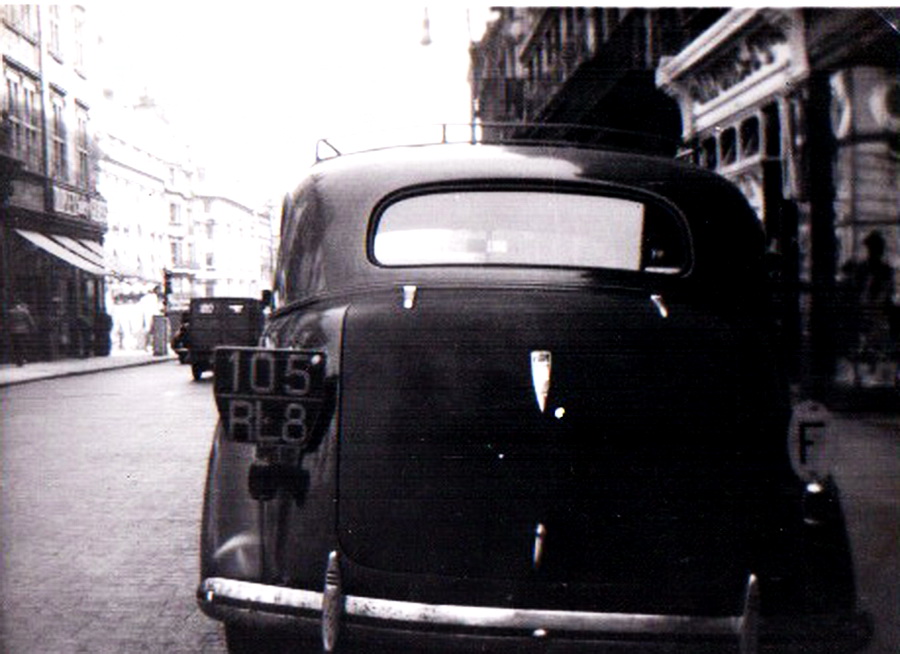
(F2b)(28-50)_105 RL 8_JPvb

8 = Ardennes, from the 1950 series.

(F)_9709 YD_JPvb

9709 YD on an unidentified convertible car is thought to be French, but if so, which series??                                                            Pemberton

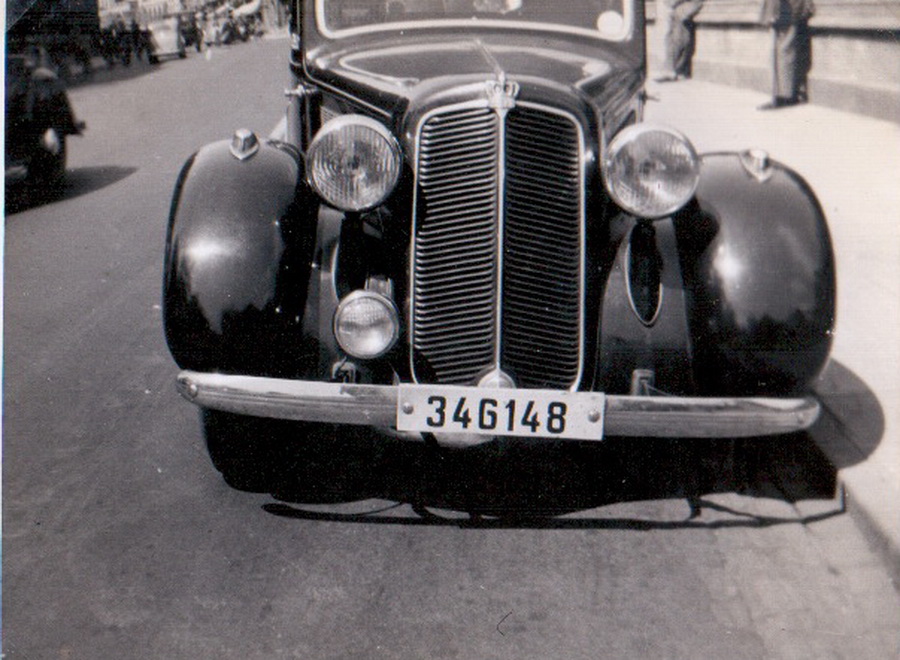
(B)_346148_JPvb

346148, a late example of the Belgian series which issued from 1926 to 1953.

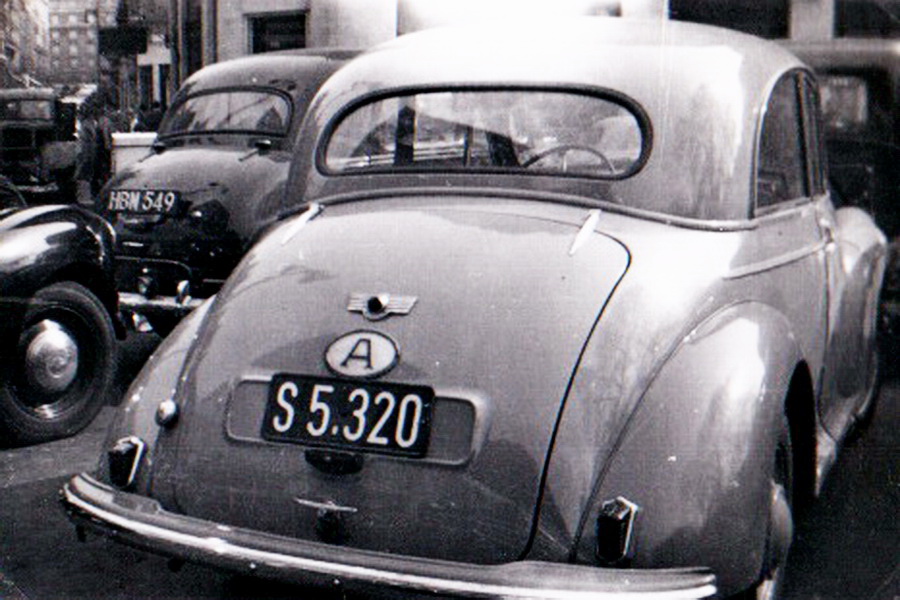
(A)_S 5.320_JPvb

S 5.320 – Austrian Morris Minor from Music City, Salzburg.            Pemberton

That’s all of the Pemberton European pictures.      A few Africans,  Middle Easterners and South Americans to come before we close his fortunately-found album.    Thanks, John!


Pemberton’s Rara Avis – Somaliland

January 26, 2013

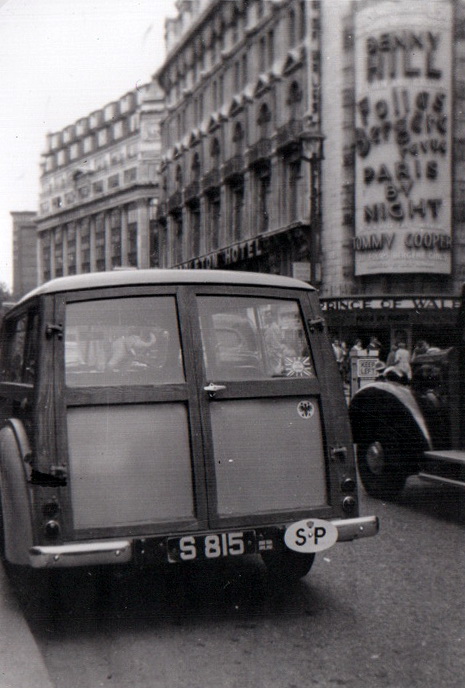
Of JP’s photo collection, few depict a plate (and international oval SP) as rare as his London sighting, circa 1955,  of a Morris Oxford MO  Traveller, on British Somaliland plates.

As the rear door sports an ADAC badge, we may assume that the car had previously run in Germany, probably on British Zone BZ plates, in which case, the owner was probably an RAF or Army officer many of whom travelled round their foreign postings with their cars…….(more info on this came along.   See responses below from Mike Raine and now from Barry Scowen)

The pressed figure ‘8’ is of an unusual design…..

S 815 from the Somaliland Protectorate British zone, until independence in 1960. Seen in London;s West End.

S 815 from the Somaliland Protectorate British zone, until independence in 1960.   Seen in Coventry Street in London’s Theatreland  circa 1955.    Pemberton archive

(SP)_S 815_JPvb

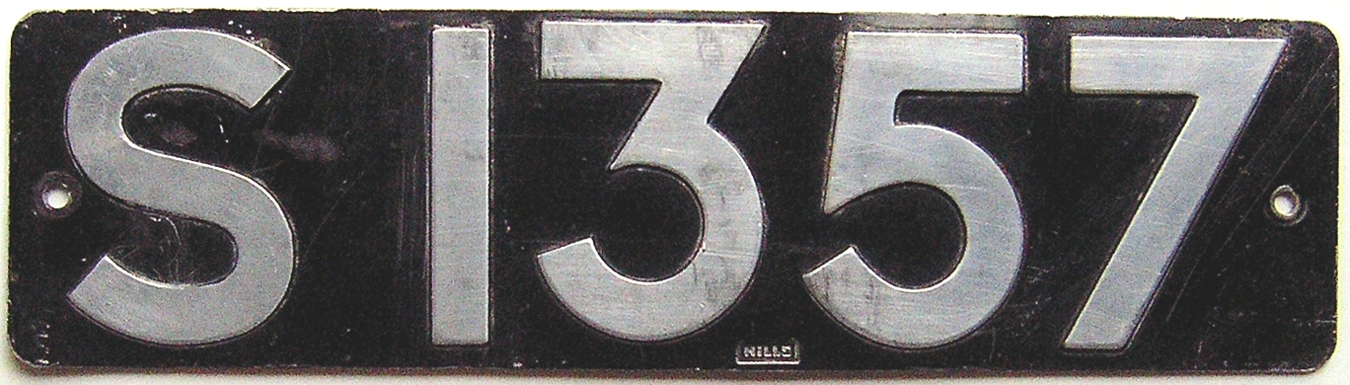
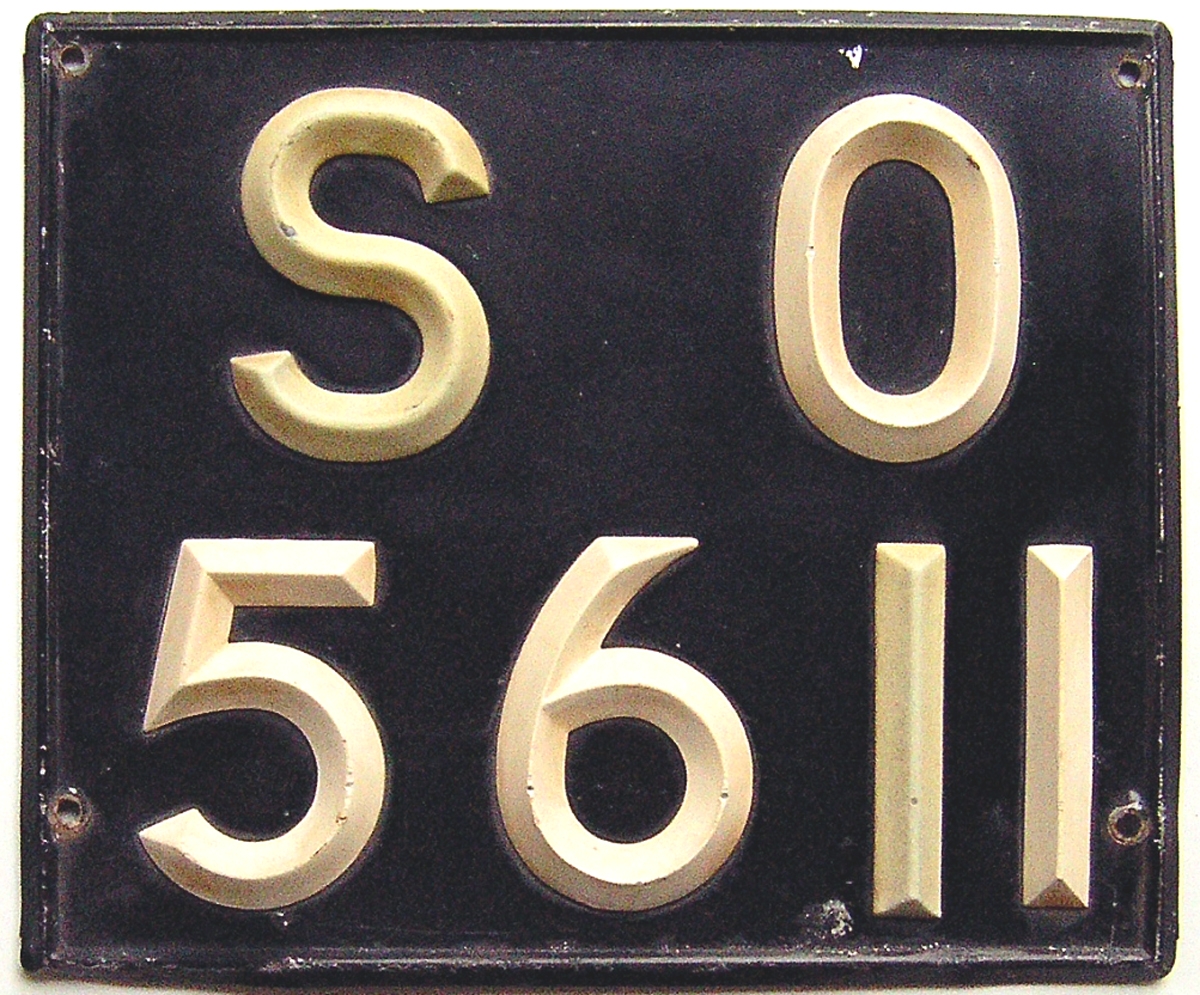
Of the 1941-1960 plate types (of which so few illustrations exists) two prefixes existed – S and SO.   There is a suspicion arising that the Italian zone of the the Trusteeship of Somaliland issued SO, and the British zone a simple S.    Mega-collector, author and international cymbalist Jim Fox has gathered one of each into his gallery of exotica, beating the sum of the Other Collectors of the World by a factor of two!


Jim Fox' British Somaliland Protectorate S 1357 rarity.

Jim Fox’ British Somaliland Protectorate S 1357 rarity.

and Jim's SO 5611 believed to be from the Italian zone of the trusteeship territory 1941-49-60 and a bit beyond.

and Jim’s SO 5611 believed to be from the Italian zone of the trusteeship territory 1941-49-60 and a bit beyond.   (Fox archive)

Victor Brumby saw SO 5671 in Britain about 1961 on an Austin A50 Cambridge, driven by an English man with a huge Somali lady passenger.   Stopped for interview by our spotter on his Triumph bicycle, the business card of the driver gave ‘Mogadiscio’ as his home base – then the capital of Italian Somaliland.   The International Circulation Permit (ICP), which temporary imports to GB had to carry in place of a licence disc in those times, read SOM in the ‘Country of Origin’ line.     The 5671 plate was painted or stencilled and the car bore no international oval at the rear.

Note that S 815 wears a ‘Visitor To Britain’ window flag, another authorised international motor-visitor accessory for new arrivals to GB in those days.    To help with parking wardens, doubtless!


Another photo of S 815 from Mike Raine, up in the Somali highlands.


ABOVE:    Here is reader Barry Scowen as a boy in Somaliland with the Morris which is the subject of this Blog page.   His father must have been the second or third owner of  S 815.   See Comments below.

_______________

Terra Incognita  could describe this benighted ‘country’ from the perspective of  collectors.   Who knows more?

P.S.    These ‘S’  plates of typical British design could just as easily have come from Seychelles, Cyprus, Fiji, Singapore, Mauritius, Southern Rhodesia, Guyana, Bermuda, Trinidad and Barbados!    Absolutely identical.     Fortunately in those day, car owners usually fitted the international ovals, which helped the perplexed spotter!

~~~~~~~~~~~~~~~~~~~~~~~~~~~~~~~~~~~~

Below:   Sometime after the Somalilands’ 1960 independence, this Italian-influenced Somalia system commenced:

The independence of Somalia gave rise to this series, about 1960. This is seen in Nairobi in 1978

The independence of Somalia gave rise to this series, about 1960. This is seen in Nairobi in 1978, on a Benz lorry.    Vic Brumby archive

When the country collapsed into anarchy, few vehicles bore any plates at all!

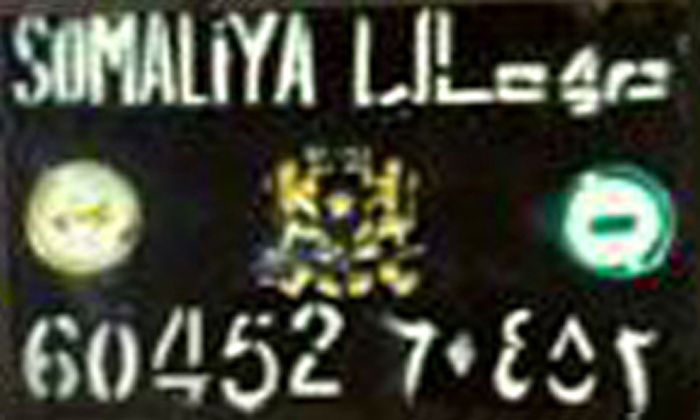
This plate was 'liberated' by a Reuter camera team during a newsgathering visit in about 1983. From an armoured Toyota pickup of one of the insurgent groups.

This plate was ‘liberated’ by a Reuters camera team during a newsgathering visit in about 1983. From an armoured Toyota pickup of one of the insurgent groups.  Brumby archive


Pemberton on Libya

January 25, 2013
A Morris Minor Tourer from Benghazi circa 1951. BN 1089. (JP)

A Morris Minor Tourer from Benghazi circa 1951. BN 1089. (JP)

Neither Ivan Thornley nor I ever saw a Libyan like this, using “BN” as a code.   Furthermore all previous examples place the arabic before the western script.     Wonderful!

LIBIA T.5829 circa 1950.

LIBIA T.5829, circa 1950.

Then JP saw a Sunbeam Talbot 90 with another VERY unusual plate design – and no arabic at all…..  Such plates  had been used in the 1930s, though this Sunbean model was produced from 1948.    And it looks as if the background might have been a light shade, rather than standard black.     Probably from the 1937-50 series.

Below:    The mid-1950s to late 60s used the next style and many used to be seen near British Air Force bases in England in that period, when US and UK had very active bases in Libya.   LB-Benghazi, LT-Tripoli.   Initially made with the arabic to the left and after about 1962, the arabic to the right.

(LAR2)(55-62)_LT21331_comp_VB1962

Libya-Tripoli 21331

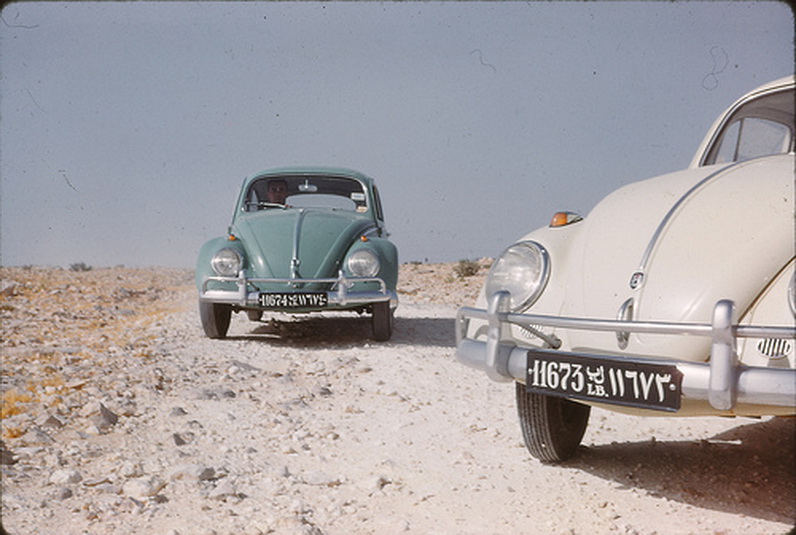
Unofficially the international oval was LT, (Libya-Tripolitania) but I don’t think any were ever seen – unless you know otherwise?    Now it is LAR Libyan Arab Republic – and still none have ever been seen!    The way things are shaping up in post-Gadaafi Libya, it will be some time before they get round to worrying  about international ovals!(LAR2)(55-62)_LB 11673_Flickr1960s


Mixed Europeans from JP

January 25, 2013

POST-WAR PHOTOS FROM JP

These early pictures are of varying quality and interest, but still need to be exhibited for the sake of the members.   They are now identified to save readers’ energy….

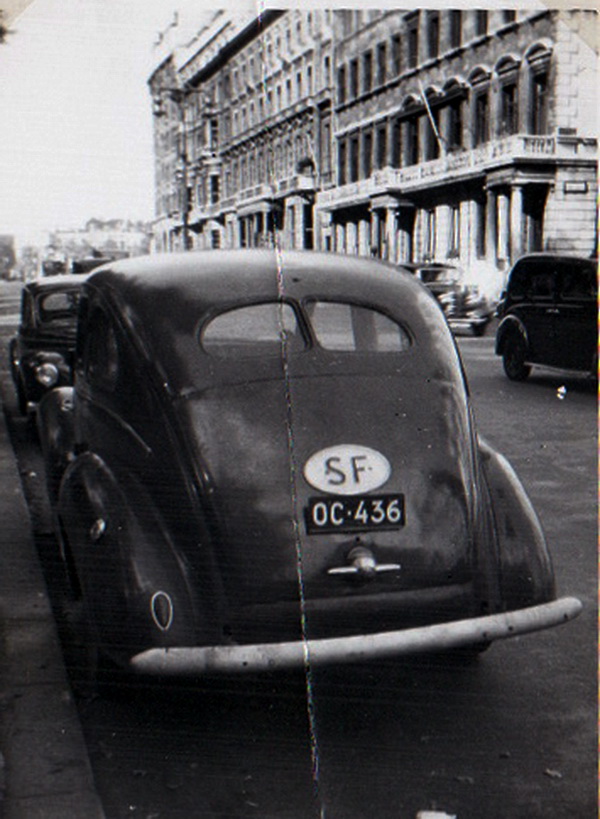
(SF)_OC.436_JPc1948vb

OC-436 from Finland area O – Oulu, travelling in Britain during the 1940s.    1939 US Ford V8 identified by Colin Spong.     Pemberton archive

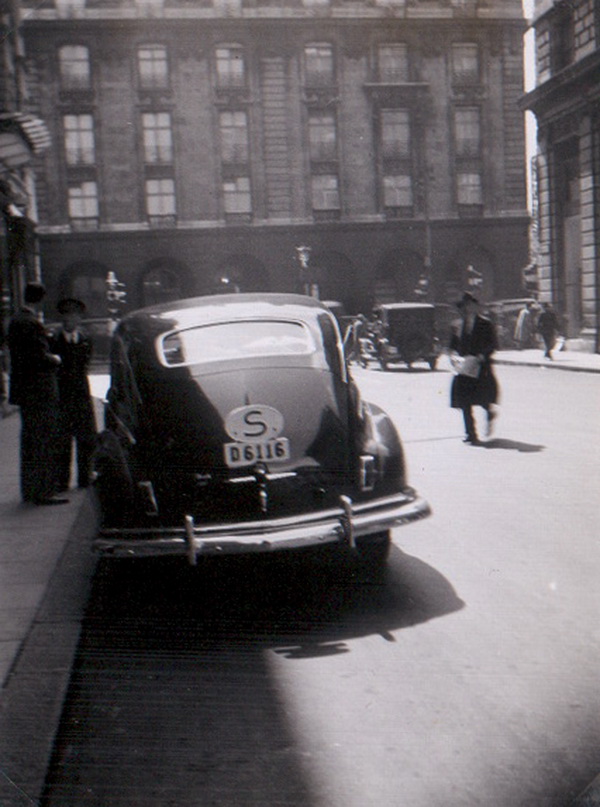
(S)_D 6116_PBvb

D 6116 from Sweden, seen in central London circa 1947.             D=Södermanland (Nyköping).  Pemberton archive

Swedish bicycles had plates, too! 57147 here.

Swedish bicycles had plates, too!      57147 here, in London, if that’s a London taxi at left….

(SF)_H.4268_JP1940vb

RPWO gives: 1939 Finland plates were revalidated for 1940 by painting the border black. Later “1940” plates were issued for new registrations and these are thought to have been used until 1945. Some 1943 plates were black painted wood, some dated 40 and some were in use as late as 1948.                    This black 1940 plate H.4268 is coded for Hame.                   The car is thought to be an early Skoda                Pemberton Archive

(S)_M 8257_JPvb

This car may be a prewar German *Hanomag (convertible), seen by member Pemberton in Oxford during the 1940s. M 8257 is from the Swedish area of Malmo.   Pemberton archive.                                                          (*2015-Now identified as an Adler by reader Spong)

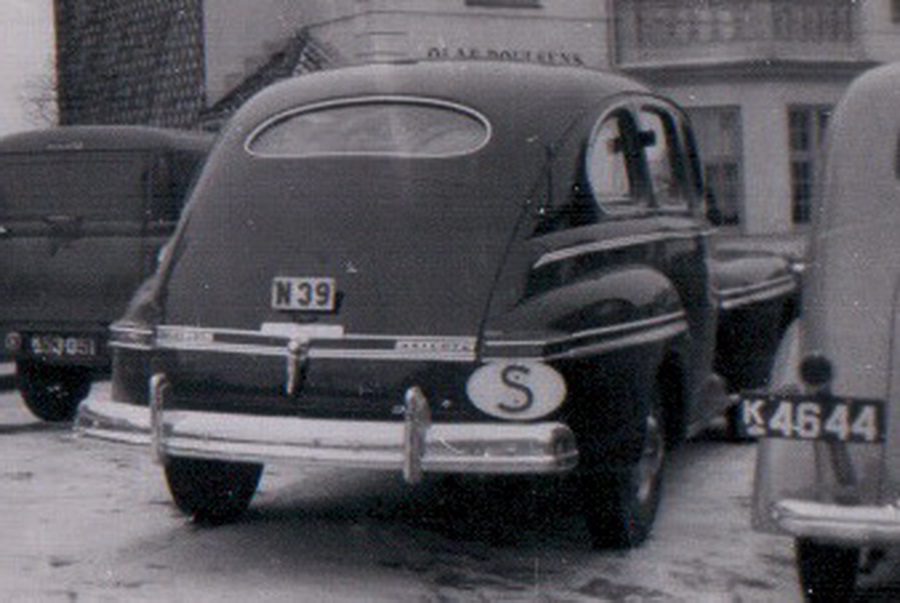
(S)_N 39_JP1940svb

N 39. – .  A low number from N=Halland (Hamstadt) by John Pemberton in 1940s Denmark.    An American Mercury.      Pemberton archive.

AH=Hessen,1945-56 (US zone of Germany)(Lorrach).       Messerschmidt bubblecar.          AH 23-45.          Pemberton 1945-56 in London

(D)(Bz)_BH25-3323_JP1949vb

B/H 25-3323 from Hamburg in the British Zone from 1948-56.    Note the massive ‘D‘oval.     Somewhere in England on an Opel, by J. Pemberton, 1949.

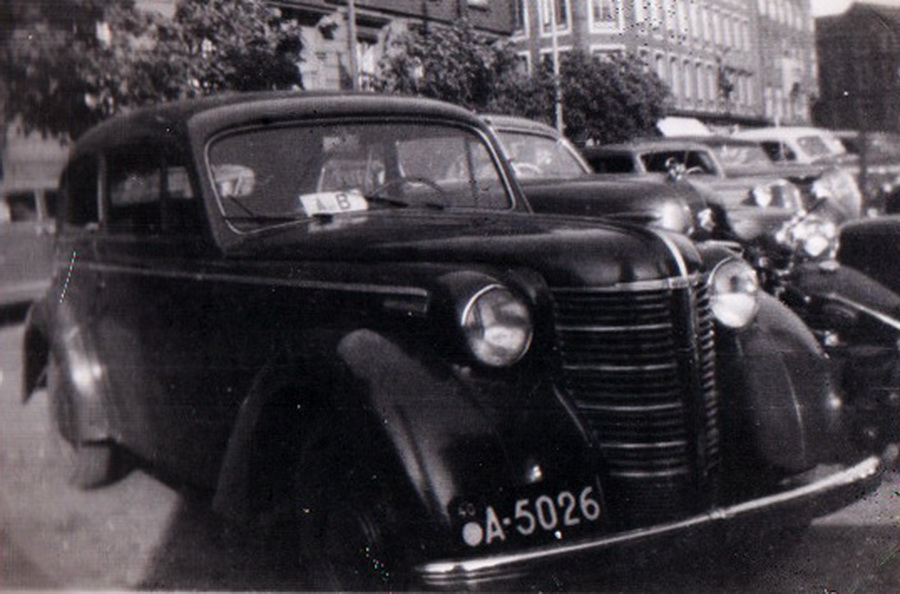
(SF)_A.5026_JP1940vb

A Finland pre-war Opel A-5026, coded A  for Helsinki (Helsingfors) using the 1940 issue of the 1930-49 series,  photographed by John Pemberton in Scandinavia.


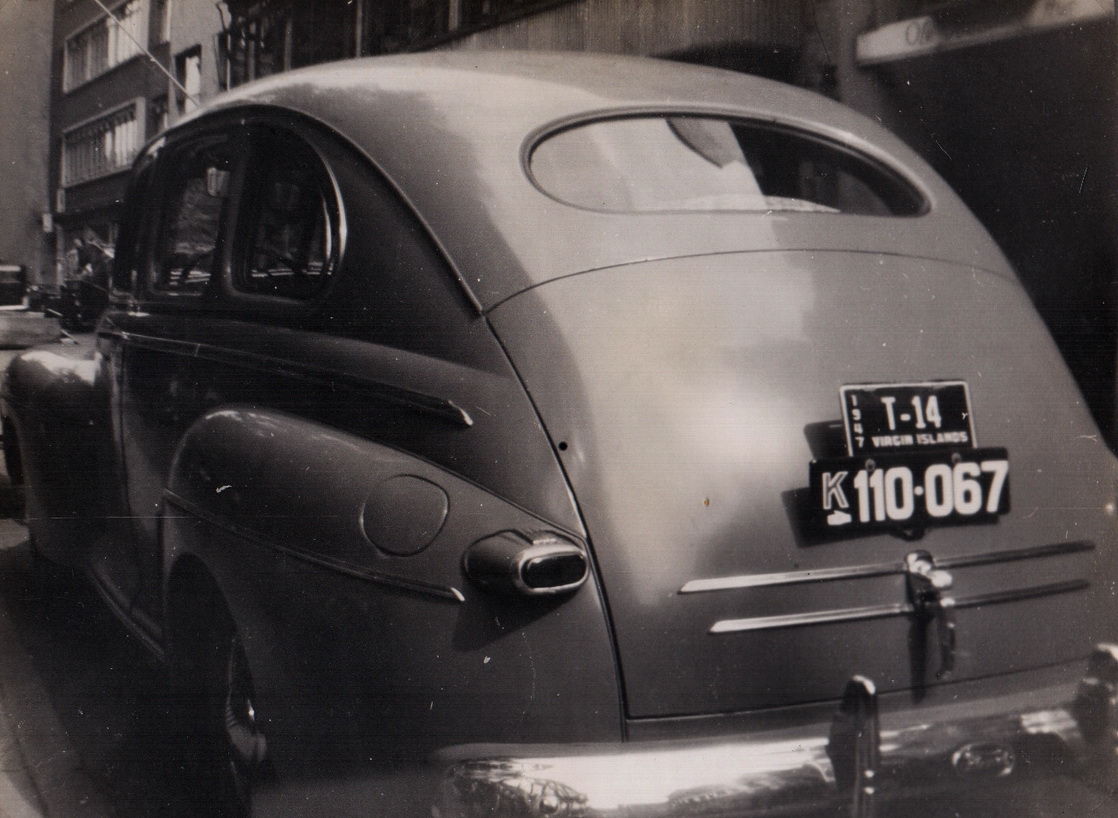
(USVI47)_T-14_JP1947vb

A 1946-8 American Ford registered in the U.S. Virgin Island of St. Thomas (1947 T-14) visits Denmark about that time, and is allocated a Temporary Use (red letter K) Copenhagen plate K 110-067 (to permit it to legally circulate in Denmark).   (This was because US/USVI had not been a signatory to the Convention which authorised international travel on their licence-plates.)   Such temporary imports to Europe often showed their original foreign plates as well.                 Pemberton archive

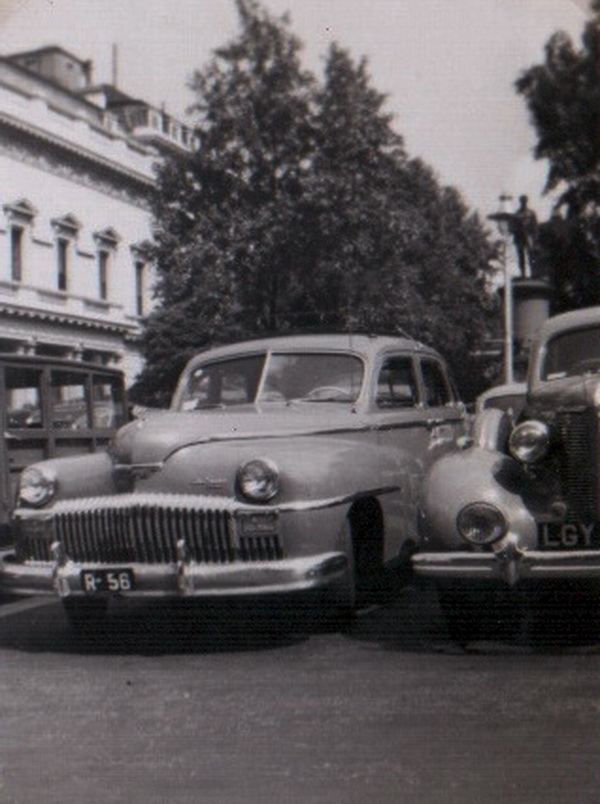
(SF)_R-56_JPvb

R codes Reykjavik, Iceland. R 56 seen in England somewhere, 1950s, on an unidentified American car.  John Pemberton

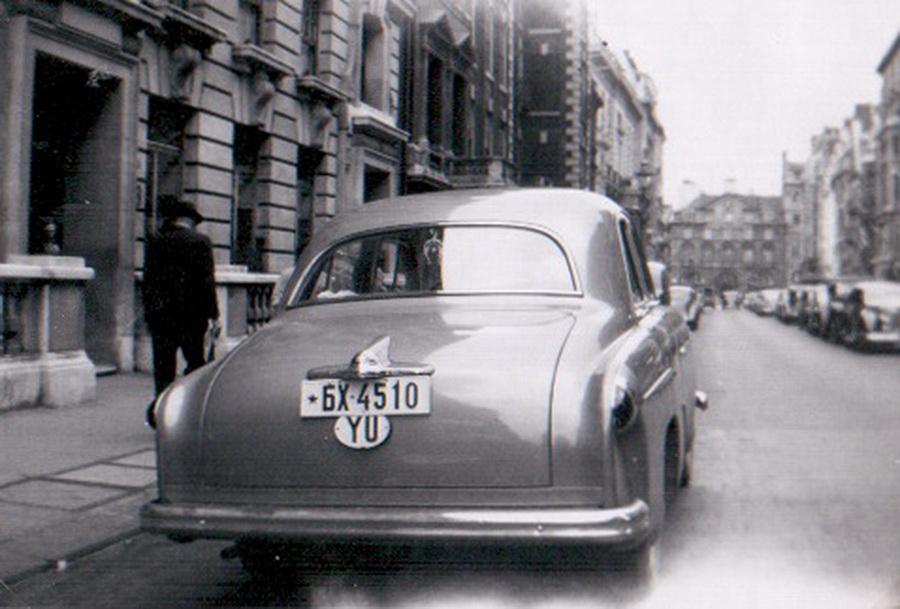
(YU)_BH-4510_JPvb

BH-4510. A Vauxhall Velox (c.1951) in London in the early 1950s. BH (in Cyrillic) hails from Bosnia-Herzegovina, by then a component of Yugoslavia.  Pemberton archive

Denmark motorcycle identified by Roger Kimbell

H 85 17. Rare Denmark-built  motorcycle identified by Roger Kimbell in his comment below.   H coded Præstø from 1919-58.    Pemberton archive

The motorcycle  with the DK plate is a rare Nimbus 4cyl in line down the frame machine. The only Danish motorcycle manufacturer I believe. Roger Kimbell.

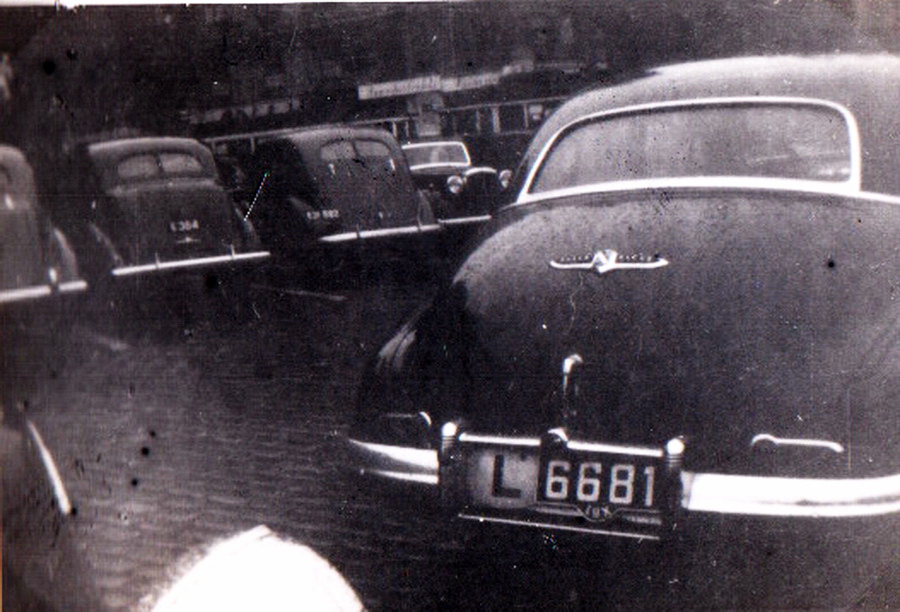
(L)_6681_JP1940svb

Luxembourg series showed LUX below on the rear plate and above on the front plate. 6681 here on the series which ran from 1895 to 1940(!), although, oddly,  this Buick(?) and photo are from the 1950s…. John Pemberton picture, taken in Denmark.


A-11829 A= Oslo, Norway

A-11829     A= Oslo, Norway   Fiat?   John Pemberton in GB

(N)_F6-47)_JP1940svb

F 647  —  F=Buskerud, Norway, taken in Denmark by member Pemberton, during 1940s.             Another unknown American car model.

(N)_Z-9643_JPvb

Z-9643 on a pre-war car from Norway, where Z coded Vestfold from 1929 to 1971.

R-7800 is a Dutch motorcycle in Oxford. R was a special allocation for temporary/foreigner registration from 1920 to 1951. Pemberton archive.

R-7800 is a Dutch Harley-Davidson motorcycle in Oxford.     R was a special allocation for temporary/foreigner registration from 1920 to 1951. Pemberton archive.

The rare Portuguese red-on-white diplomatic CD-10-46, seen on a grand American limousine, possibly a 1940s Buick Eight.

The rare Portuguese red-on-white diplomatic CD/10-46, seen on a grand limousine, – a 1940s Buick Eight.    Dates of the introduction of this series are unknown,  as are the embassy codes.    Pemberton archive

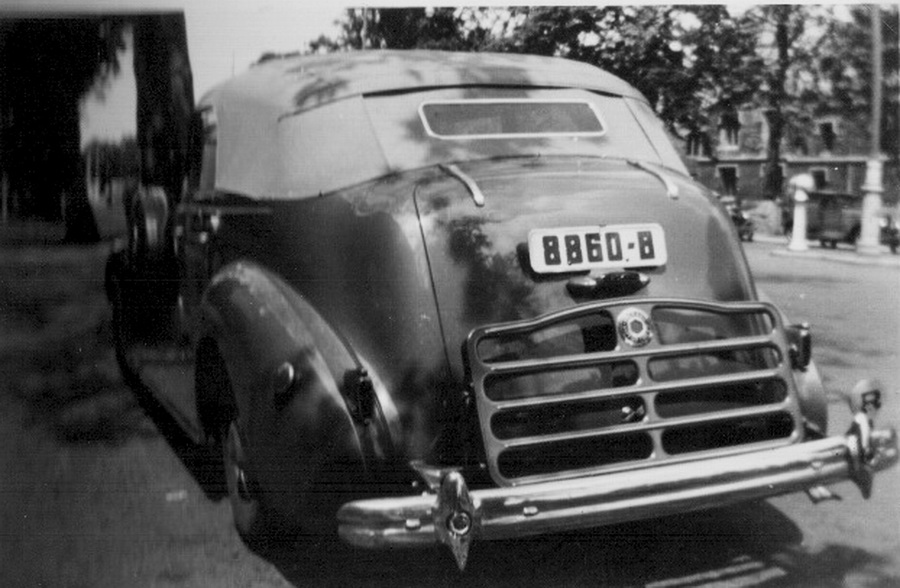
8860-B ucharest, borne an another unknown American tank - a convertible model, so someone very rich. (In 1940s Romania??)

8860-B ucharest, borne by another American behemoth –  a convertible Packard Super Eight Convertible Sedan model – so someone very rich. (In 1940’s Romania??)                                                                                                            Car i/d by contributor ‘BlackVolga’.    Pemberton archive

(E)_VI.2623_JPvb

VI-2623… A Morris Oxford from Spain circa 1950 in London. VI=Álava (Vitoria )

(MC)_MC-1818_PBvb

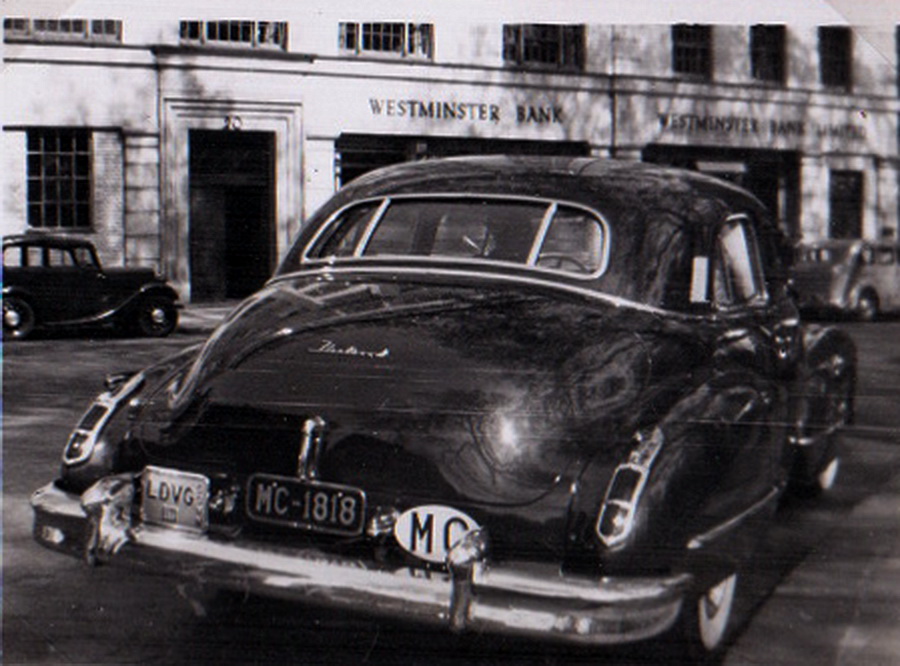
Alex Kafka writes: This Monegasque photo MC-1818 is doubly interesting: if I’m not mistaken, “LDVG” to the left of MC-1818 is a Connecticut vanity plate,  metal validation tab included.
You may need to download and enlarge the photo to see the vertically aligned letters “CONN”. This style was used from 1937 to 1947, and 4-letter personalized plates were allowed from 1945 [RPWO paragraph (y)]. So this CT plate must be from 1945-47.
Connecticut was the first U.S. state to introduce personalized plates (called “initials plates”), already in 1937. Only two or three letters were permitted at first.
John Pemberton shot this double-plated Cadillac Fleetwood in London around 1947.


Swiss tourists in 1940s Britain

January 25, 2013

The journey from the Alps to England in the 1930s/40s would have been long and tedious – and all the more so in this selection of vehicles which Monsieur Pemberton snapped in those uncomfortable times.      I would have chosen the Citroen, for my voyage…….

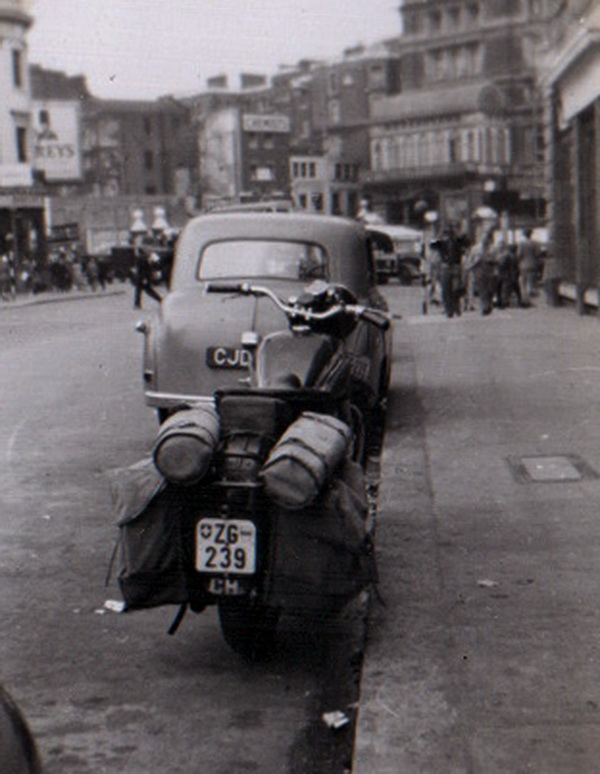
ZG 239 motorcycle from Zug in Oxford 1940s, see by John Pemberton

ZG 239 motorcycle from Zug in Oxford 1940s,      seen by John Pemberton

Berne Citroen Light Fifteen, 1940s London.   JP

BE 4646 – Berne Citroen Light Fifteen, 1940s London. JP

A real old-timer - possibly 1938 in Oxford.A real Genevan old-timer, maybe American make – possibly 1938 in Oxford.

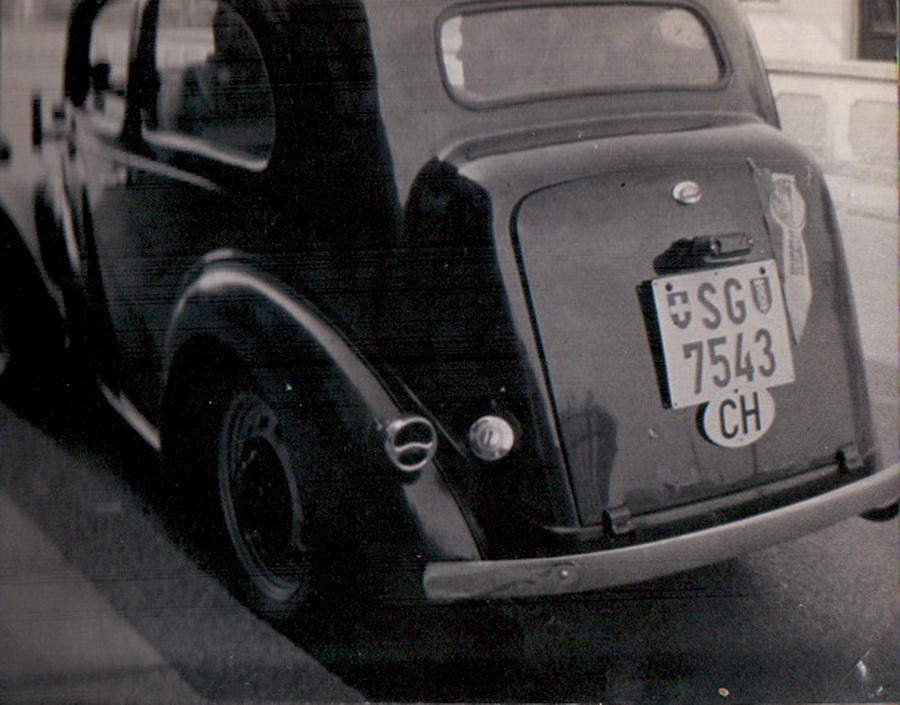
British Ford Eight - noisy, slow and bumpy.

British Ford Eight from St. Gallen – noisy, slow and bumpy journey to London??          Pemberton archive.


Burma, Vietnam

January 25, 2013

Another long-standing Europlate member, John Grabham, took a very few photos during his long spotting life, which, sadly, ended a few weeks ago, in January 2013.     He had allowed Vic Brumby to scan two of his photos, which are reproduced here:

A Land Rover seen in the 1970s.  A painted Rangoon 11838 translation plate had been added for travel outside Burma.

A Land Rover seen in Wales in the 1970s. A painted Rangoon ‘ri 1838‘ translation plate had been added for travel outside Burma. (JG)

There is no evidence of another Burmese plate sighting in Britain since the 1950s.   Unless YOU know otherwise……

~~~~~~~~~~~~~~~~~~~~~~~~~~~~~~~~~~~~

NG*1249 below was John’s other very rare photo, from 1970s Viet-Nam, of the series created for diplomats.

NG abbreviates the Vietnamese Ngoai Gaio, translating to  “Foreign Affairs” – the international equivalent of ‘Diplomatic Corps’.        Though RPWO has a full embassy code list from that time, it remains difficult to attribute the plates of which Europlate has pictures,  to that list.       As a (presumably) British embassy car, this Sunbeam should have 01 in the registration, but it shows either 12 or 49 for a code…….

Usually these were green on yellow – this one, oddly, is black on yellow.

Sunbeam car from the British embassy in Saigon, seen in Cardiff, Wales.  John Grabham.

1970s Sunbeam Rapier car from the an embassy in Saigon, seen in Cardiff, Wales by  John Grabham during the 1970s.

~~~~~~~~~~~~~~~~~~~~~~~~~~~~~~~~~~~~~~~~~~~~~~~~~~~~~~~

Thanks to John for seizing these two rarities.~~

~~~~~~~

VN (cont.)

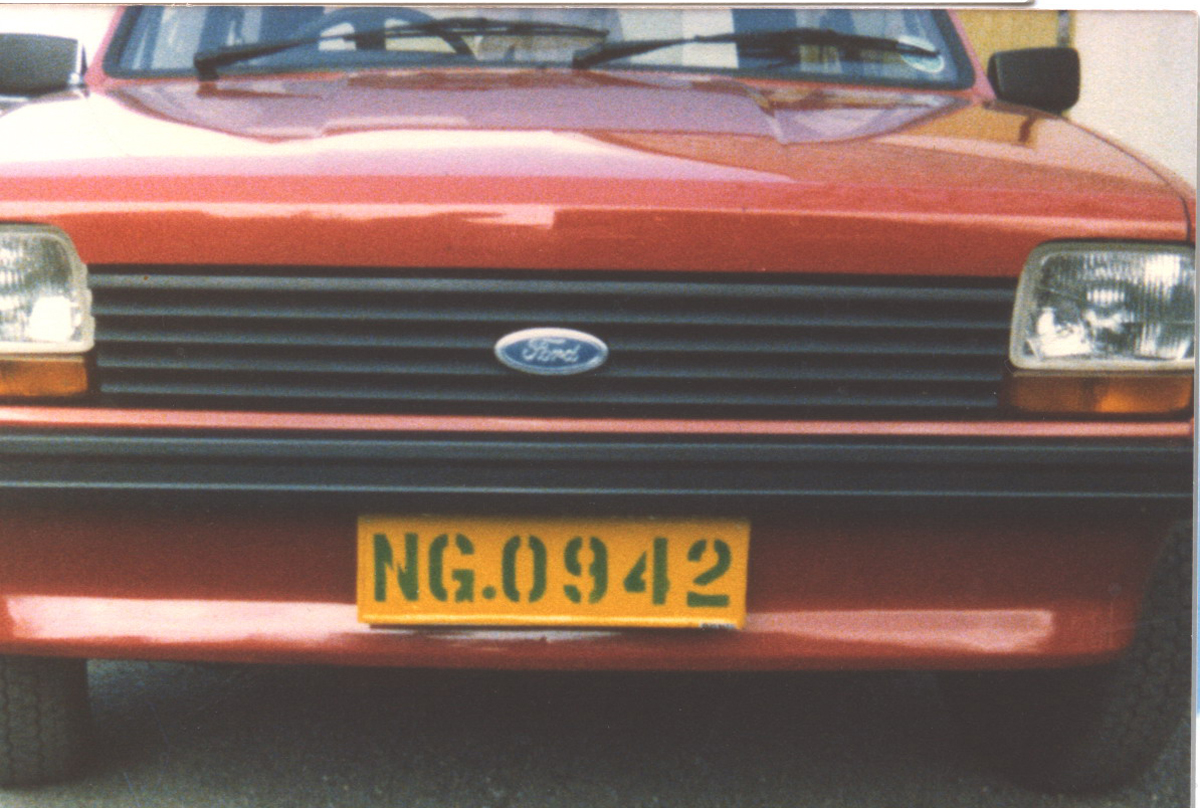
About the same time, Nip Thornley saw a similar diplomatic Ford Fiesta NG 0942  in Britain, but the code doesn’t indicate the British embassy (01)…..

NG.0942 came from Saigon embassy 09 or 42!

NG.0942 came from Saigon embassy 09 or 42!

Below:

This Land Rover Y*00137 was shot in Saigon by Murray Bailey  at the British Embassy in Saigon, during the 1970s and is one of the few we can be sure of, attached to a specific embassy.   Here, the 001 must(?) be for GB, car 37, possibly?

Later unknown CD or semi-CD type, using Y or T and five numerals.

Y*00137  Later, unknown CD or semi-CD type, using both Y and T and five numerals with leading zeroes, circa 1976.    Brumby archive, via Murray Bailey.
The 'T'  variant on 1970s Vietnam diplos.

The ‘T’ variant on some  1970s Vietnam diplos.

~~~~~~~~~~~~~~~~~~~~~~

Below:  The first Vietnamese I ever saw, was in Cannes in 1957 and is the only one I have ever seen with a VN – and with Chinese script included in the plate.    Apparently it reads ‘”Viet Nam“.   The N indicates the North of the country (Hanoi) the B was the code for cars and the M was serial.

No such ideogram-embellished plates existed in Viet Nam, I am sure; this smart American Ford Fairlane  had been specially plated to bring home to France by a departing French senior colonial administrator, I would suggest.

1957 North Viet Nam seen in France.

1957 North Viet Nam seen in France.  White on black.

Finally, below, the unidentified category of embassy or foreigner plate represented by this single example I saw in Saigon in 2008.    Can anyone help?           YES!

Feb. 2013 – Alex Kafka finds the definitive answer to this QT question in his detailed comment below, dated 25/1/2013 …..QT stands for “quốc tế” (‘international’)

QT - Unidentified type in Saigon, 2008.

QT – Unidentified type in Saigon, 2008.   Now see Alex’    International Organisations explanation.       Brumby archive  


Swazi latest series – plus

January 25, 2013

My native guide tapped me on the shoulder with his panga.  “Look, Massah, and approach slowly.”

A single young plate had broken away from the Manzini herd and was grazing in the beach car park outside Plettenberg Bay, ZA, only yesterday, March 24th.

Steadily, I raised my Lumix to my good eye and took a good long focus on the strange sight – the first of the species I had seen.     Click – click – click   –  and the item was permanently recorded in my digital archive, ready to exhibit to you chaps once it had been skinned and stuffed.

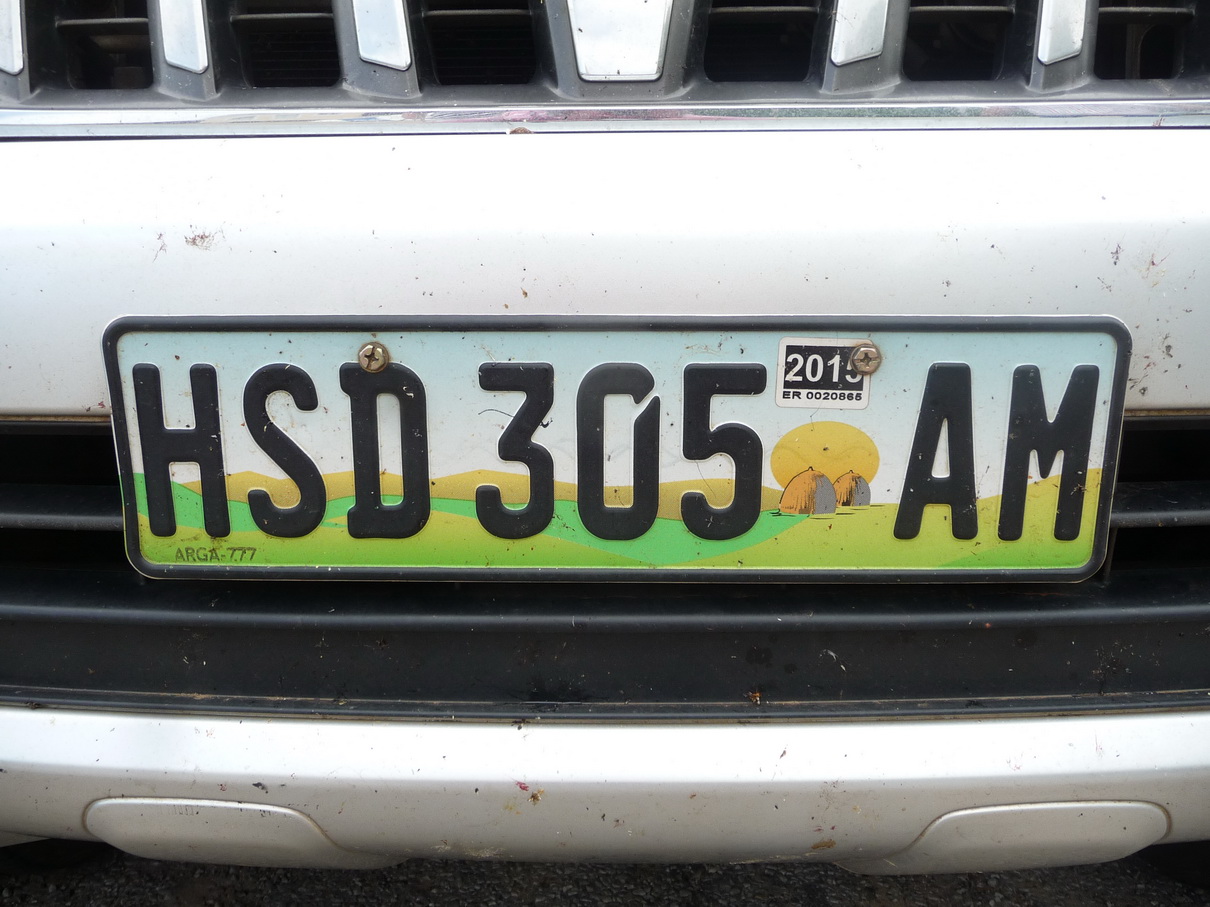
HSD 305 AM Swaziland 2010 series.  M= Manzini.  H305A is the serial

HSD 305 AM Swaziland 2010 series. M= Manzini. H305A is the serial

(SD3)_HSD 305 AM_VB2013

HSD 305 AM Swaziland 2010 series.  M= Manzini.  H305A is the serial

HSD 305 AM Swaziland 2010 series. M= Manzini. H305A is the serial

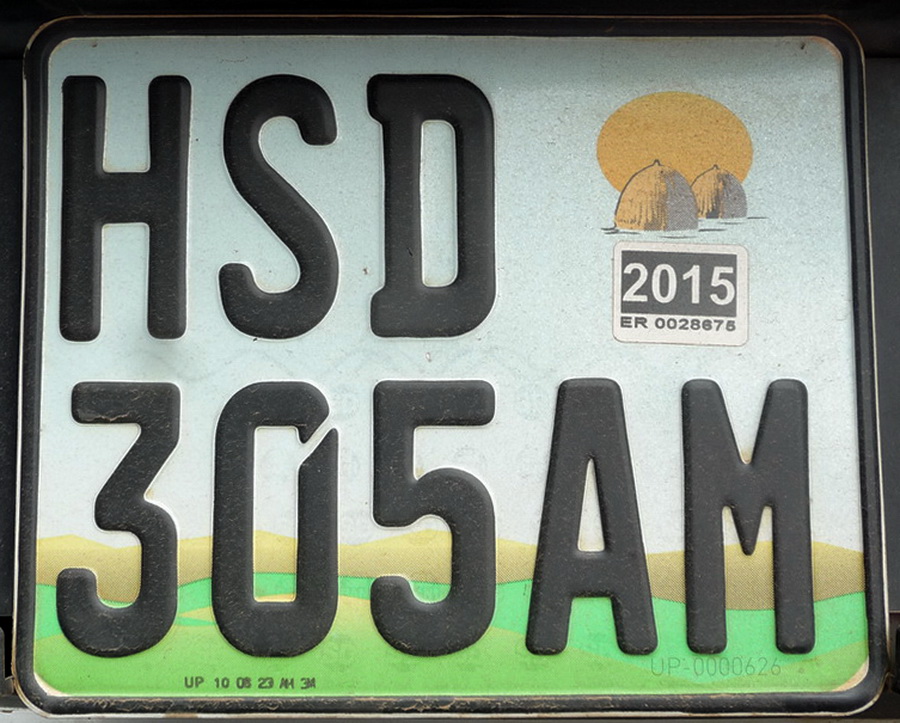
rear plate.

rear plate.

Clearly the plate-makers in ZA were involved in the design of the first Swazi plate change for many years!   These are an exact replica of the current ZA provincial plates.

Let us not leave Southern Africa without stepping back over 60 years to the photos taken in England at that time by hero Pemberton.     They are left again, for your own identification:(ZA1)(Ntl1)_NU 212_JP1940svb

Note the massive dimensions of the international ovals, which were reduced by a later convention, detailed by a most interesting forthcoming research document from Placamundi.
(Z1)(NR)_K 2440_JPvb(Z)(SR)_G 4210_JB1950svb

Thank goodness for the preservative power of film!

~~~~~~~~~~~~~~~~~~~~~~~~~~~~~~~~~~~~~~~~~~~~~~~~~~~~~~~~