Colony of North Borneo ((CNB) until 1963)

November 17, 2012

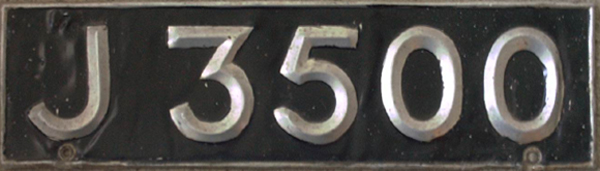
Member John Pemberton EU83, a venerable nonagenarian from Suffolk, has reminded me that he has a plate, J 3500, from one of the the little-seen British colonial enclaves of  Borneo island, now known as Sabah state in Eastern Malaysia.     Independent  in 1957,  Malaya later combined with the former British territories in Borneo island, Sarawak and (then) the Colony of North Borneo to form Malaysia in 1963.    To see a plate from British Borneo (or from Labuan Island – a onetime Straits Settlement)  in those times was a rare sight indeed.

I have written to him thus:

Mr. P. – You write of having a ‘CNB’ numberplate, J 3500 – the CNB only identifying the Colony of North Borneo as it was designated between 1955  and 1963*, when it assumed (PTM) – six years after Malaya’s 1957 independence from Britain.   After another ten years, in 1967, the Malaysian  (PTM) international oval changed to (MAL) and vehicles from (by now, Sabah) would show the (MAL) oval IF they ever travelled outside Borneo or mainland Malaya – most unlikely.
British North Borneo 1950s-60s.     J=Jesselton (now Kota Kinabulu).

You sent me a photo of J 3500, and I have it my Sabah archive as above: Glorious!     You say that the late Roger Anderson passed it to you in 1976.   Did he ever say what vehicle it came from?   Did he see it in Britain?     John P replied verbally that a very old friend and an early spotter obtained it ‘out East’ in the 1950s, but was unsure of its origin.

The writer DID see Sabah once in London on a Mini, in 1963*, and fortunately, photographed it for posterity:

J 6186    1963 sighting in London of Jesselton (J) Morris Mini-Minor.    Showing the new Perseketuan Tanah Melayu (PTM) oval, which, since 1958, had replaced  (FM) (Federation of Malaya).   Until 1963 the oval  for this region would have been (CNB)          Brumby archive

I have now visited Sabah twice and collared quite a few of these earliest plates on photo – it’s a jurisdiction where old cars are kept running,  and, happily, the authorities don’t force owners to shed their original plates whenever a system change occurs.

Although, when Mainland Malaysia recognised that it’s newly-acquired Bornean territories, Sabah and Sarawak were already using regional codes identical to their own, Sabah hurried to add a suffix ‘S’ to their existing registered vehicles, (and Sarawak added a ‘Q’ suffix) to distinguish them, should vehicles move between Peninsular Malaya and north Borneo (now East Malaysia).   The Mini above would have adopted J 6186 S.

Newly-registered cars in Sabah first adopted an ’E’ (for East Malaysia) preceding their town code (E J-Jesselton, E S-Sandakan etc.)    In Sarawak, they added a ‘Q’ suffix to existing plates and a ‘Q’ prefix to new registrations.    The ‘J’ for example, which could have come from Johore (Peninsular Malaya) or from Jesselton (Colony of North Borneo/Sabah).

Until these changes had been implemented,  at that confused time, a PTM-ovalled car seen abroad after 1963, registered  ‘K’ nnnn could have been registered in Kedah (Peninsular Malaya), Kudat (Sabah) or Kuching (Sarawak)!       ‘T’ could come from Trengganu  (PM) or Tawau, and ‘S’  from Sandakan (Sabah), Singapore (old) or Sibo (Sarawak).

Little wonder the licensing authorities had to act!

The post -1963 Sabah plates had an ‘S’ suffixed to their original registration. K=Kudat, S=Sabah.   Most plates were re-made from scratch, for appearance.    Brumby archive

NEW vehicles were issued with the usual codes and a new ‘E’ prefix:

The Sabah system from 1963.   Later, having issued to 9999, a serial suffix A and B would be needed, in three of the Sabah registration districts – EJ-A, EJ-B, ES-A, ET-A.    Brumby archive


Eastern Malaysia – Sandakan – with serial suffix A 3024.    Brumby archive

There are still, dumped in kampongs, a few of the single-letter plates to be seen.   And photographed.     Some plate collectors would buy them off the village headman and take them away, but I like to leave them in their context, in case another member should chance by in years to come!

~~~~~~~~~~~~~~~~~~~~~~~~

Mr. P – It is so evocative to read that in your early spotting day, you saw Danzig Free City plates – and India, including Jammu & Kashmir!     Did you take photos of any of them in those times?

LATER  (John Pemberton passed his album in January 2013 to the Club, as a result of this enquiry,  and the 80 or so pictures will be progressively released on the Blog.

Any other unseen material out there, readers????

BORNEO ADDENDUM

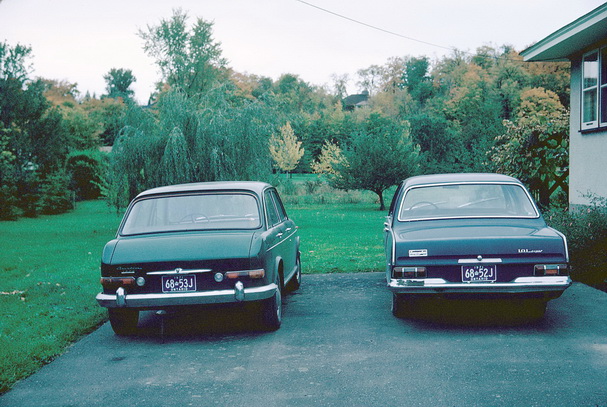
The remarkable sight on two Jesselston-registered VW 1500s in London in 1969.   Note their numbers.

The remarkable sight of two Jesselton-registered VW 1500s in London in 1969. Note their numbers.     Brumby archive

p.s.   Does anyone have a picture of a Colony of North Borneo oval (CNB) or a State of North Borneo oval (SNB)????      We assume a few were made.


1955 Pakistan

September 30, 2012

PAKISTAN AFTER 1947 INDEPENDENCE


Denis Fowler is a retired diplomat who served in Iceland, Nepal, and Pakistan amongst other places.

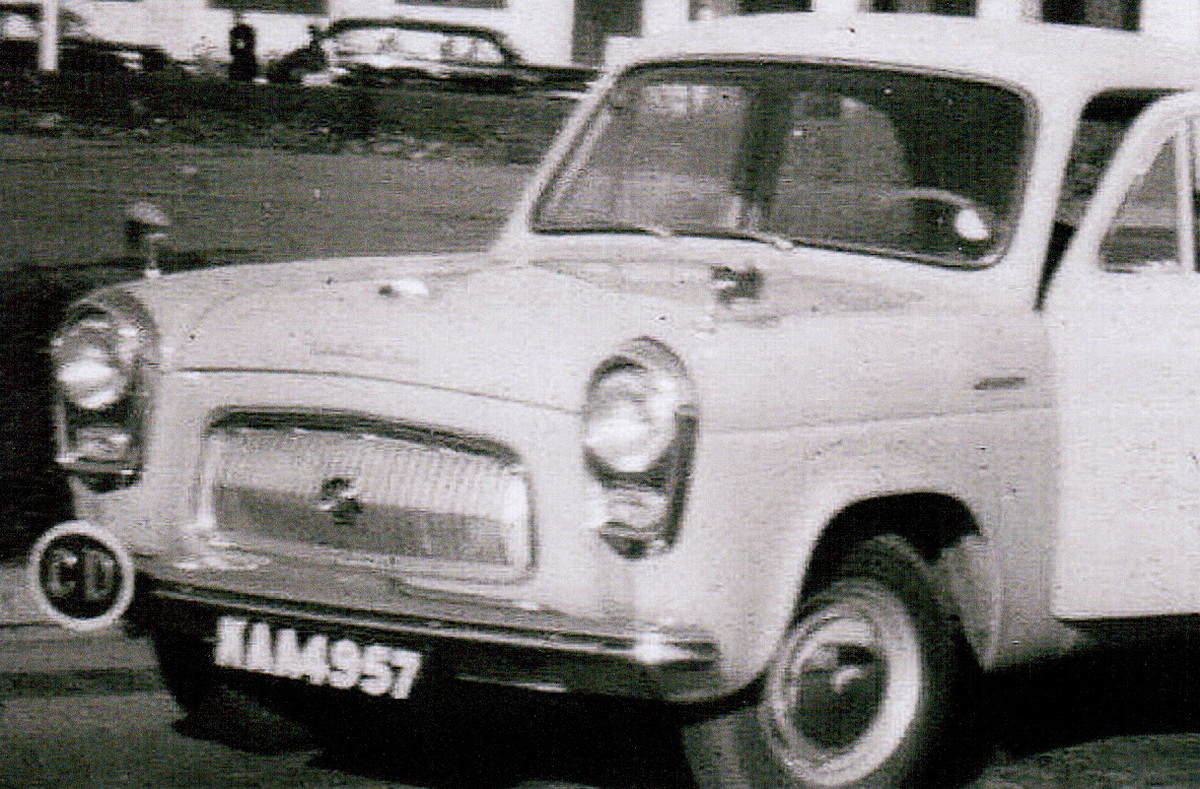
He has kindly trawled his old photos and slides and sent this (slightly fuzzy) shot of his Ford Prefect, on standard  KA (Karachi) Pakistan plates, but identified as a diplomatic vehicle by the CD oval, which had silver letters on a dark green background and a white rim.    He adds that he bought the Prefect from UK Ford dealer Lex via  the tax-free Home Delivery Export Scheme in August 1955, and ran it for a couple of months before handing it back to Ford for shipment to Karachi.

He knew that upon becoming a republic in March 1956, Pakistan was planning to switch from driving on the left to the right, and so he ordered the new Ford in Left-Hand-Drive, but after he arrived in November 1955, the plan was scrapped for this extraordinary reason:  camel-drawn carts were then used to take the imported goods from Karachi docks to all parts of Pakistan, by day and by night, with their drivers sleeping much of the time.

It became recognised that the animals could not be trusted to walk unattended on the ‘wrong’ side of the road to that to which they had  been accustomed for generations.    It would have caused accidents and chaos, and so the new republican government never proceeded with its plan – which had probably merely been a symbolic act of casting off their imperial yoke, and not of any actual practical value.

We hope to see further pictures from Dennis’ delving in to his photos and slides!

His daughter spent periods in Zimbabwe, Malawi and Bolivia and his son drove back to Britain from Nigeria in a Landcruiser.    They have been asked to inspect their albums for period plate shots!

1955 British Ford 100E Prefect in Karachi, 1956. KAA 4957


Readers are advised to ask for such pictures of any old pals who once served abroad.    They are a unique record of extinct plate types, and will not generally be recognised as being of interest to their heirs, when they inherit parents’  old photo albums and transparencies/slides.      Sad to think how many great pictures are thrown out in house clearances…..


————————————————————————————————————————————————

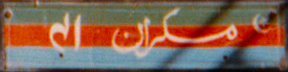
Below is an unusually-plated Morris Minor, also in Karachi, but shot by me (VB)  in 1965, and which for years I had never properly identified.

Apparently the Urdu script reads ‘Mashriq’ 41  – any ideas, anyone?

ANSWER from Europlate member Kurt Leothold  –

 “The word  correctly translated is: MAKRAN, a province from Baluchistan, Pakistan (Gwardar).”

Wikipedia notes: Makran Division (Persian: مکران ) was an administrative division of the Balochistan Province of Pakistan, until the reforms of 2000 abolished the third tier of government.    Districts of Makran Division included GwadarTurbatMand and Panjgur.

Makran is the ancient name for Baluchistan and was an exclave of Oman until 1958, when Pakistan bought it from the Sultanate of Oman.

So – thanks to Kurt, a 47-year-old puzzle eventually explained!      (The low number 41, the colours and the style of the plate would indicate that it was a Morris Minor of the Khan/Sultan’s fleet – or possibly of some high-ranking State official.)

~~~~~~~~~

Finally, one of the very few Pakistan plates seen in Britain since 1947 Partition – a VW Camper from Quetta in Baluchistan, sporting a PAK oval provided by the Karachi Automobile Association.     Seen in Kensington Church Street, London in 1964, by VB.

QA 6209, a Quetta plate in 1964 London.

More finally, I parked my Peugeot 404L  next to a pair of diplomatic VWs in Rawalpindi in 1968.     That same CD system is still in use in Pakistan, 44 years later!

I doubt if the airline offices are still intact, as such places have become targets for angry mobs fretting about cartoons and daft films.       It was a peaceful and pleasant country then, with the Moslem population kind and hospitable……

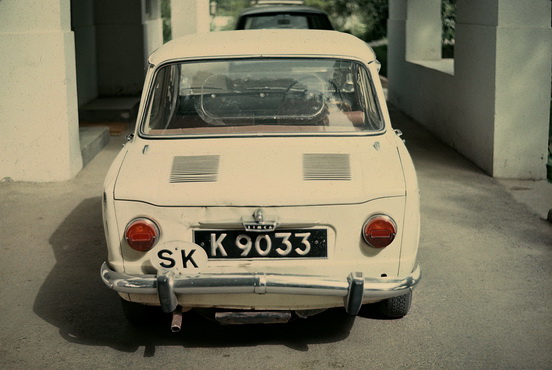
BELOW: When EU38 visited the newly-built British High Commission in Islamabad to collect my mail from the Poste Restante service they used to offer travellers, I was amazed to come across a car from Sarawak – the first I had ever seen!   And as used to be the convention, it showed the international oval SK, as supplied by the Kuching office of the AA.

How unusual to see a vehicle from Borneo in the ‘stans!

Sarawak K 9033 outside the BHC, Islamabad, 1968.   K=Kuching.


(PAK1)('47~)(un)_PR9679_comp_VB1965_resize

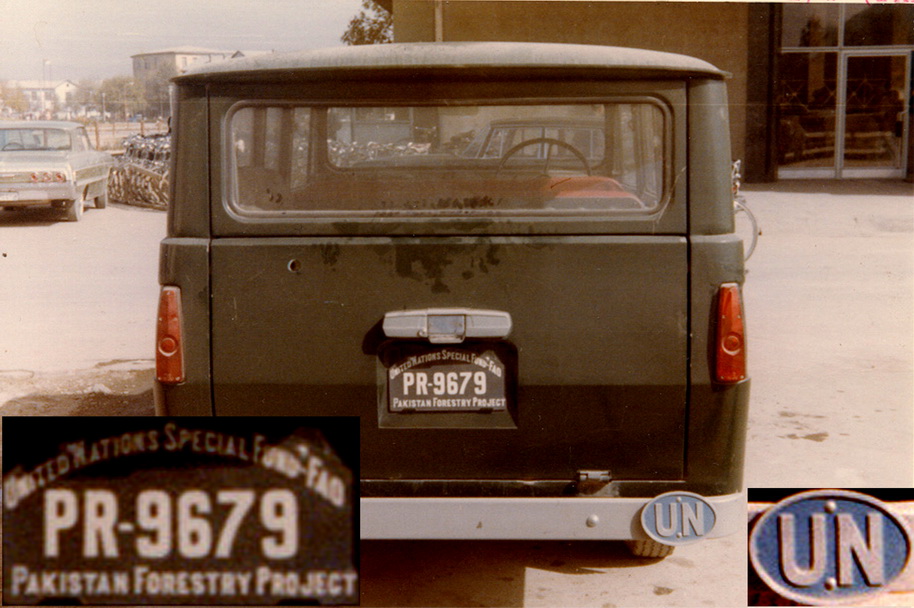
PR-9679  —  Seen in Karachi in 1965, this Jeep with United Nations connections, belonged to the Pakistan Forestry Project and was registered in Peshawar in the regular series.                                 Brumby archive 1965


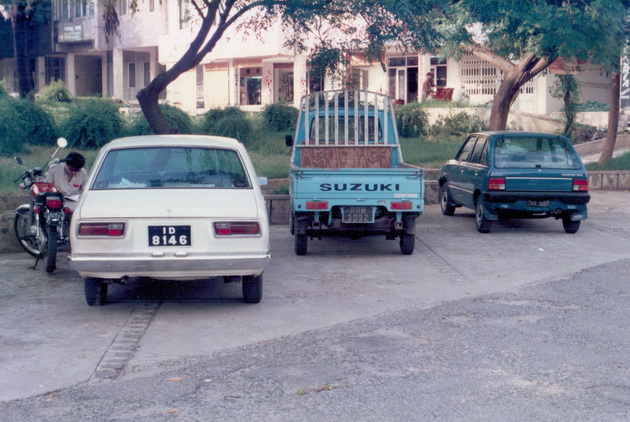
ID 8146 ID was the newly-created  code for the 1960’s-built new capital city of Islamabad (PeaceTown),  when this photo was taken in the 1970s, on a Datsun 1200.      There were still very few  such fully-imported cars in neighbouring India, due to the shortage of foreign currency with which to buy such, yet Pakistan seems always to have imported  from anywhere without difficulty, even though it must have been even shorter of money.      Previously, British Ford 100E Anglias were built there from parts sent from Dagenham. and Morris Minors were assembled in India, alongside the eternal Morris Cowley a.k.a. the Hindustan Ambassador, Indian production of which 1955 design finalised in 2013!.      The Suzuki pick-up is from Peshawar – PRH 3032.    Soon such Japanese products displaced the British-built vehicles  which had held sway from 1900.                  Brumby archive 1970s (Capt. Pointon-Taylor)


KAW 6444  --  red-on-yellow Karachi Trade-plate on a new British Vauxhall Victor, there in 1965.     Brumby archive.

KAW 6444 – red-on-yellow Karachi Trade-plate on a new British Vauxhall Victor, there in 1965.                        Brumby archive.


(PAK1a)('47~)_KAE9800 Urdu_comp_VB_resize

KAE 9800 — It was unusual to see an Urdu-scripted plate in Pakistan in the 1960s. This oddity is seen in Lahore in 1965, on a Morris 1000, registered in Karachi.                            Brumby archive 1965


Unknown African and French IT plates

September 29, 2012

In the 1970s, a much-travelled pal of mine, Murray Bailey, photographed this yellow on green IT plate 008-IT-22, but he forgets where, only that it was in West Africa.       It may be Senegal, but confirmation welcomed!     What a shame the moped behind is not in full picture, to give us a clue…

Senegal – or elsewhere??

About 1963, I saw this American car in London, IT 0623.    It could have been from any of the overseas French territories of the period – but which??

IT=Importation Temporaire

Unidentified temporary Importation plate for a French territory-1960We used to think that all the green IT plates we  saw were French Diplomatics, and only learned much later that they were given out to any category of foreigner who was in a country temporarily (possibly with the vehicle let in without payment of import taxes).    Aid personnel and non-diplomatic embassy staff were among the groups registered so.


If they really were diplomats or consular officials, they would carry a separate oval plate or even have the letters CD or CC made into their IT plate.       (Were the French IT plates coded for the users’ country of origin, then

French Temporary Import of Diplomatic vehicle, in Paris, 1960s.    The zeroes probably indicate the ambassadorial car…  The boot/trunk  label on this American-made 1950s Ford Sedan tells us that this was a manual gearbox car with an optional overdrive, before automatic transmission became standard on all US cars.

A non-diplomatic temporary importation to France, in  1964 London, on a then-ubiquitous Renault 4L.

And finally, just for interest….

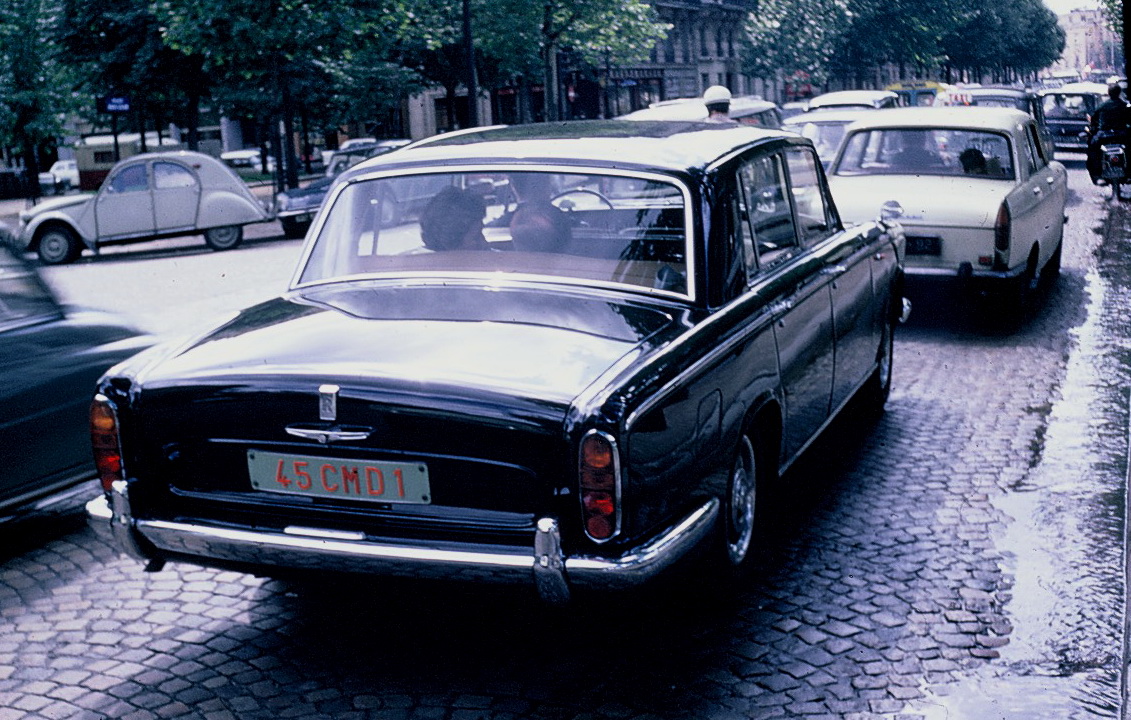
The R-R Silver Shadow of the British Ambassador in Paris 1970s.


Which Argentine series is it?

September 27, 2012

Seen in Buenos Aires in 1989, I never did find out what category of plate this was.     Any ideas?

Thanks to Bernt – see Comment below.

Unknown RA m/c

This Argentine Dealer plate was an oddity – and what a great thing to see!   (see Comment)

Argentine Dealer plate on locally-built Fiat

Because Argentina made its plates so well in years gone by, many survive in excellent condition, as has this San Vicente enamel example from 1929.   I found it  in a massive old milk factory in which a man named Nestor Corsi made new Ford Model T’s out of original parts which he gathered in from farms all round Uruguay and Argentina.    He manufactured anything he couldn’t find, including any style and colour of body, and sold them all to collectors abroad, mostly in USA and Switzerland, he told me.

1929 enamel plate from Argentina (VB collection)

It used to be at least twice a year we would see Argentine cars in London, during the 1960s.    Here is a Beetle near Putney, as always in  those times, carrying an international oval!

Cordoba-registered VW in London in 1968.

And a big American car of the period, from province of Buenos Aires, rather than from the city area.   It displays the usual very large RA oval which owners obtained from the Automobile Club of Argentina, as witness their shield.  Seen in Kensington, 1960s.

The oddest Argentine sighting for me was a 1920’s car bumbling along the road from Kuching to Lundu in Sarawak, in January 2011!     It belongs to a family which is circumnavigating the world.    Their movements are documented in several sites, one of which is:

http://www.dailymail.co.uk/news/article-1365406/Are-nearly–Couple-Herman-Candelaria-Zapp-travel-world-11-years-having-children-way–theyre-going.html


Is there a new Italian type?

September 27, 2012

Victor Brumby in Italy in September 2012.

I followed a tractor and trailer in the countryside at dusk near Orvieto last week, which had both tractor and trailer plates in medium BLUE on yellow, not black on yellow as usual.     The trailer carried the same registration as the tractor (which I seem to have lost!), but had the red ‘R’   for Remorque (trailer).  These were both pressed plates, not painted.      It was too dark to take a photo, and indeed, my Italian would have been inadequate to explain to the rustic worthy who piloted the machine, the bizarre concept of xenoautonumerology – and his part in extending the boundaries of the science.    In other words, I couldn’t stop him, explain and photograph.    BUT – I DID follow him for about 6 kilometres before giving up.

Days later, I saw another blue on yellow tractor plate, that time without my camera (I am too old to use a smart-phone with built-in film unit) and the system was identical.     However, most of the many other ag. tractors and trailers I saw were as we usually expect, viz: black on yellow.

I await a response from out Italian pals, who may know of this type.

March 2014……Well –  no-one else  has reported this blue/yellow ag. plate AND I have been back to Umbria to search for it, during 2013 – so I must explain my faulty experience by reference to one or more of the Italian beers which I enjoy before I go spotting in the Republic!      

Moroni, Moretti and Magneto Marelli can all share the blame!!

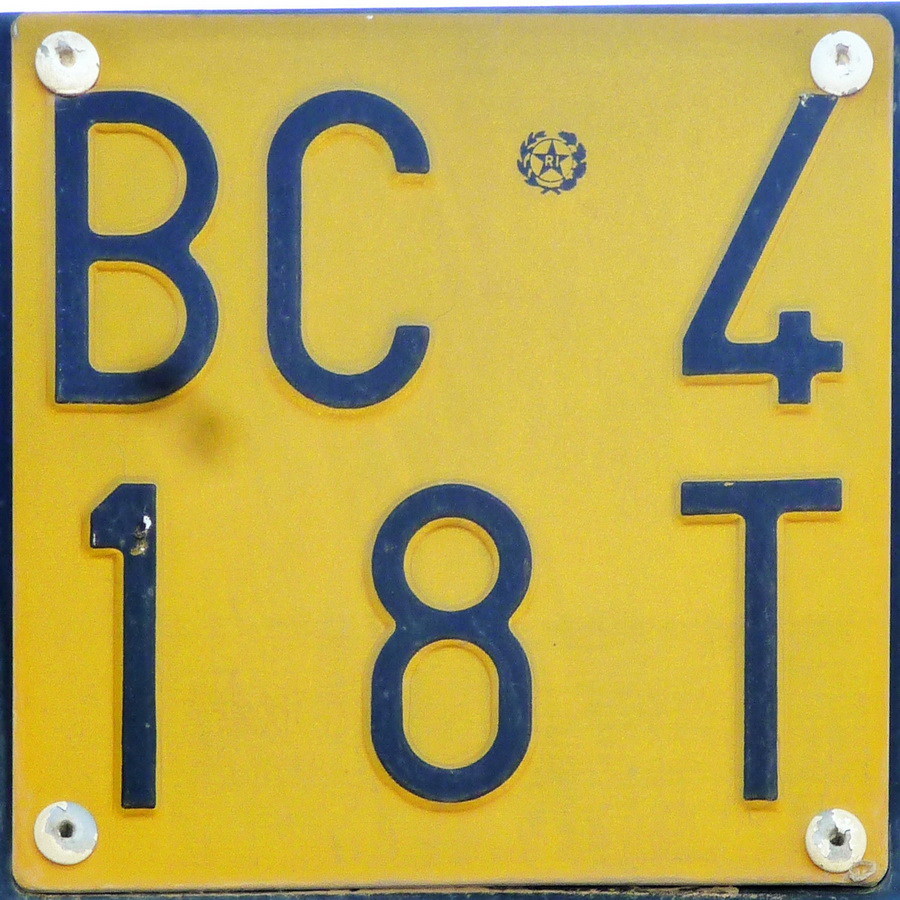
BC 418T – Normal agricultural tractor series since 1999. No regional identifier.

Rimorchio Agricola (Trailer Agricultural). Current series since 1999.

~~~~~~~~~~~~~~~

The paper temporary plates are still sometimes to be seen – see 27140 P 5.    The first I photographed was in 1965,  51962 C 1, so that type has been running for a long time!

P5 is the regional code for Viterbo interim plates, used on this Fiat awaiting technical approval.

Circa 1965, this new Fiat 850 carried temporary plates while it awaited inspection and allocation of its permanent plates.      Code C1 is for Bolzano region.                                             Brumby archive

~~~~~~~~~~~~~~~~~~~~

RPWO mentions that personalised Dealer plates are permitted, which explains this oddity, seen at the customs yard at the Adriatic port of  Ancona.     Perhaps this dealer trades in importing and exporting vehicles?

2012 personalised Italian Dealer plate.   Brumby
~~~~~~~~~~~~~~~~~~~~

In Trento, just before commencing the Brenner Pass into Austria, I paused for lunch (at an excellent Japanese restaurant – unusual for Italy!)  and found this this specially-plated Civil Defence 4wd with the TN code for Trento.

Trento is one of the three areas issuing these official Civil Defence PC plates, with Bolzano and Aosta.

~~~~~~~~~~~~~~~~~~

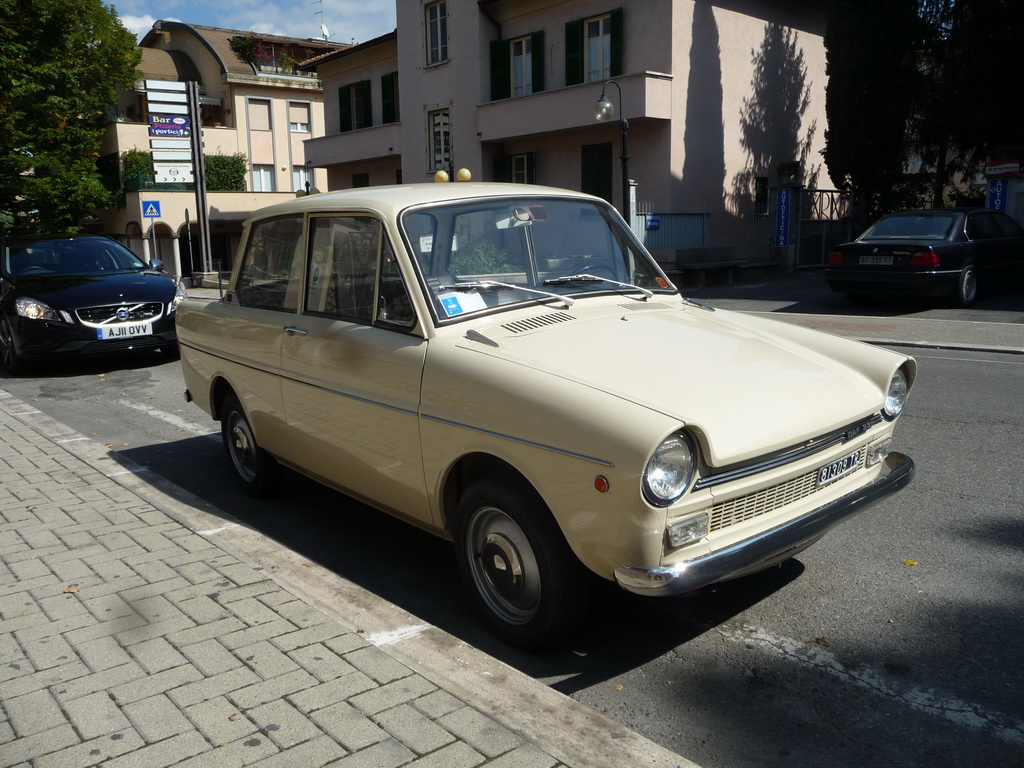
An unusual DAF 33 belt-drive car from the 1960s was awaiting photography in Orvieto, bearing the old black series plates.       In amazing condition, and clearly the owners’ pride and joy.

Dutch-built ‘Daffodil’ model 33 car from the 1960s, still working in Italy 2012.

DAF 33 rear plate from TR – Terni.      VWB


Canada – odd pre-war Quebec bus plate

July 6, 2012

            … The now-defunct but much-respected old vehicle journal in England, Old Motor, depicted this shot of an AEC bus in Québec in 1933, and it shows an X prefix, which is not noted elsewhere.     Could ‘X’ have been a code for service/city buses?  (now see John weeks’ reply.)

Until the 1970s, British vehicles were very popular in Canada, even though US factories had plants there, building several brands of tough US models.    A visit by the writer in the 1970s reminds of some common British makes in service then – an Austin 1300 (named Austin America for export to North America) and the bigger Austin 1800 (dubbed The Land-Crab) with a Vauxhall Vict0r, consecutively registered in Ottawa, Ontario.

This Austin America carried a ‘Q’ international oval, to display the owner’s pride in his province and perhaps his wish to secede from Greater Canada, the better to develop the bizarre patois of the ancient French language, which the Québecois have made their own..

    .               .

.

.

~~~~~~~~~~~~~~~~~~~~~~~~~~~~

British Commer lorries were represented in Canada, as this 1954 photo shows of a Government vehicle in Ontario – where the small ‘C’ stood for Cargo (or Carrier (or Commercial) vehicle).    Several interpretations worldwide of the letter!   .


Trezzo Specials

April 10, 2012

Among the amazing plates displayed at Trezzo, near Milan, this weekend (Easter 2012) were these, shown for the benefit of those who could not attend – but who have access to the Europlate Blog!

Image

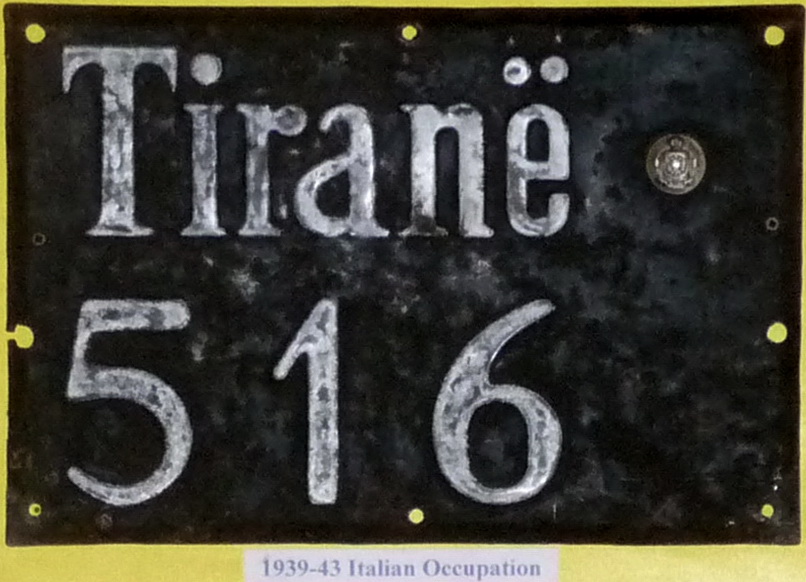
Albania was occupied by Italy during WW2 (1939-43), and dedicated Italian plates were issued to the few vehicles in circulation there.    Probably they had no plates before – or they were made up of goatskin, which hardly lasted the year between those annual emission tests ……

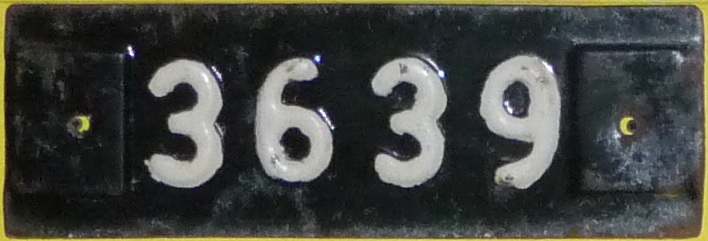
Italy issued some great extra-territorial plates whenever it erected its flag in some fortunate corner of the world.   Rhodes, Cattaro and Eritrea are examples.

Here, from Trezzo, is a plate from the Eritrean Liberation Front fleet of semi-military vehicles, all now abandoned in the shifting sands, but awaiting your visit with a screwdriver.     (Take some bail money with you in case the plan goes wrong.    And some long books.    It may take some time to organise your evacuation – you will certainly miss the 2014 Convention!)

The ELF operated between the 1960s and 1990s, so this plate may be of that period.

Image

Interesting that opponents to the ‘government’ were able to obtain official-style plates.   We know that neighbouring Somalia has long abandoned plating their militia Toyota pickups.

This ‘font’ is characteristic of Ethiopia, which supports the ELF, so probably these plates came by way of aid to their administrative HQ at Tent 14, Dune 32,883, Boiling Desert.    A great place to fight over.

~~~~~~~~~~~~~~~~~~~~~~~~~~~~~~~~~~~~~~~~~~~~~~~~

CITES

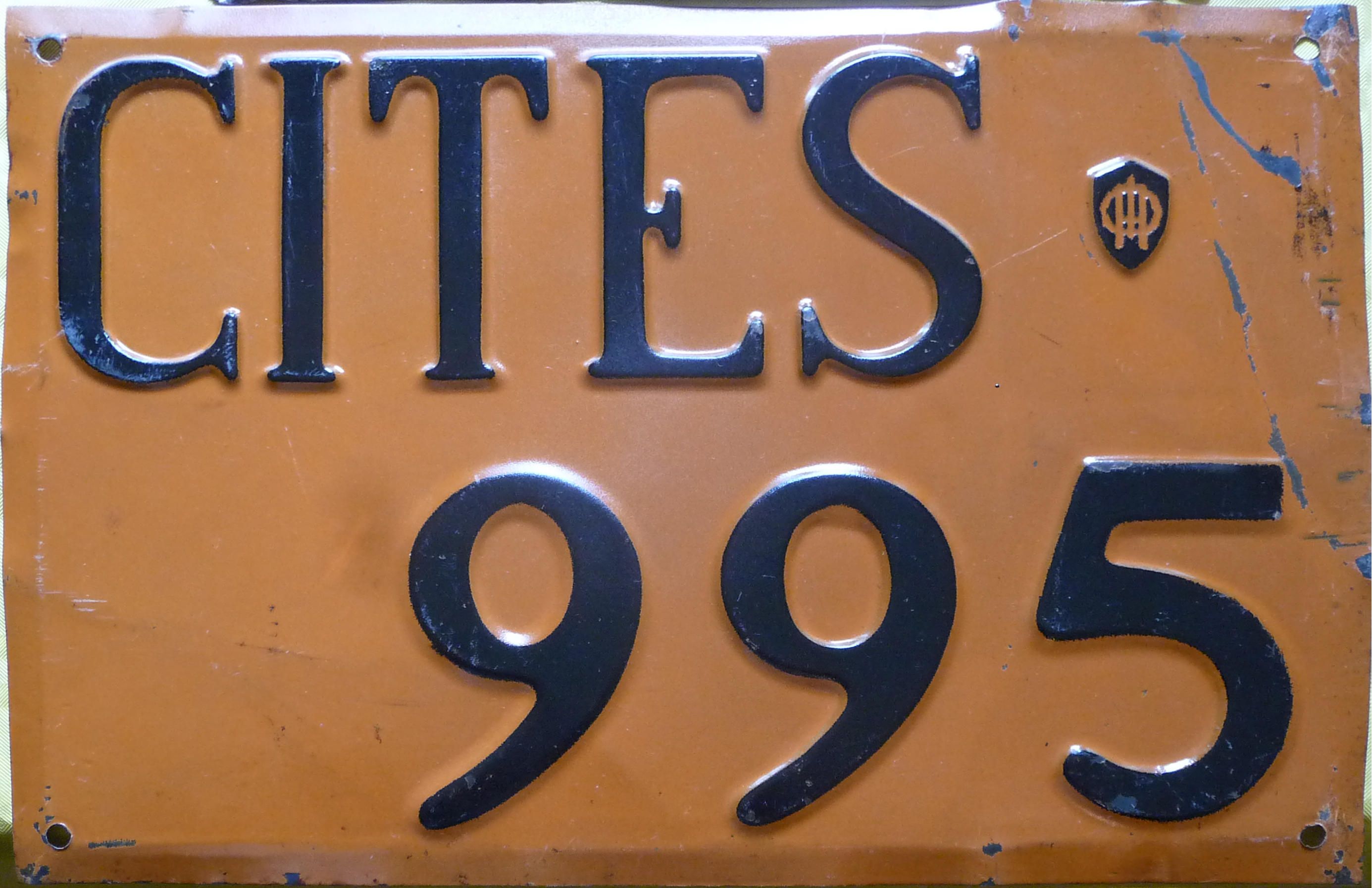
After WW2, several international missions operated in Italy, to assist in the post-war recovery and their personnel were issued a fancy orange plate marked with the initials ‘CITES’, which Roberto Solbiati has kindly decoded for us as:

CIRCOLAZIONE TEMPORANEA in ITALIA di ENTI STRANIERI .

Image

To make an acronym that they could read, they put ITALIA before TEMPORANEA.
So the sequence of words is :
C – Circolazione – (Circulation (licence))
I – (in ) Italia
T – Temporanea – (temporary, for duration of posting)
E – (di) Enti – (entity, organisation, mission)
S – Stranieri – (strangers, foreigners)

(Temporary Licence for Foreign Organisations in Italy.)

Shortly after WW2, a new symbol was embossed on the (rear only) Italian plates, depicting three swords on a shield; this was the symbol of the National Disabled Veterans’ Association.      This CITES plate shows this emblem well.

The SITES series ran from 1947 to 1952, we understand.

The SITES plates ran alongside the ‘EE‘ plates issued to foreigners who purchased Italian cars there, to export to their home countries. (EE=Escursionisti Esteri=Foreign excursionist/visitor)

~~~~~~~~~~~~~~~~~~~~~~~~~~~~~~~~~~~~~~~~~~~~~~~~~~

I will add more pictures of the  other Trezzo plates which made me gasp, in a later Blog.


1965 Chad Citroen 2cv

March 23, 2012

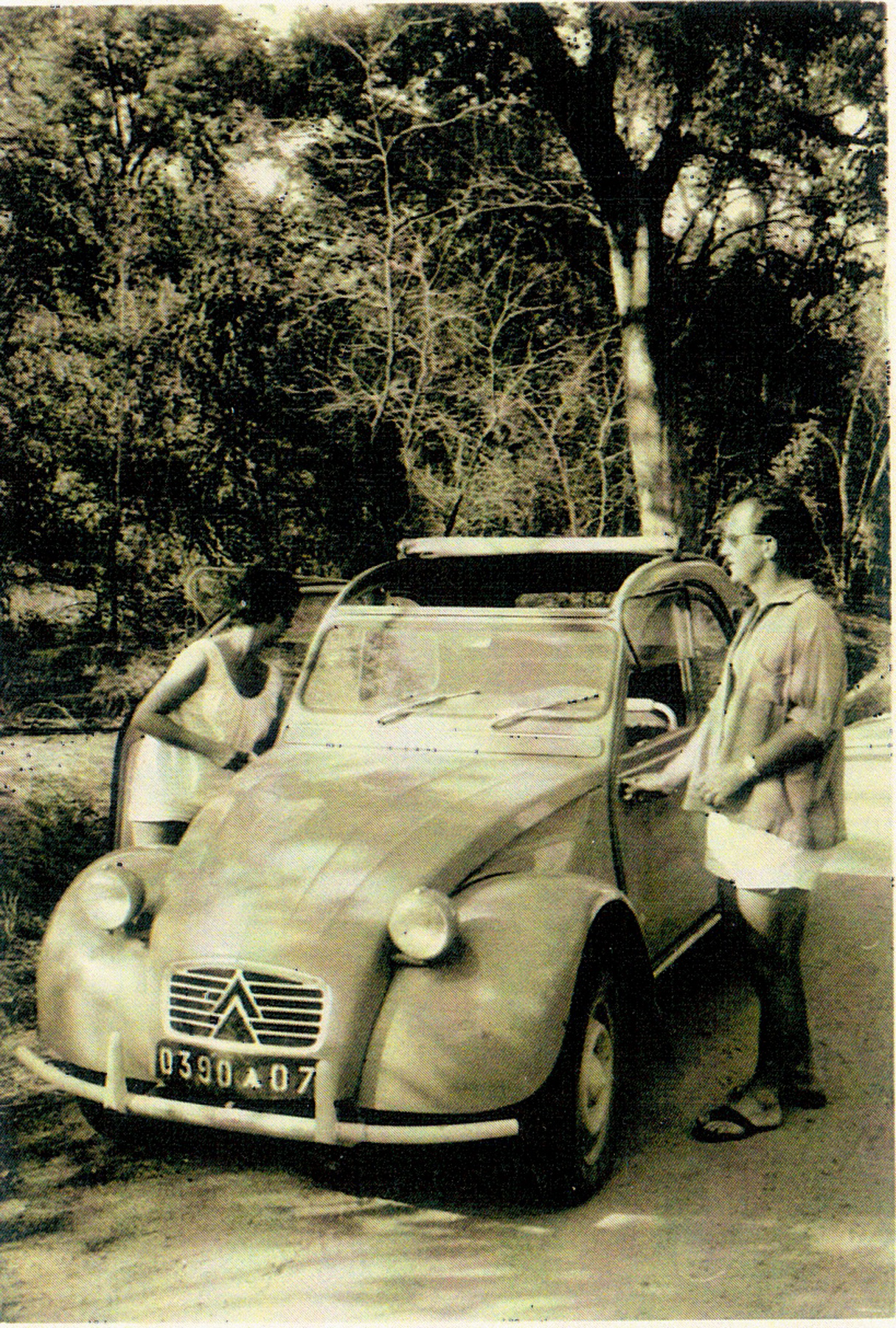
Ted van Rijn lived in Tchad overseeing the design and build of a new Heineken plant at Moundou in 1965.

There he ran this Citroen 2cv, 0390 A 07 – the 390 th. registration in the province 07 – Eastern Louoma.      There were no roads and the Citroen was the ideal vehicle for the terrain.    Chad had been independent from France since 1960, when it had formed part of French Equatorial Africa.    As usual in French Africa, numberplates were made up with stencils and white or silver paint, often in this characteristic font.


Whose Vietnam photo?

March 17, 2012

Who took this shot in the 1960s?   It’s a 1960s-70s white on green Viet Nam foreigner plate, exceedingly rare to sight in Europe.     No claimant as at Dec 4 2013!

The anonymous picture (with the bumper attached) came to the Blog via Jim Gordon in West Oz, but Jim says it was not he who took it…….

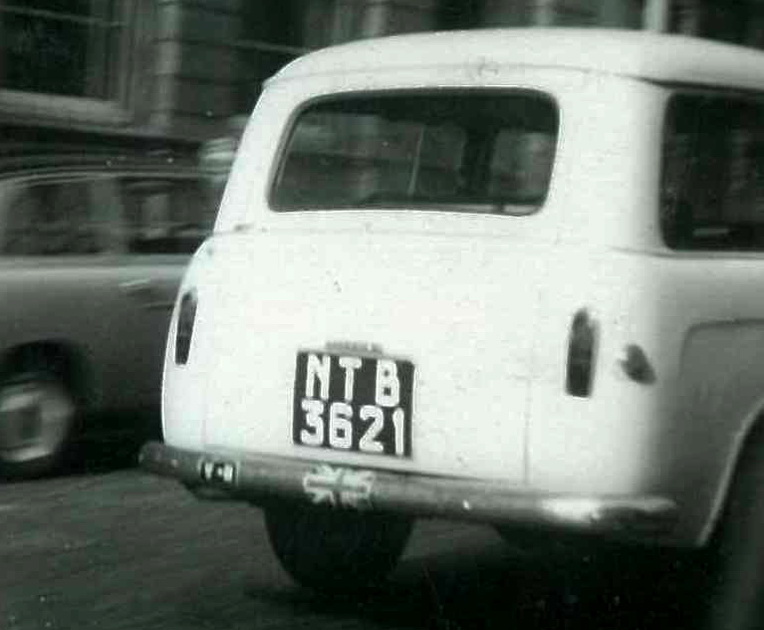
Taken by an anonymous cameraman, seemingly in London during the 1960s, we believe. On a Hillman Husky.

This anonymous shot shows the Hillman Husky bearing a home-made VN oval on the bumper. The bumper was missing on the later shot, by Vic Brumby in Notting Hill Gate a little later, below.
 

The owner told Vic Brumby, when questioned, that he was an  ‘educational missionary’  and that his next posting was to Tchad.   He gave me a picture of his car in his pre-Viet Nam posting – BK = Medan,  Sumatra.      This was a well-travelled Hillman!

A well-travelled Hillman Husky in Medan, Sumatra (BK) before re-registering NTB 3621 in Viet Nam, then Tchad.


Antigua & Barbuda

March 17, 2012

A day visit by cruise ship to Antigua (St. Johns) on Feb. 3, 2012, rendered some new items of interest.

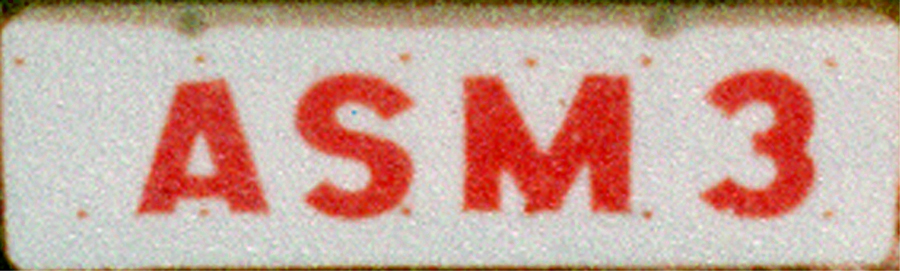
First, the original  Dealer (Motor Trader) plates had been changed a few years back, from red on white with Dealer initials and a low number (usually painted).                    ASM 3 is a 1981 example:
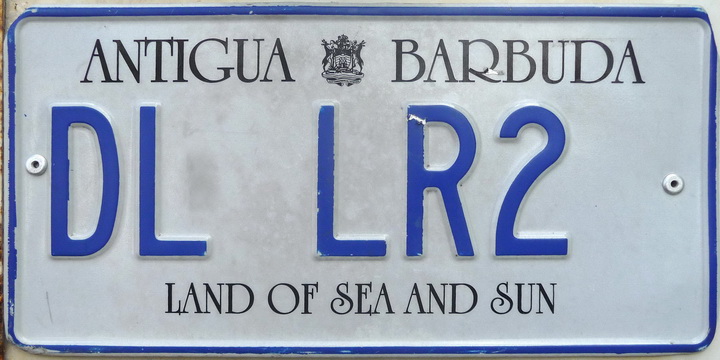
These changed to US-dimensioned,  pressed plates, thought to be in annually-varying colours, which showed the abbreviation  DL, followed by the initials of the Dealership (LR for Land Rover),  and then a serial number.

Antigua Dealer during the 2000s - Land Rover agency

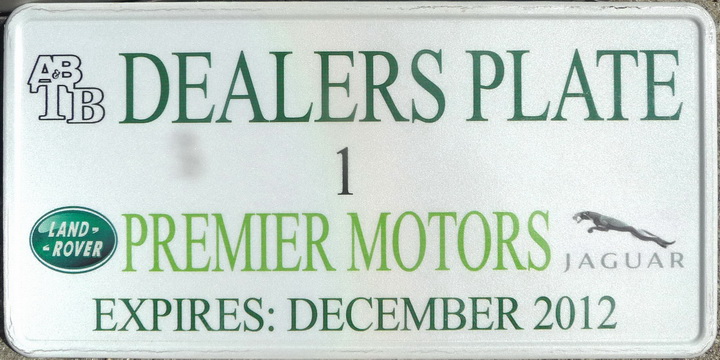
2012 sees another Trade Plate change, with a complex all-silk-screened design, printed black, green and green on a white backgrounded US-size plate as shown below.   This dealer, Premier Motors,  has plates 1, 2 and 3 for their use.     This plate is un-drilled, as it is displayed loose from inside the vehicle, through the front or rear window.

Antigua/Barbuda  Dealer 2012 (annually issued)

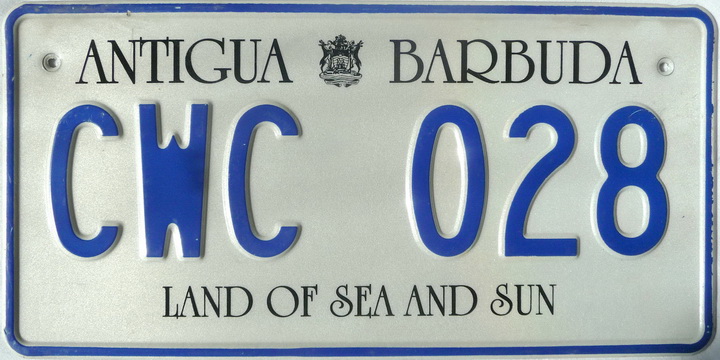
In 2007, Antigua hosted a round of the World Cup Cricket series, and the authorities issued a batch of commemorative plates for the most important participants/ distinguished visitors.

I don’t think they remain valid for Antiguans to use, but this plate survived for the pleasure of  Europlate members!   (Update) CWC 028 was among those to pass through the Europlate Easter auction at Trezzo and is now in the hands of a keen collector.

Cricket World Cup Commemorative 2007.

Current government plates for senior people are in a very pleasing colour combination of green on dusky yellow.   Ministers have yet another series, without any legends, in yellow on royal blue, MP and a low serial.

Antigua Government personnel from 2000, pictured 2012.

Antigua Member of Parliament

~~~~~~~~~~~~~~~~~~~~~~~~~~~~~~~~~

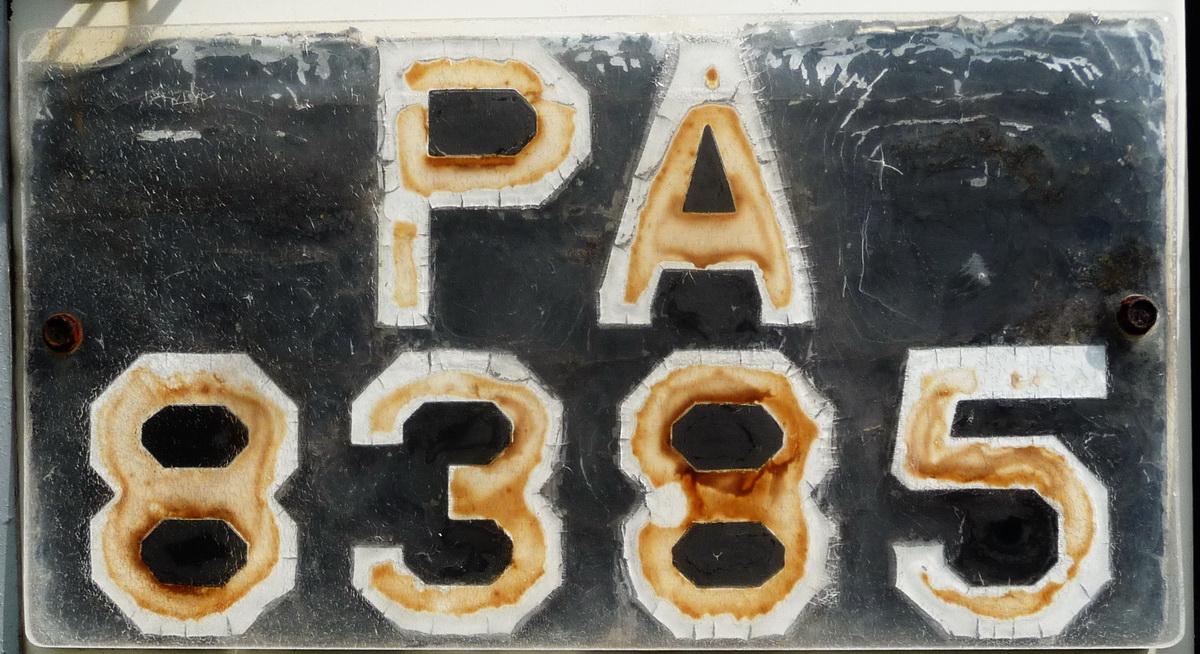
None of the old AG prefix plates remain, though I did see one of each ‘P’ and ‘PA’ , which were subsequent issue, on scrapped cars.

Until 2000, when the new, US-style series began, Antigua often used a characteristic letter style, which helped to separate them from the identical  ‘P’  registrations issued by neighbouring islands in the West Indies and elsewhere.    They made up the digits with straight lines replacing the curves of numbers and letters.

Antigua Government vehicle, pre-2000, with stylised digits.

The smart annual tax disc for the country, below:

Antigua tax disc 2012

An excellent visit, where we found the Antiguans to be most hospitable and cheerful – and no grim looks when they see us photographing licence plates!     Members may know that we risk being arrested in many places these days, as we go for that  special shot!