Confuse-a-spotter

December 7, 2011

Most of the territories which Britain managed in the earlier years of the 20th. century were given registration systems firmly anchored in the design and layout of the Construction and Use regulations of the home country.     As a result, far-flung places could have identical plates and an early spotter relied on the vehicle carrying an international oval at the back, if it travelled outside its own land.

The most prolific type was the letter ‘P’ (which usually stood for Private vehicle-but not always) followed by up to four numbers.     First, though, are three  ‘AY’  examples, all still legally circulating in their respective countries.     First, Turkish Northern Cyprus, AY 255.

Turkish Northern Cyprus AY 255

Then, AY 230 – Alderney, Channel Isles (GBA)
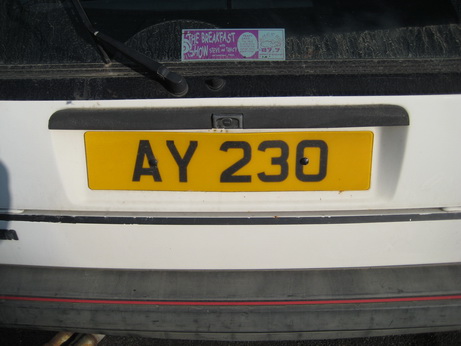
Alderney, Channel Isles - AY 230

and Hong Kong (HK) ( a  re-issue, as AY 995 is quite old now, on a new car.)
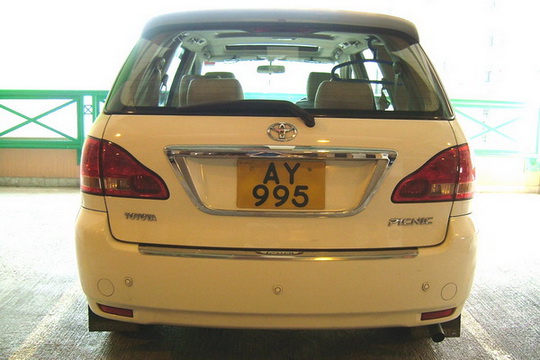
Hong Kong AY 995

No identifying ovals, unfortunately, but I do remember where I took the pictures!

~~~~~~~

Perhaps the most confusing set of identical plates was issued in the Windward Islands.    One had to chase the car and interview the driver to obtain the island of issue, as they hardly ever carried an international oval….

GRENADA (WG) on an MG TD in Newmarket, GB in 1964. P 2734

1972 photo of an Austin 1300 in London, from Barbados, where P codes the parish of St. Philip.

1972 photo of a Morris 1300, P 475, in London, from Barbados, where P codes the parish of St. Philip.


P 2909 - the original series for Antigua.

P 2909 – the original series for Antigua.
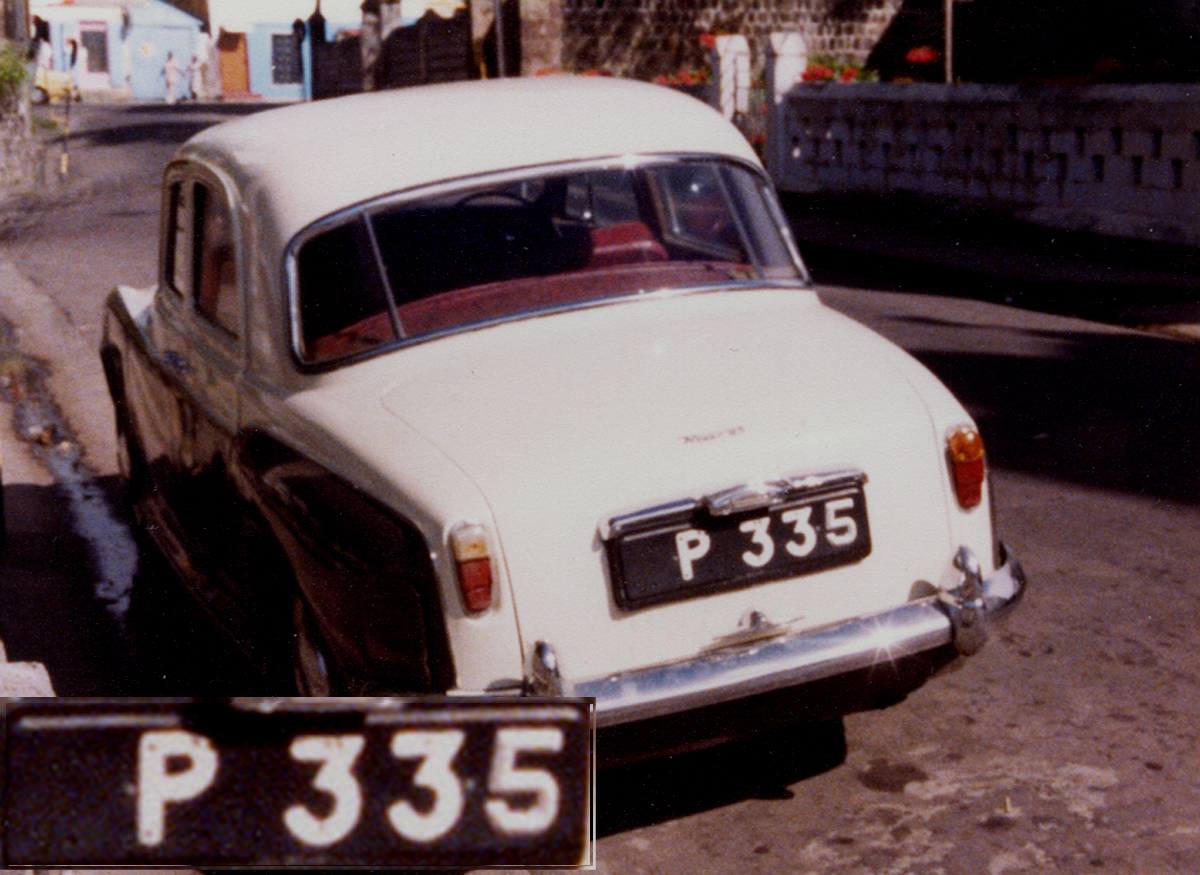
St. Kitts & Nevis went on to P and numbers, when it had exhausted its original CN prefix (Christopher & Nevis)   1980 picture by Vic Brumby on St. Kitts.

P 335 – St. Kitts & Nevis went on to P and numbers, when it had exhausted its original CN prefix (Christopher & Nevis).   1980 picture on a Rover 90, by Vic Brumby on St. Kitts.
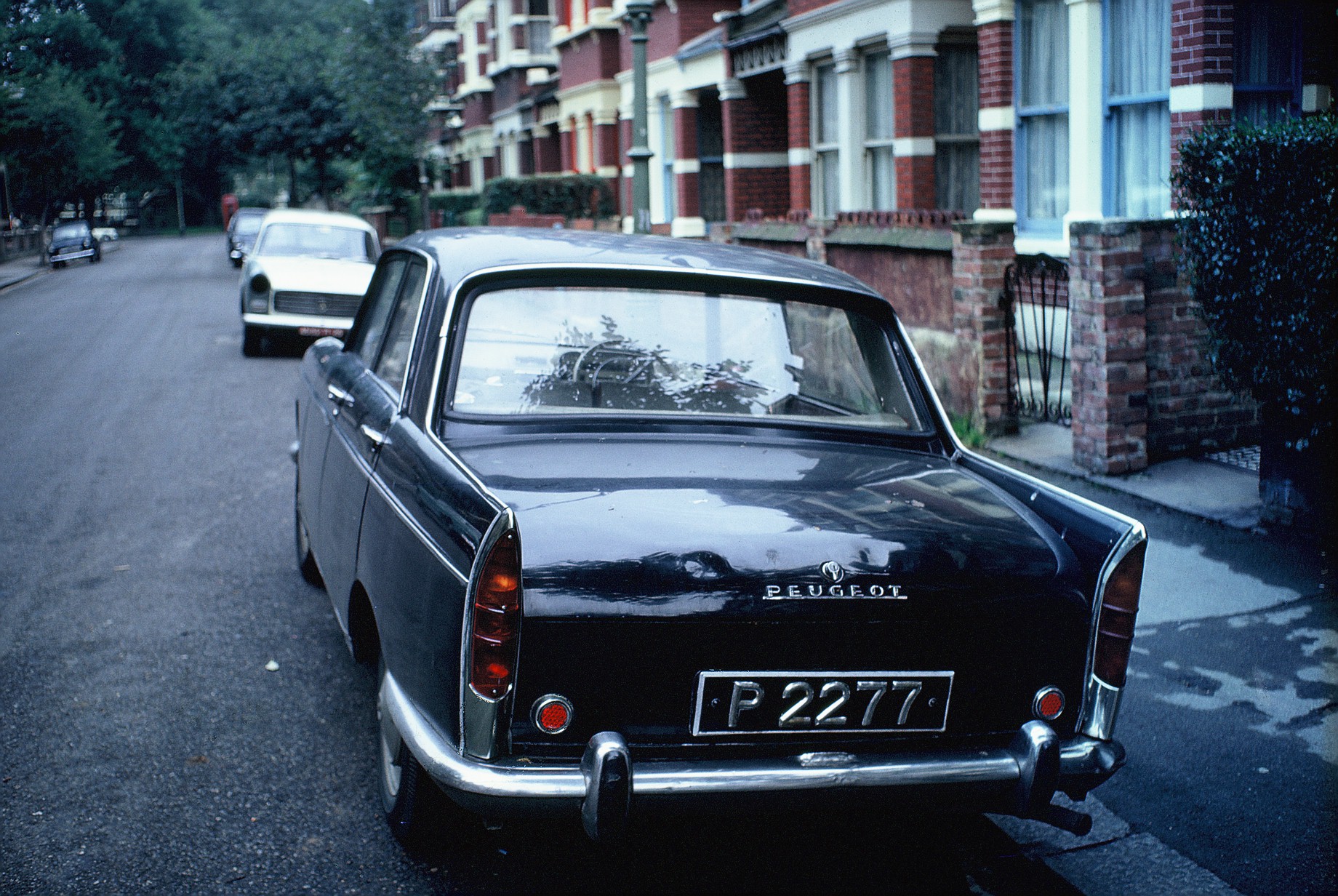
St. Vincent, the rarest of the W set of Windward Islands, seen in London in 1969, and still the only one ever.    The owner had to be stopped and asked, to learn the island of source.    Peugeot 404 - Brumby archive.

St. Vincent, the rarest of the W set of Windward Islands, (WV, WG, WL & WD) seen in London in 1969, and still the only one ever. The owner had to be stopped and asked, to learn the island of source.   Months later, P 2277 was found parked in a far distant part of London, ad a photo grabbed – Peugeot 404 – Brumby archive.

Trinidad used up to P 9999 long ago, but still re-issue as cherished plates if needed.    That's what this one is.    P 6000, taken there in 1987 by VB.

Trinidad used up to P 9999 long ago, but still re-issue P as cherished plates if needed. That’s what this one is. P 6000, taken there in 1987 by VB.   Black on white indicates taxi licence, as with Mauritius below.
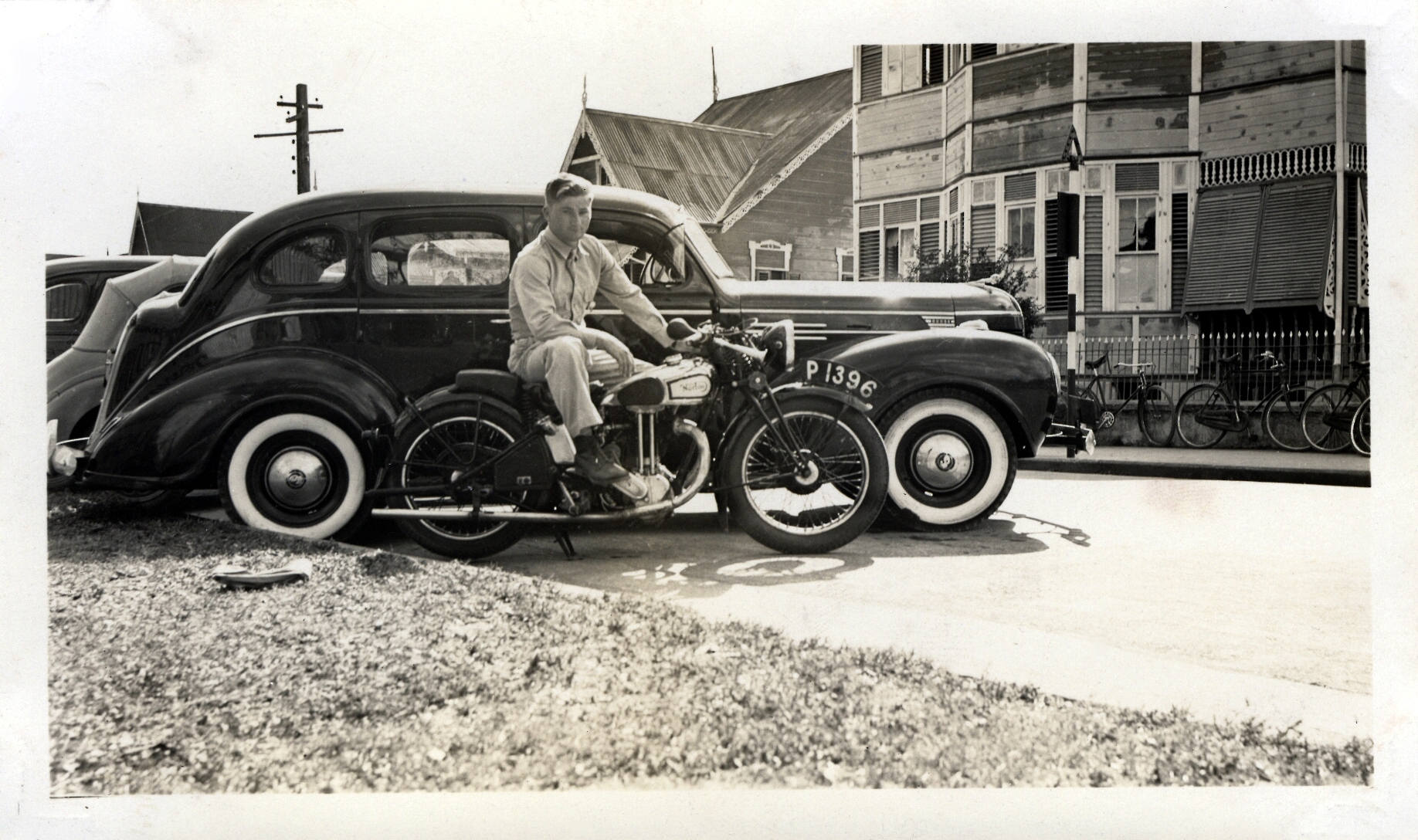
Bermuda is not far away, though not in the West Indies, and used the same P system.   The motorbike shows P 1936 and was photo'din  the early 1950s.

Bermuda is not far away, though not in the West Indies, and used the same P system. The motorbike shows P 1936 and was photo’d
in the early 1950s.
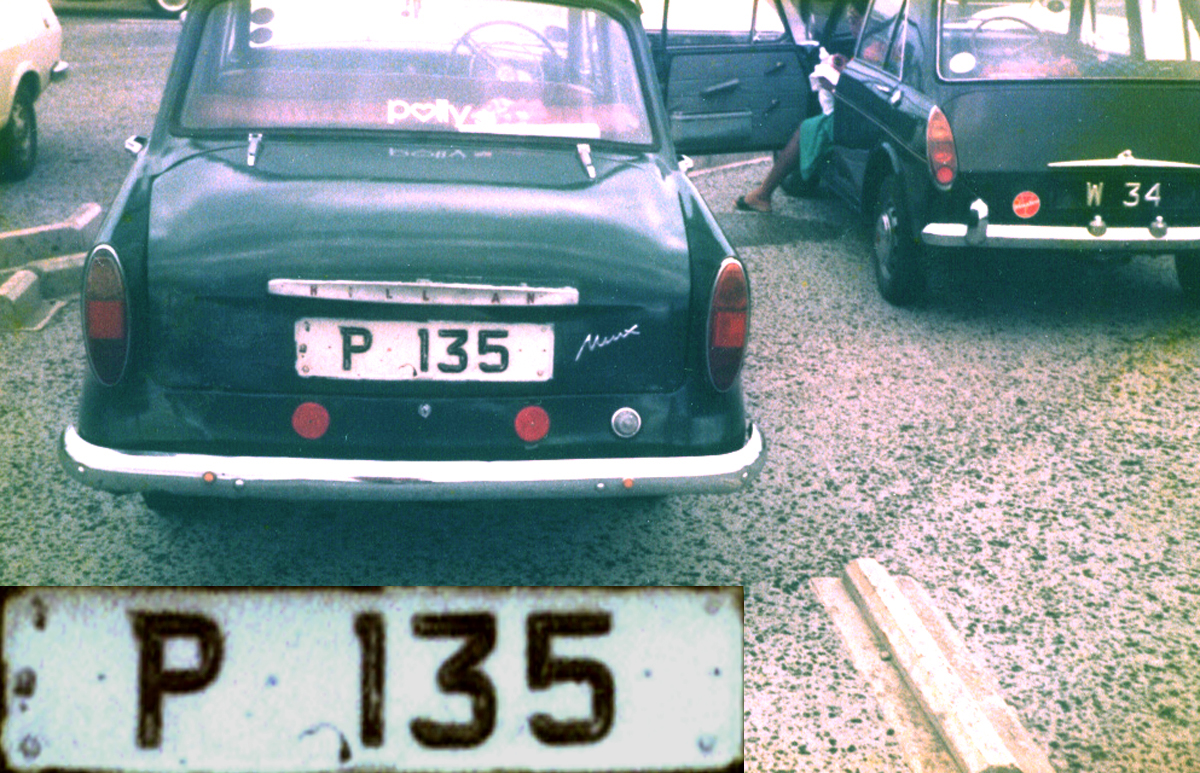
P 135 is from distant Mauritius, where the white background shows it to be a taxi - a Hillman Minx, shot by VB in Port Louis, 1980s.

P 135 is from distant Mauritius, where the white background shows it to be a taxi – a Hillman Minx, shot by VB in Port Louis, 1980s.
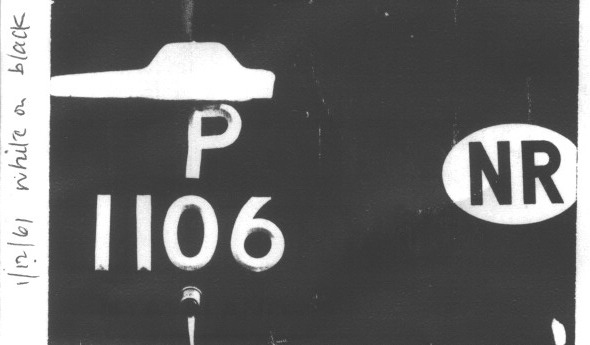
 

Northern Rhodesia allocated 'P' code to Lusaka and Mumbwa and Reg Wilson capured P 1106 in Britain in 1961.

Northern Rhodesia allocated ‘P’ code to Lusaka and Mumbwa and Reg Wilson captured P 1106 in Britain in 1961.

P 5373 was issued to Penang as a Straits Settlement in Malaya  in the1920s - and this Ford Anglia was photographed there as recently as 2012!

P 5373 was issued to Penang as a Straits Settlement in Malaya in the1920s – and this Ford Anglia was photographed there as recently as 2012, by Douglas Fox!

France kept the enclaves of Pondichery and Karikal in Madras State, South India, tagging the vehicles there in the P and K series.     This Cadillac P 1452  has survived the obligatory change to white Indian plates, when this photo was taken.   Thanks to Cedric Sabine.

France kept the enclaves of Pondichery and Karikal in Madras State, South India, tagging the vehicles there in the P and K series, using the British-style font of India. This Cadillac P 1452 had survived the obligatory change to white Indian plates, when this photo was taken. Thanks to Cedric Sabine.
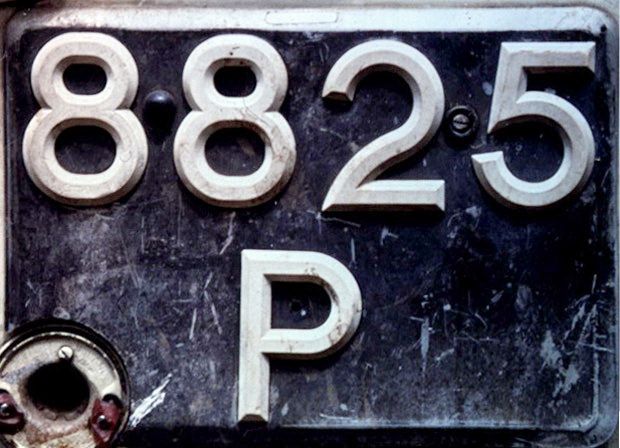
 

P 8825 - Similarly , French Tahiti sometimes used British-style plates for the original series of up to four numerals followed by a 'P' for Privé.   VB photo in Papeete, 2002.

P 8825 – Similarly , French Tahiti sometimes used British-style plates for the original series of up to four numerals followed by a ‘P’ for Privé.        VB photo on a Land Rover in Papeete, 2002.

END (Unless you know otherwise????


South Africa Military

December 6, 2011

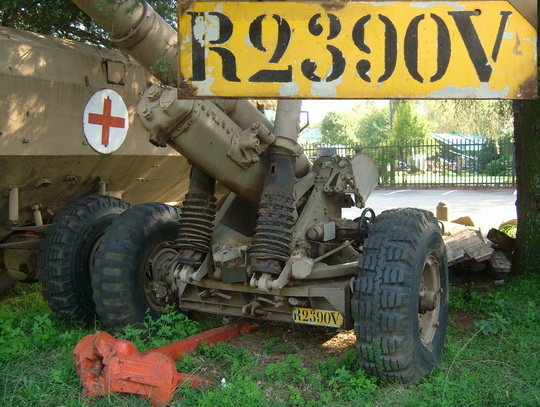
ZA army towed gun 2005


Sri Lanka CV code and others

December 6, 2011

http://www.bokhans.com/trollybus.html

Above is a web page which shows a few early Sri Lanka plates on trolleybuses.    The double-deckers use the code  ‘CV’ which RPWO lists as ‘diesel buses & lorries’ – so perhaps CV also covered electrically-driven vehicles, too…..

I had once thought that it indicated ‘Conduit Vehicle’, as trams and trolleys rely on the overhead conduit for electric power, but no.


And while we’re in Ceylon:

Mototcycles from each of the first two series in Ceylon.   A 1040 from the 1910-28 series and EL 3943 from the 1953-4 issue.   Seen in Colombo in 2009.   Brumby archive.

Austin A40 Devon in Colombo 20091940-56 series.   EY 2846 – Austin A40 Devon in Colombo 2009.   EY specifically 1951-3.          Brumby archive

In 1940, someone had he odd idea of creating a Sinhalese registration series which used the letters of the name of Ceylon as a component of the tag.   Thus CE, CY, CL, CO(not issued ) and CN were succeeded by to EY, EL, and EN.    The idea was then abandoned before YL began,  and in 1956 the first ‘sri‘ symbol plates were launched.

The 1 Sri issue ran from 1956-8.   Jaguar Mk2 exists as a collector's car in Colombo.

The 1 Sri issue ran from 1956-8.    This Jaguar Mk2, 1 Sri 2581, exists as a collector’s car in Colombo.


Zanzibar JR 9

October 15, 2011

JR 9 – This Zanzibar Beetle was captured near Barnes,  by VWB in 1961.      Around that time we saw another on a Citroen DS19,(GE 2) and one on a Simca 1000, which kept its Zanzibar registration (YE 9) as its new English plate, by a fluke of administration in the London licencing office.          These were the days of two-letter, one number registrations in EAZ.   Everyone had a vanity plate!


When the Empire territories achieved their independence, it usually gave rise to the return of colonial administrators, as they were replaced by indigenous personnel.    They brought home their cars to UK – and treated us young spotters to sightings of rare species.

Now there have been no sightings of Zanzibar (or indeed of  Tanganyika) plates in Britain for over 40 years.

(Unless you know otherwise????)

~~~~~~~~~~~~~~~~~~~~~~~~~~~~~~~~~~~~~~~~~~~~~~


Addendum 05/04/2013:

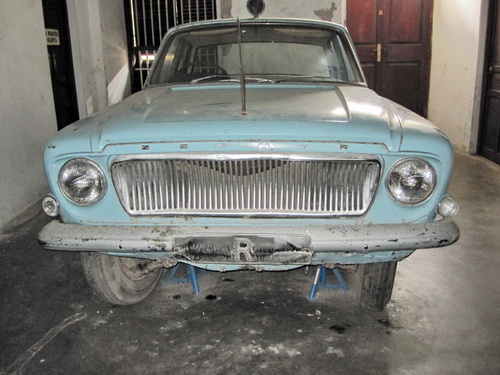
The man who came to mend our water-heater in 2012 told me of his Zanzibar holiday, during which, in Stone Town, he photographed  ‘a Humber Hawk’ with an odd plate in a museum..    Here is that car – a UK Ford Zephyr 3, circa 1963.

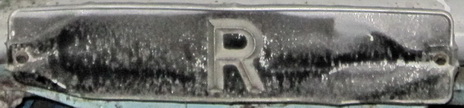
(EAZ)(si)_R_wee_VBplumb

R is thought to be the special plate used by the British Residents in Zanzibar, who, from 1913-1961, guided the sultans in matters outside their own experience. Effectively the Governor of the State, the title of Resident then changed to Consul or Consul-General, but the special registration appears to have survived a little beyond 1963, as the first production of this Zephyr model was in 1962.     For his safety, the Sultan was flown out by private plane in Jan. 1964 by Brian McAlister, a passing light aircraft pilot, after which a post-independence celebration of ethnic cleansing beset the islands, handing power to the surviving majority African group, who had previously been governed by Omani Arabs for the centuries of Oman’s ownership of the Zanzibar islands.     Brumby archive

(EAZ)(si)_R_c_VBplumb_resize


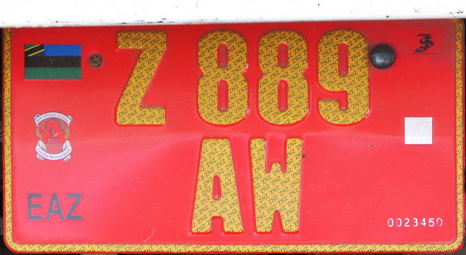
A 2012 visit by Mike Hall gathered this modern picture from Zanzibar (where yellow on red is for taxis for the use of tourists only.)   (So – a smart taxi – Probably meaning that the vehicle is under 25 years old and had been serviced just before it was stolen in Durban in 1989.)

(EAZ9)(txi-tourist)_Z889AW_c_VBCag2012_resize_resize


~~~~~~~~~~~~~~~~~~~~~~~~~~~~~~~


Ghana mystery SG

October 13, 2011

For the first time since I took this photo in London in the 1960s, I have checked for the Ghanaian area code SG in RPWO and found no entry!   –

Later:    1959 special issue to celebrate Self-Government.)

Anyone know what the SG code might have indicated, please?     On the big  Fiat 2100 of the period.     (Answer given below by Alex Kafka, under Comments.)

SG 1267 Ghana plate from the early 1960s.   Brumby archive


Use the new EUROPLATE BLOG (TEHA)

August 10, 2010

The Belgian Congo/DRC has one of the longest lists of different international ovals, starting with no ovals (no cars?) during the Leopold private ownership period (King Leopold’s Congo Free State 1855-1908) then adopting CB for the Belgian State-owned Congo Belgique until 1960.     There followed RCL, CGO, ZR and ZRE, to DRC today (in which the ‘D‘ amusingly abbreviates the concept ‘Democratic!’).   Some of the area codes overlapped.    This RCL was photographed in Cannes during the early 1970s by VB on that great Africa-favoured car, the Peugeot 404.      The front plate was a normal, yellow on blue, pressed  ?Howoco? plate, but the rear plate had been lost and replaced by this well-painted version.

Does the Consular Corps oval suggest that Congo had not established a special plate series for Consular in those years?

One of the six Congo ovals-RCLRepublic of Congo – Leopoldville (later re-named Kinshasa)                                                      Brumby archive

Comms. exchange

Here is a new concept by means of which we can liaise with each other at will, on any subjects we choose.    A mail system between members, starting from the RPWO web site.

The (WordPress-hosted) Europlate Blog site can also be set to allow non-members to read our correspondence and to contribute comments if they please.    We might derive useful information or images from exposing our odd hobby to others!

Entries to a blog are kept permanently, in date order, enabling subjects to be re-visited if required – say, before adding new information.

Just log in here and write your first post!

That’s all!