1955 Pakistan

September 30, 2012

PAKISTAN AFTER 1947 INDEPENDENCE


Denis Fowler is a retired diplomat who served in Iceland, Nepal, and Pakistan amongst other places.

He has kindly trawled his old photos and slides and sent this (slightly fuzzy) shot of his Ford Prefect, on standard  KA (Karachi) Pakistan plates, but identified as a diplomatic vehicle by the CD oval, which had silver letters on a dark green background and a white rim.    He adds that he bought the Prefect from UK Ford dealer Lex via  the tax-free Home Delivery Export Scheme in August 1955, and ran it for a couple of months before handing it back to Ford for shipment to Karachi.

He knew that upon becoming a republic in March 1956, Pakistan was planning to switch from driving on the left to the right, and so he ordered the new Ford in Left-Hand-Drive, but after he arrived in November 1955, the plan was scrapped for this extraordinary reason:  camel-drawn carts were then used to take the imported goods from Karachi docks to all parts of Pakistan, by day and by night, with their drivers sleeping much of the time.

It became recognised that the animals could not be trusted to walk unattended on the ‘wrong’ side of the road to that to which they had  been accustomed for generations.    It would have caused accidents and chaos, and so the new republican government never proceeded with its plan – which had probably merely been a symbolic act of casting off their imperial yoke, and not of any actual practical value.

We hope to see further pictures from Dennis’ delving in to his photos and slides!

His daughter spent periods in Zimbabwe, Malawi and Bolivia and his son drove back to Britain from Nigeria in a Landcruiser.    They have been asked to inspect their albums for period plate shots!
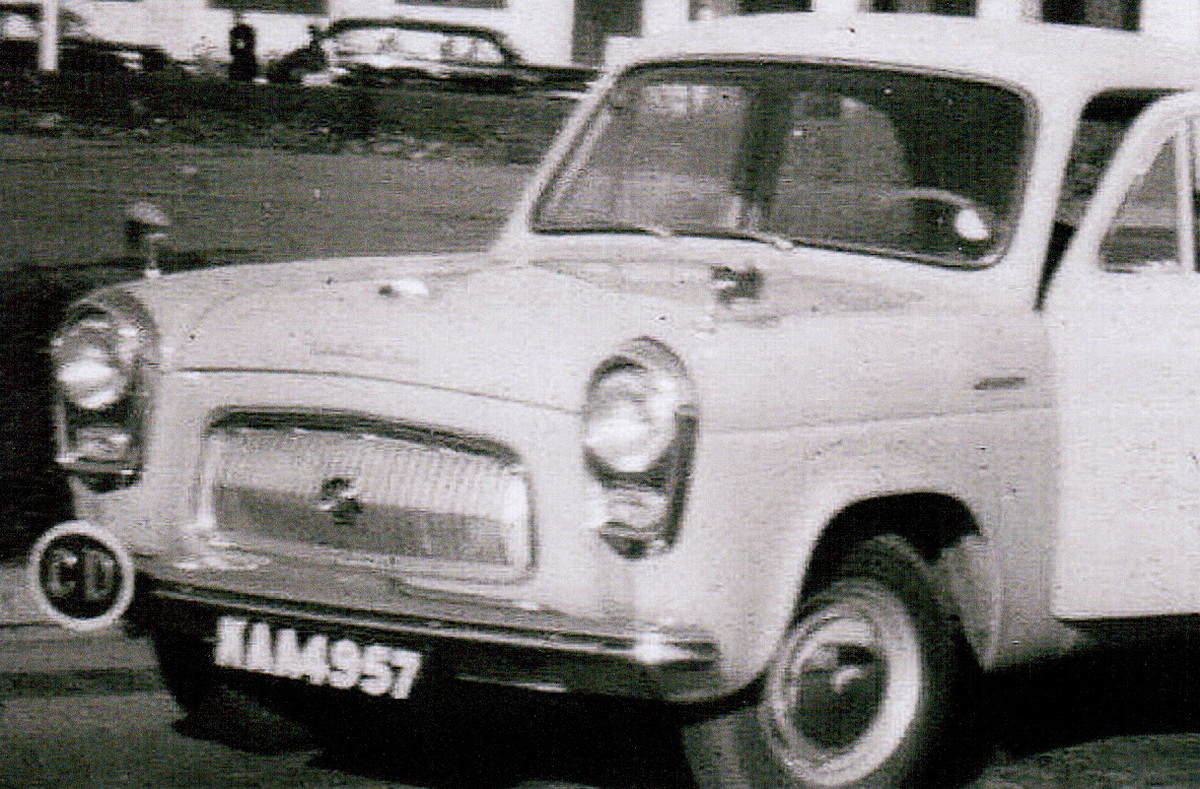
1955 British Ford 100E Prefect in Karachi, 1956. KAA 4957


Readers are advised to ask for such pictures of any old pals who once served abroad.    They are a unique record of extinct plate types, and will not generally be recognised as being of interest to their heirs, when they inherit parents’  old photo albums and transparencies/slides.      Sad to think how many great pictures are thrown out in house clearances…..


————————————————————————————————————————————————

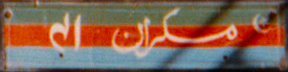
Below is an unusually-plated Morris Minor, also in Karachi, but shot by me (VB)  in 1965, and which for years I had never properly identified.

Apparently the Urdu script reads ‘Mashriq’ 41  – any ideas, anyone?

ANSWER from Europlate member Kurt Leothold  –

 “The word  correctly translated is: MAKRAN, a province from Baluchistan, Pakistan (Gwardar).”

Wikipedia notes: Makran Division (Persian: مکران ) was an administrative division of the Balochistan Province of Pakistan, until the reforms of 2000 abolished the third tier of government.    Districts of Makran Division included GwadarTurbatMand and Panjgur.

Makran is the ancient name for Baluchistan and was an exclave of Oman until 1958, when Pakistan bought it from the Sultanate of Oman.

So – thanks to Kurt, a 47-year-old puzzle eventually explained!      (The low number 41, the colours and the style of the plate would indicate that it was a Morris Minor of the Khan/Sultan’s fleet – or possibly of some high-ranking State official.)

~~~~~~~~~

Finally, one of the very few Pakistan plates seen in Britain since 1947 Partition – a VW Camper from Quetta in Baluchistan, sporting a PAK oval provided by the Karachi Automobile Association.     Seen in Kensington Church Street, London in 1964, by VB.

QA 6209, a Quetta plate in 1964 London.

More finally, I parked my Peugeot 404L  next to a pair of diplomatic VWs in Rawalpindi in 1968.     That same CD system is still in use in Pakistan, 44 years later!

I doubt if the airline offices are still intact, as such places have become targets for angry mobs fretting about cartoons and daft films.       It was a peaceful and pleasant country then, with the Moslem population kind and hospitable……

BELOW: When EU38 visited the newly-built British High Commission in Islamabad to collect my mail from the Poste Restante service they used to offer travellers, I was amazed to come across a car from Sarawak – the first I had ever seen!   And as used to be the convention, it showed the international oval SK, as supplied by the Kuching office of the AA.

How unusual to see a vehicle from Borneo in the ‘stans!
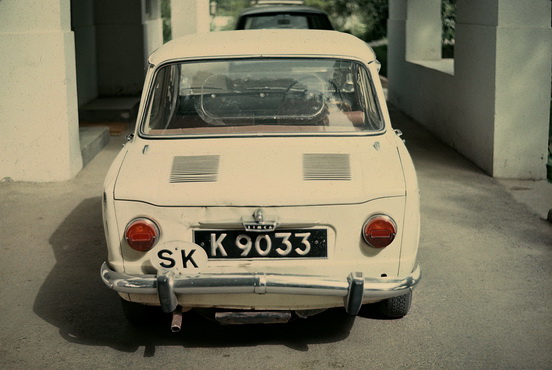
Sarawak K 9033 outside the BHC, Islamabad, 1968.   K=Kuching.
 

(PAK1)('47~)(un)_PR9679_comp_VB1965_resize

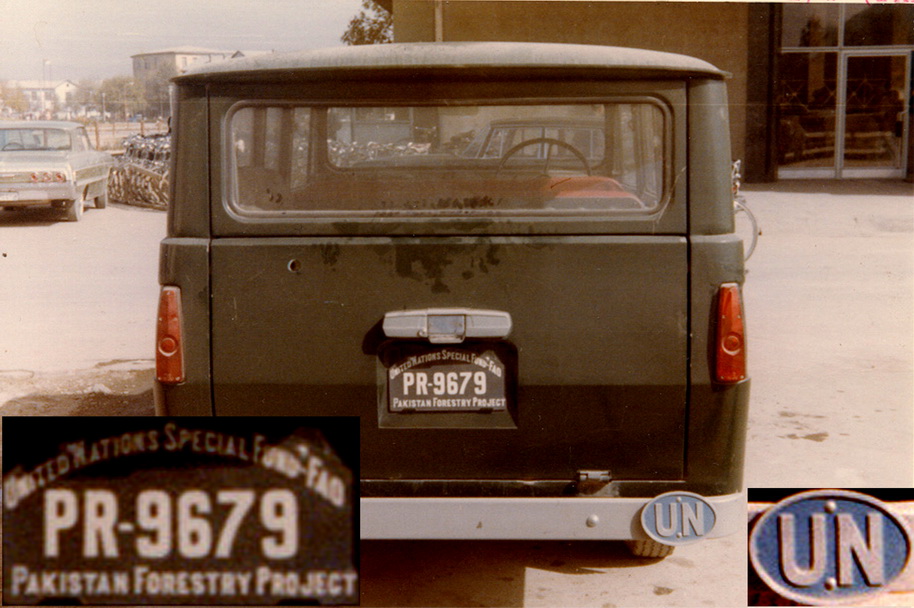
PR-9679  —  Seen in Karachi in 1965, this Jeep with United Nations connections, belonged to the Pakistan Forestry Project and was registered in Peshawar in the regular series.                                 Brumby archive 1965
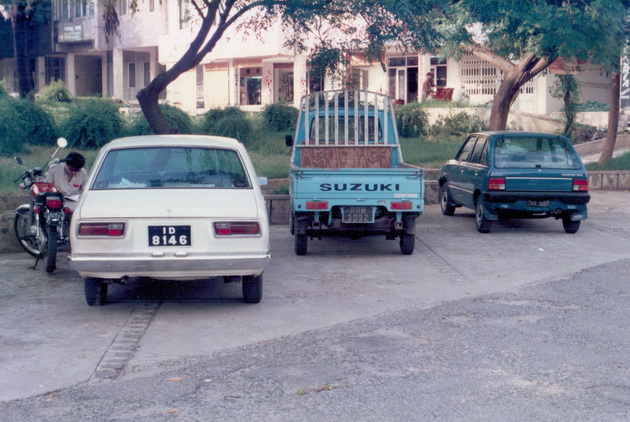


ID 8146 ID was the newly-created  code for the 1960’s-built new capital city of Islamabad (PeaceTown),  when this photo was taken in the 1970s, on a Datsun 1200.      There were still very few  such fully-imported cars in neighbouring India, due to the shortage of foreign currency with which to buy such, yet Pakistan seems always to have imported  from anywhere without difficulty, even though it must have been even shorter of money.      Previously, British Ford 100E Anglias were built there from parts sent from Dagenham. and Morris Minors were assembled in India, alongside the eternal Morris Cowley a.k.a. the Hindustan Ambassador, Indian production of which 1955 design finalised in 2013!.      The Suzuki pick-up is from Peshawar – PRH 3032.    Soon such Japanese products displaced the British-built vehicles  which had held sway from 1900.                  Brumby archive 1970s (Capt. Pointon-Taylor)


KAW 6444  --  red-on-yellow Karachi Trade-plate on a new British Vauxhall Victor, there in 1965.     Brumby archive.

KAW 6444 – red-on-yellow Karachi Trade-plate on a new British Vauxhall Victor, there in 1965.                        Brumby archive.


(PAK1a)('47~)_KAE9800 Urdu_comp_VB_resize

KAE 9800 — It was unusual to see an Urdu-scripted plate in Pakistan in the 1960s. This oddity is seen in Lahore in 1965, on a Morris 1000, registered in Karachi.                            Brumby archive 1965


Unknown African and French IT plates

September 29, 2012

In the 1970s, a much-travelled pal of mine, Murray Bailey, photographed this yellow on green IT plate 008-IT-22, but he forgets where, only that it was in West Africa.       It may be Senegal, but confirmation welcomed!     What a shame the moped behind is not in full picture, to give us a clue…

Senegal – or elsewhere??

About 1963, I saw this American car in London, IT 0623.    It could have been from any of the overseas French territories of the period – but which??

IT=Importation Temporaire

Unidentified temporary Importation plate for a French territory-1960We used to think that all the green IT plates we  saw were French Diplomatics, and only learned much later that they were given out to any category of foreigner who was in a country temporarily (possibly with the vehicle let in without payment of import taxes).    Aid personnel and non-diplomatic embassy staff were among the groups registered so.


If they really were diplomats or consular officials, they would carry a separate oval plate or even have the letters CD or CC made into their IT plate.       (Were the French IT plates coded for the users’ country of origin, then

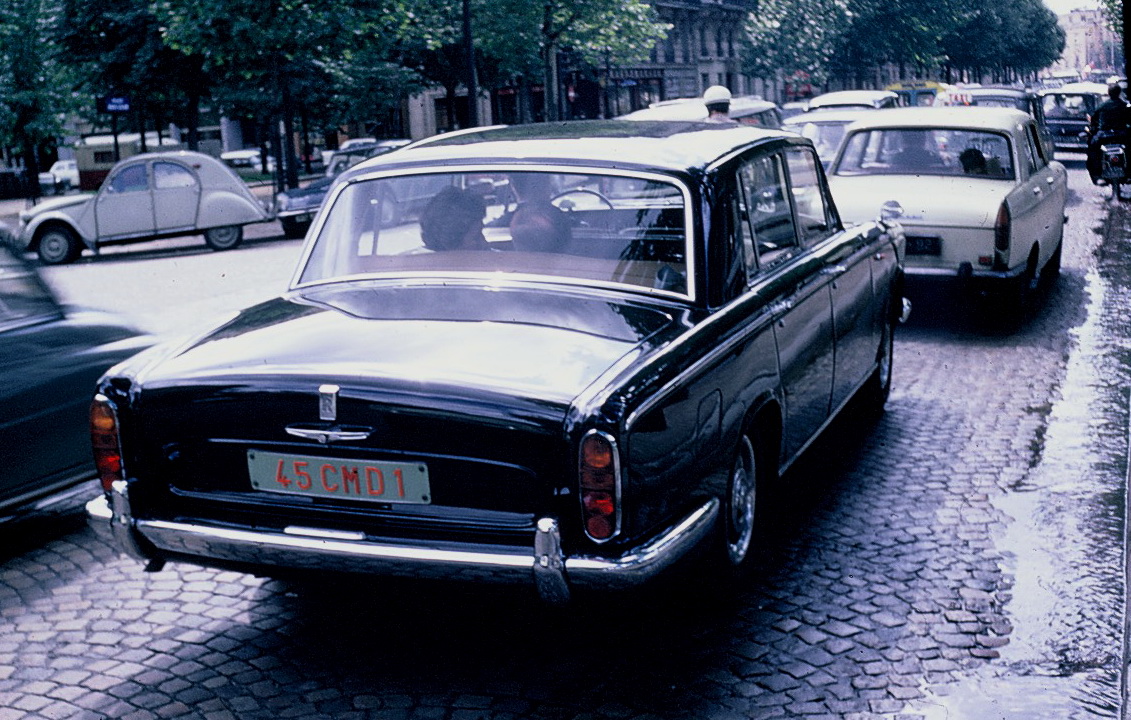
French Temporary Import of Diplomatic vehicle, in Paris, 1960s.    The zeroes probably indicate the ambassadorial car…  The boot/trunk  label on this American-made 1950s Ford Sedan tells us that this was a manual gearbox car with an optional overdrive, before automatic transmission became standard on all US cars.

A non-diplomatic temporary importation to France, in  1964 London, on a then-ubiquitous Renault 4L.

And finally, just for interest….

The R-R Silver Shadow of the British Ambassador in Paris 1970s.


All the Same?

September 27, 2012

Is it just me, or is the influence of  Herr Utsch* and the computer slowly creating a homogeneous plate system?    Against the wishes of their voters, these countries have removed the regional codes and given new vehicles a soulless computerised tag, some of which are almost identical.

The ex-Soviet  ‘stans have other examples of lookalike plates, so thank goodness they all include the country codes within the new plates.


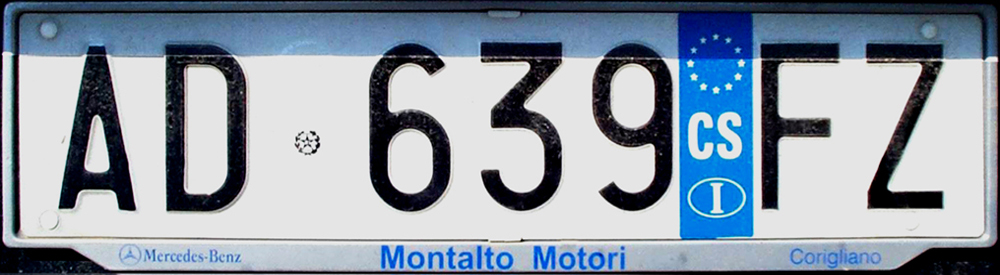
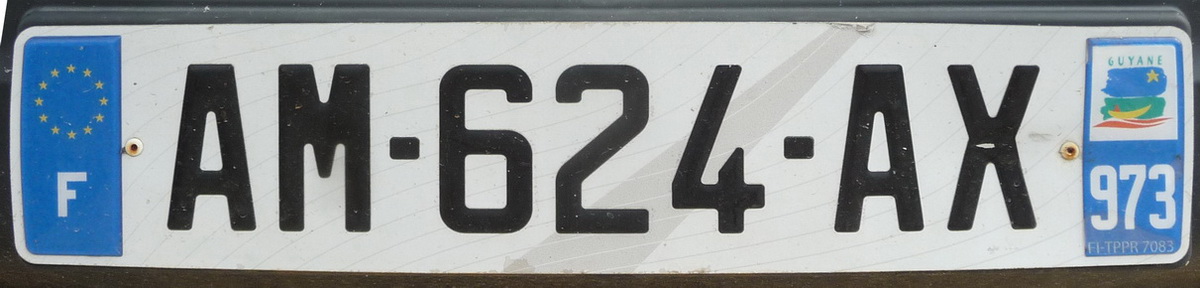
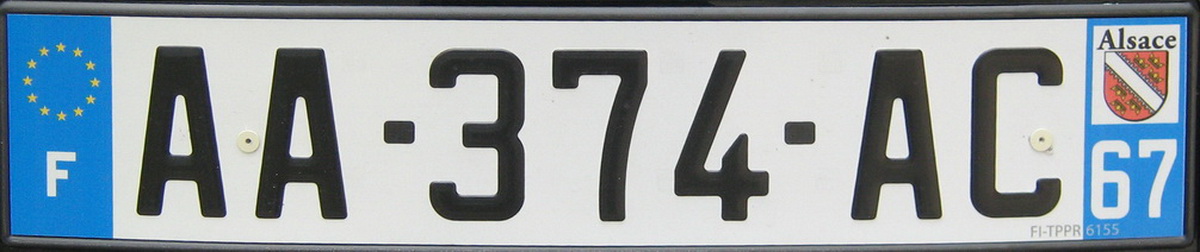
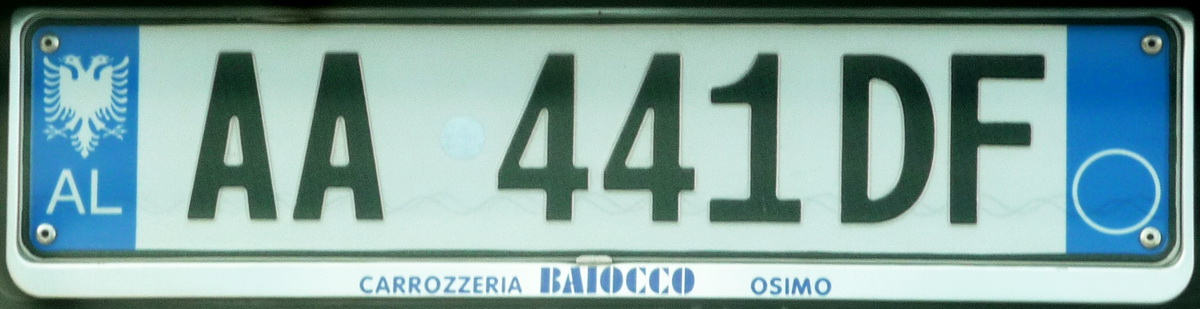
Here we compare current plates issued  by Italy, France, French Guiana and Albania.   No much difference, is there?

Italia

Italia

French Guiana

French Guiana

France

France

Albania

Albania

*  The German Utsch company has devised a popularly-received design-and-build licence-plate package for the many countries which are modernising their various national departments and systems, but which  know little about the complexities of modern motor vehicle registration.    The Utsch system donates a country such as Zimbabwe a plate-stamping machine and some rolls of alloy sheet which they ally with various colours of 3M adhesive nylon(?)  tape.    Subsequent shipments of the consumable metal and plastic have to be paid for, of course, and that is how Utsch eventually make some money from the idea.      I suspect that actually, the German government pay for the original machine and material for the first few plates, and give them by way of international aid to the recipient states.    

I hear that the privilege of supplying Zim with the new style replacement plates was given to Robert Mugabe’s sister, as a sure-fire way of her making loads of dough.    Every vehicle in the country had to change plates within six months, or very severe penalties ensued.     When she ran out of the sample sheets, she hadn’t kept enough pocket-money  to pay for the next supply of materials, and so the diktat that everybody must change plates by a certain date, melted away in the confusion which is Africa.       Later she must have borrowed some more money from someone – or came by some more aid from a generous donor – China is courting Zimbabwe for its minerals –  and the system has recommenced.

The thing I don’t understand is that Utsch must have made the system security watertight , so that for example, duplicates could not be made and sold under the counter.    That would not suit many – or most – of the world’s developing nations’  Transport Ministers and senior personnel.    Vehicle licencing has always been a marvellous cash cow for the head of department given the job – but ‘poor’ people are by necessity, exceedingly inventive, and can usually find a way to make a small profit, even from a highly efficient German scheme!

Incidentally, what a waste of the unfortunate citizens’ money, to force re-plating for no good reason……    


Which Argentine series is it?

September 27, 2012

Seen in Buenos Aires in 1989, I never did find out what category of plate this was.     Any ideas?

Thanks to Bernt – see Comment below.

Unknown RA m/c

This Argentine Dealer plate was an oddity – and what a great thing to see!   (see Comment)

Argentine Dealer plate on locally-built Fiat

Because Argentina made its plates so well in years gone by, many survive in excellent condition, as has this San Vicente enamel example from 1929.   I found it  in a massive old milk factory in which a man named Nestor Corsi made new Ford Model T’s out of original parts which he gathered in from farms all round Uruguay and Argentina.    He manufactured anything he couldn’t find, including any style and colour of body, and sold them all to collectors abroad, mostly in USA and Switzerland, he told me.

1929 enamel plate from Argentina (VB collection)

It used to be at least twice a year we would see Argentine cars in London, during the 1960s.    Here is a Beetle near Putney, as always in  those times, carrying an international oval!

Cordoba-registered VW in London in 1968.

And a big American car of the period, from province of Buenos Aires, rather than from the city area.   It displays the usual very large RA oval which owners obtained from the Automobile Club of Argentina, as witness their shield.  Seen in Kensington, 1960s.

The oddest Argentine sighting for me was a 1920’s car bumbling along the road from Kuching to Lundu in Sarawak, in January 2011!     It belongs to a family which is circumnavigating the world.    Their movements are documented in several sites, one of which is:

http://www.dailymail.co.uk/news/article-1365406/Are-nearly–Couple-Herman-Candelaria-Zapp-travel-world-11-years-having-children-way–theyre-going.html


Is there a new Italian type?

September 27, 2012

Victor Brumby in Italy in September 2012.

I followed a tractor and trailer in the countryside at dusk near Orvieto last week, which had both tractor and trailer plates in medium BLUE on yellow, not black on yellow as usual.     The trailer carried the same registration as the tractor (which I seem to have lost!), but had the red ‘R’   for Remorque (trailer).  These were both pressed plates, not painted.      It was too dark to take a photo, and indeed, my Italian would have been inadequate to explain to the rustic worthy who piloted the machine, the bizarre concept of xenoautonumerology – and his part in extending the boundaries of the science.    In other words, I couldn’t stop him, explain and photograph.    BUT – I DID follow him for about 6 kilometres before giving up.

Days later, I saw another blue on yellow tractor plate, that time without my camera (I am too old to use a smart-phone with built-in film unit) and the system was identical.     However, most of the many other ag. tractors and trailers I saw were as we usually expect, viz: black on yellow.

I await a response from out Italian pals, who may know of this type.

March 2014……Well –  no-one else  has reported this blue/yellow ag. plate AND I have been back to Umbria to search for it, during 2013 – so I must explain my faulty experience by reference to one or more of the Italian beers which I enjoy before I go spotting in the Republic!      

Moroni, Moretti and Magneto Marelli can all share the blame!!

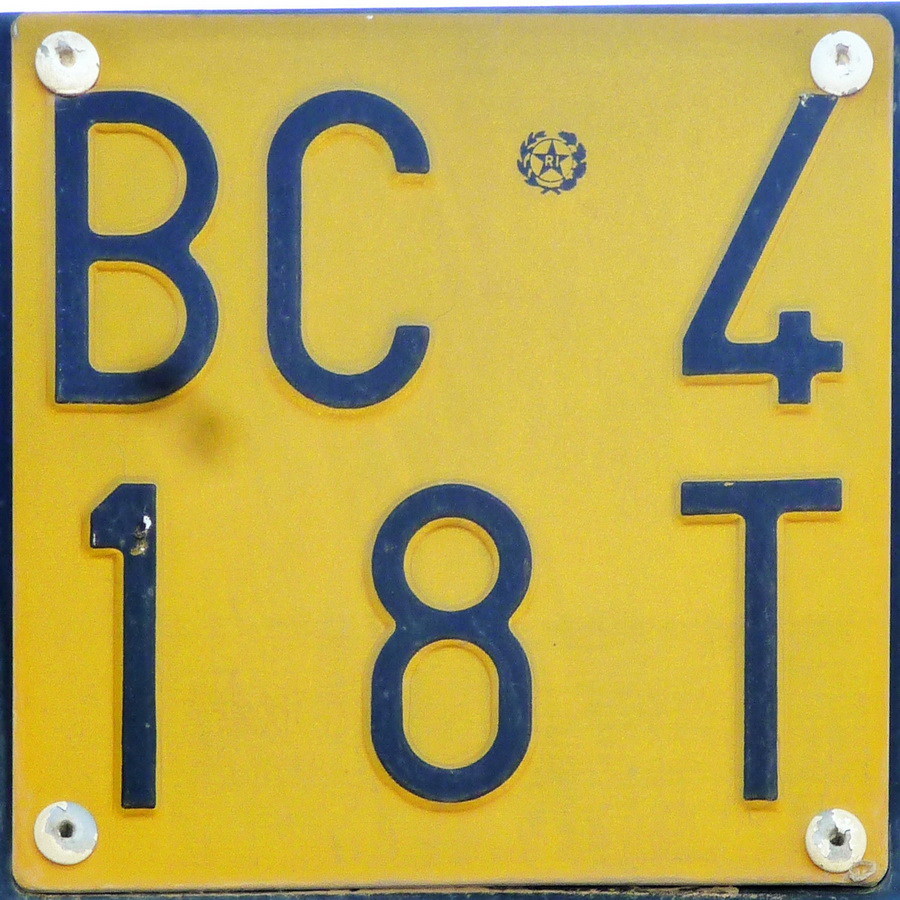
BC 418T – Normal agricultural tractor series since 1999. No regional identifier.

Rimorchio Agricola (Trailer Agricultural). Current series since 1999.

~~~~~~~~~~~~~~~

The paper temporary plates are still sometimes to be seen – see 27140 P 5.    The first I photographed was in 1965,  51962 C 1, so that type has been running for a long time!

P5 is the regional code for Viterbo interim plates, used on this Fiat awaiting technical approval.

Circa 1965, this new Fiat 850 carried temporary plates while it awaited inspection and allocation of its permanent plates.      Code C1 is for Bolzano region.                                             Brumby archive
~~~~~~~~~~~~~~~~~~~~

RPWO mentions that personalised Dealer plates are permitted, which explains this oddity, seen at the customs yard at the Adriatic port of  Ancona.     Perhaps this dealer trades in importing and exporting vehicles?

2012 personalised Italian Dealer plate.   Brumby

~~~~~~~~~~~~~~~~~~~~

In Trento, just before commencing the Brenner Pass into Austria, I paused for lunch (at an excellent Japanese restaurant – unusual for Italy!)  and found this this specially-plated Civil Defence 4wd with the TN code for Trento.

Trento is one of the three areas issuing these official Civil Defence PC plates, with Bolzano and Aosta.

~~~~~~~~~~~~~~~~~~

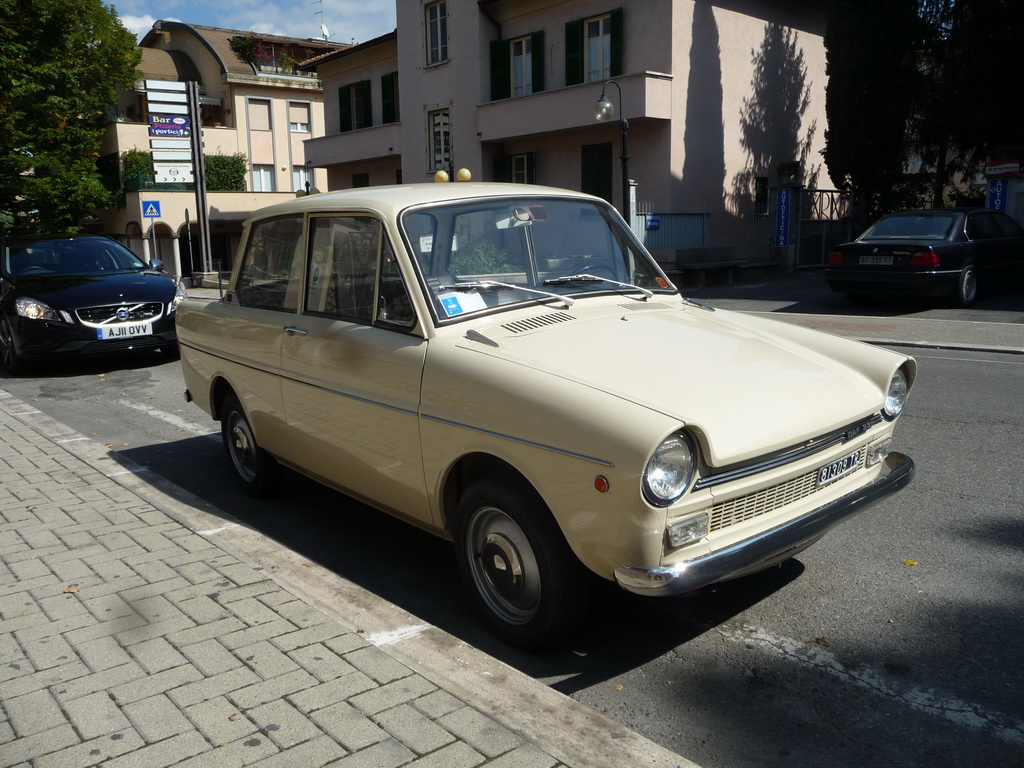
An unusual DAF 33 belt-drive car from the 1960s was awaiting photography in Orvieto, bearing the old black series plates.       In amazing condition, and clearly the owners’ pride and joy.

Dutch-built ‘Daffodil’ model 33 car from the 1960s, still working in Italy 2012.

DAF 33 rear plate from TR – Terni.      VWB


Chinese car spotted on fjord ferry in Norway

July 10, 2012

OLAV writes

July 2012

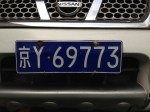
China is not the most likely country to be spotted in Europe. So you can imagine my surprise when I came across this Beijing registered vehicle on a local ferry in Norway this Sunday. The solo driver said he had left Beijing at the end of May. They were a group of 8 (vehicles or people I don’t know) that separated in Moscow because he wanted to go to the North Cape. The good news for British spotters is that they are all going to London for the Olympics. So keep your eyes open!


Confuse-a-spotter – AY plates

July 10, 2012

Ref. Vic’s post “Confuse-a-spotter” from December 7, 2011.

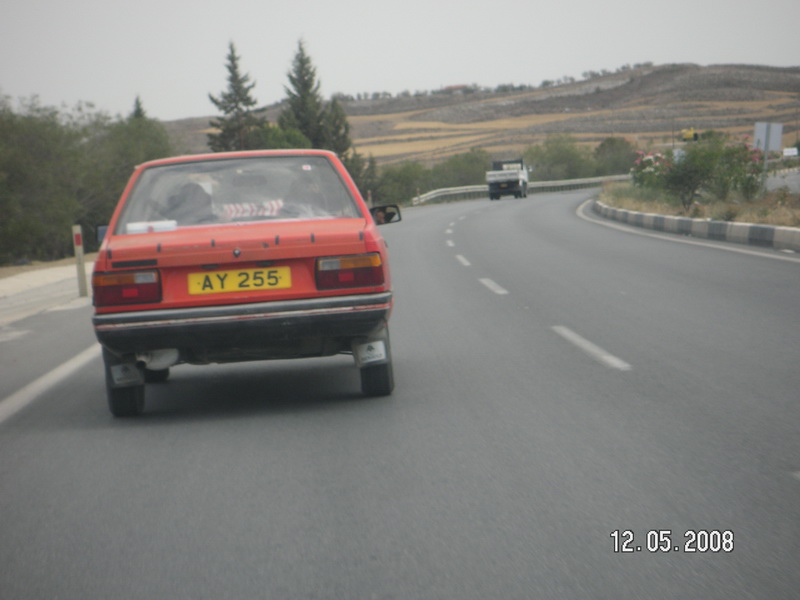
He’s got a photo of a Turkish-Cypriot car with registration AY 255 snapped in May 2008 in Northern Cyprus.    When I visited Alderney in August 2008 I photographed the same registration on a motorcycle.     What a coincidence!

AY 255 Alderney

Alderney 255 on Alderney I. 2008. Olav archive


In Turkish Northern Cyprus, AY 255 is captured by Mike Oldham for Vic Brumby in 2008.    This could just as easily be a Republic of Cyprus plate - or Alderney - or Hong Kong - or Mauritius - or......  Brumby archive

In Turkish Northern Cyprus, AY 255 is captured by Mike Oldham for Vic Brumby in 2008.     This could just as easily be a Republic of Cyprus plate – or Alderney – or Hong Kong – or Mauritius – or……              Brumby archive


Qatar – Camels to Maclarens

July 6, 2012
Ivan (Nip) Thornley on RPW Patrol – year 51 of service to the hobby.    Still he rejects the computer, and so what may be the biggest collection of  paper photos in the Club, cannot be easily sent round to members, except by hard copy in the post!   The writer is slowly scanning his archive, but it is a lifetime’s project!          Brumby archive

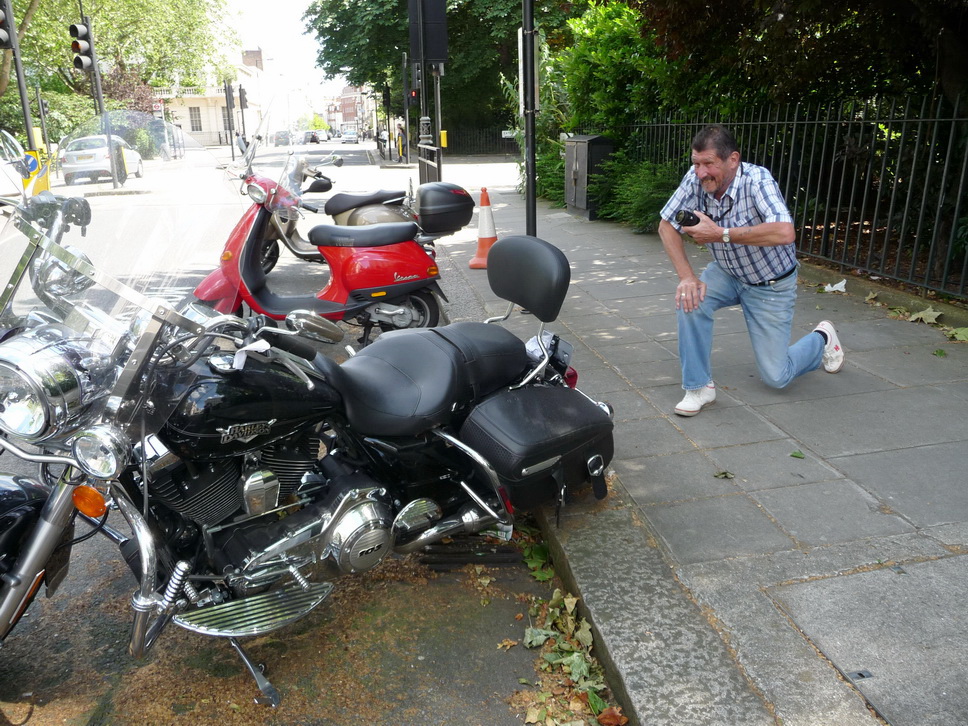
Whilst spotting in London on Saturday 30th.,  June, 2012, June being the premier month for visits by citizens of the Gulf countries who are not scrapping among themselves, VB noted this eminent autonumerologist at work with his trusty (film) camera, capturing an Illinois 2012  Harley-Davidson, seemingly abandoned.                 Gathering this worthy gent up into my car, N 692 LUF, I was guided by that ace-spotter, Nip,  to one of the Gulf-patronised hotels in the area, where two Arabian families were displaying their little treasures in the most prominent parking spots of the hotel forecourt.

The Qatari Maclaren plate 177  below carries the serrated red edge of the royal household members.   Tom Redington adds some amazing detail about this car in his response below!

QATAR 177 – The F1 Maclaren centre-steer road racer.   Brumby archive

~~~~~~~~~~~~~~~~~~~~~~~~~~

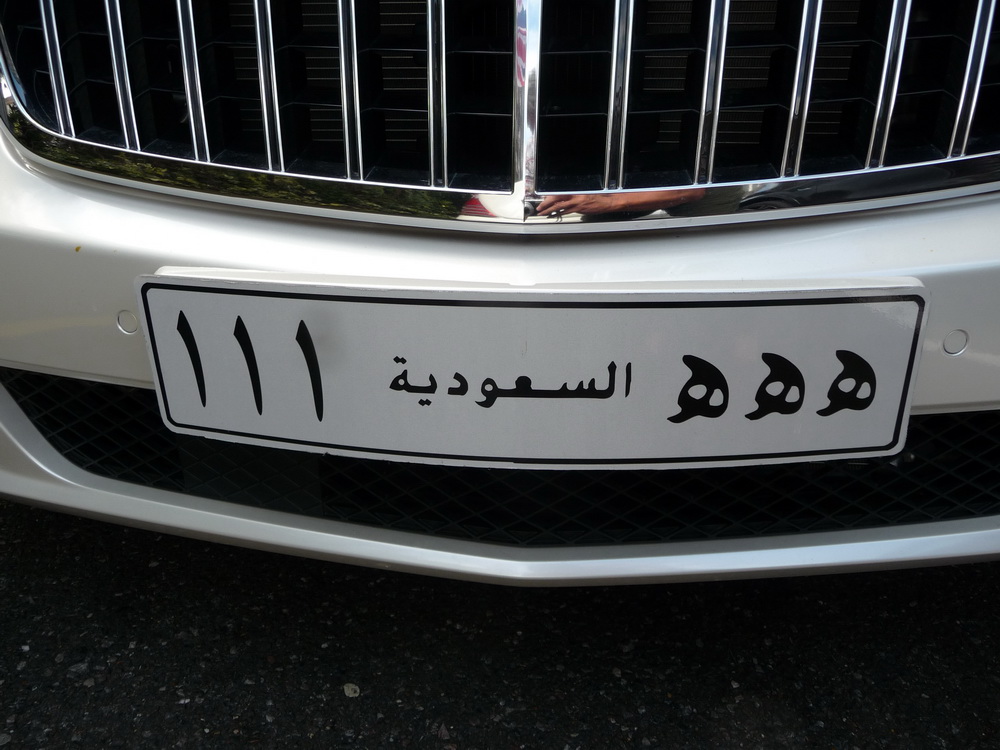
Parked in front of the Maclaren are two identical Saudi Maybachs which  are registered 111 and 999, and probably bring the total value of the cars this group bring on holiday with them in their private 747s, to about  US$1.5million.


Such wealthy visitors as these, incidentally, do not carry conventional motor insurance, by special agreement with the appropriate government legal departments.     If they damage a local vehicle, they either hand out cash for repairs or replacement on the spot, or send someone round to pay up the next day, according to reports in the national papers.

London Transport, with their thousands of buses,  has the same facility, depositing a bank bond to cover any charges which might arise from a successful claim against them.    Presumably, so have the military fleets of some countries……..

I calculate that one could comfortably accommodate six wives in each Maybach, a situation with which I have considerable sympathy for the much-wed Muslim.

Perhaps the benefit could be that he can have no need to buy a dashboard sat-nav, as such prolific advice would be forthcoming in abundance from behind – if my experience is anything to go by.


Canada – odd pre-war Quebec bus plate

July 6, 2012

            … The now-defunct but much-respected old vehicle journal in England, Old Motor, depicted this shot of an AEC bus in Québec in 1933, and it shows an X prefix, which is not noted elsewhere.     Could ‘X’ have been a code for service/city buses?  (now see John weeks’ reply.)

Until the 1970s, British vehicles were very popular in Canada, even though US factories had plants there, building several brands of tough US models.    A visit by the writer in the 1970s reminds of some common British makes in service then – an Austin 1300 (named Austin America for export to North America) and the bigger Austin 1800 (dubbed The Land-Crab) with a Vauxhall Vict0r, consecutively registered in Ottawa, Ontario.

This Austin America carried a ‘Q’ international oval, to display the owner’s pride in his province and perhaps his wish to secede from Greater Canada, the better to develop the bizarre patois of the ancient French language, which the Québecois have made their own..

    .               .

.

.

~~~~~~~~~~~~~~~~~~~~~~~~~~~~

British Commer lorries were represented in Canada, as this 1954 photo shows of a Government vehicle in Ontario – where the small ‘C’ stood for Cargo (or Carrier (or Commercial) vehicle).    Several interpretations worldwide of the letter!   .


G di F trailer

April 19, 2012

Driving to Milan/Trezzo and back for the 2012 Europlate Meeting, a few odd sightings made me reach for my camera:   Here is the first Italian Taxation Police trailer I’ve ever seen, taken as a moving target on the autostrada, whilst driving at 85kph.     Still, it came out all right….

G di F trailer

Presumably for collecting the bigger taxation amounts?

~~~~~~~~~~~~~~~~~~

Stopping above Nice on the toll-booth rest area, was 116189 RS, my first of the 2002-onwards Tunisian Foreigner series – Régime Suspensif – ‘given to foreign workers who pay taxes monthly’.   (Don’t we all?)

Tunisian Foreigner series

~~~~~~~~~~~~~~~~~~~~~~~

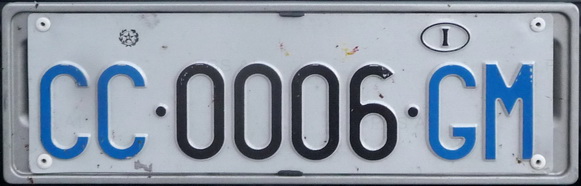
Dropping our Editor Paul at the Milan airport on Easter Monday, the less-common Italian Consular Corps plate was seen parked on a Kia 4wd:

Italian Consular Corps for South Korea (GM), at Malpensa airport, Milan, April 2012.

~~~~~~~~~~~~~~~~~~~

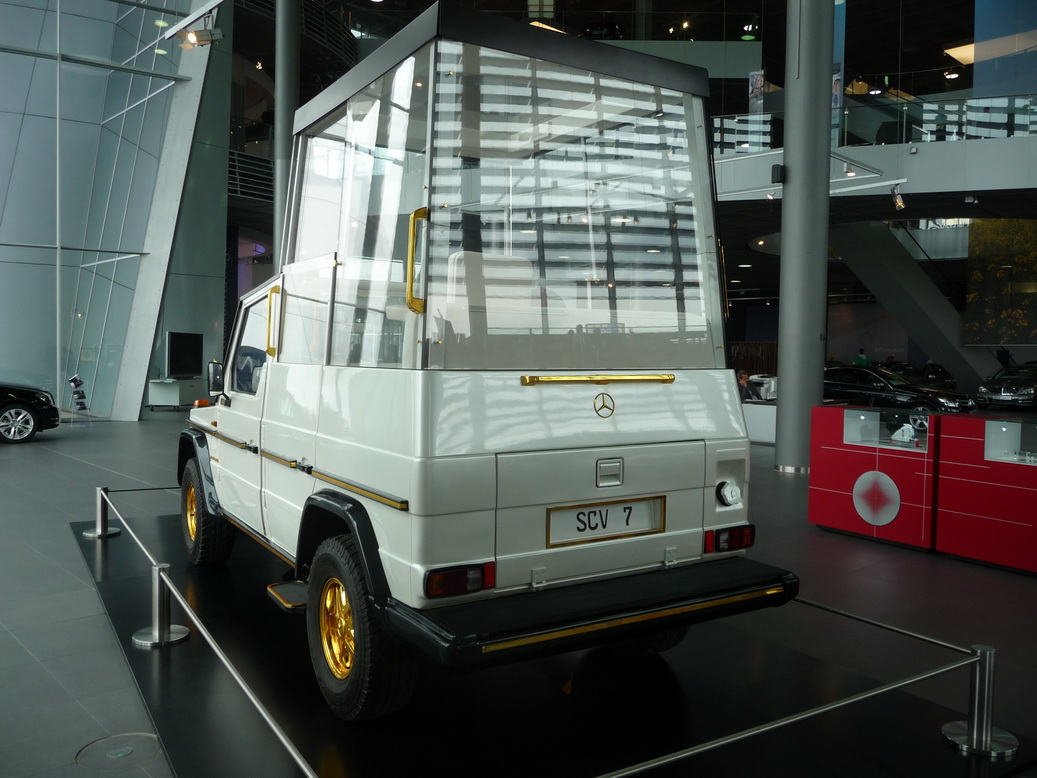
The Mercedes Benz Museum at Stuttgart was an impressive visit, though few plates were of interest.

They have made a good facsimile of the Vatican plate borne by the first Popemobile which Benz supplied in the 1980s.

~~~~~~~~~~~~~~~~~~~~~~~~~~~

Though the Swiss don’t have vanity plates as such, it seems that one can obtain an interesting out-of-sequence tag:

NW = Nidwalden

~~~~~~~~~~~~~~

In Calais I was surprised to find that the local fast-food joint was delivering their delicacies on Luxembourg-registered mopeds!

Long-distance Pizza?