Out-of-date Czechs

January 24, 2013

Polymath member Kavka spent a little time in CS as a boy, so these Pemberton spottings in wartime/postwar Britain may have some resonance for him.      Rather than attempt to identify them for readers, it  is suggested that you send in your own notes:

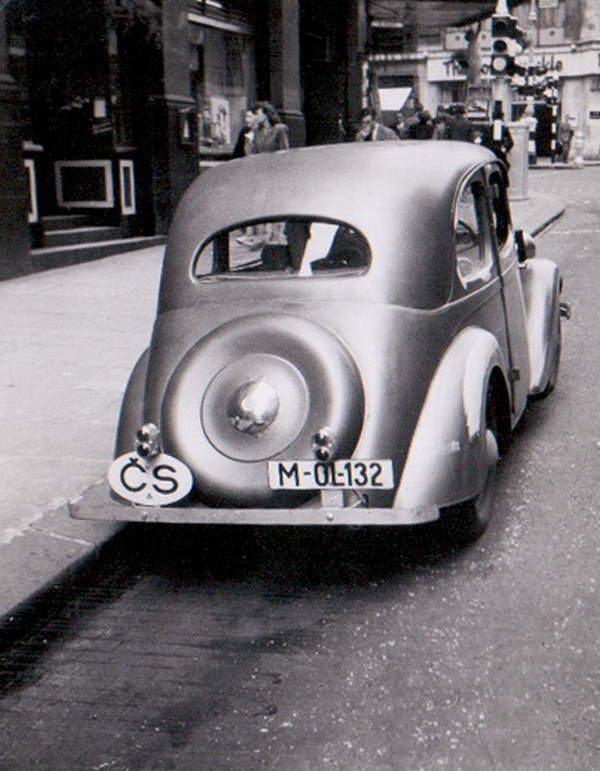
M-OL-132

M-OL-132    Looks like London

P-14873

P-14873, probably in Copenhagen.

P-60-298 (what is this car??)

P-60-298 (what is this car??)  Oxford after the war.


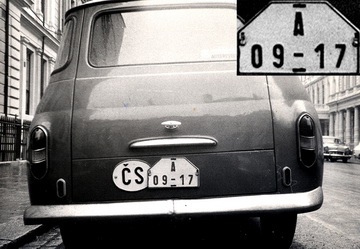
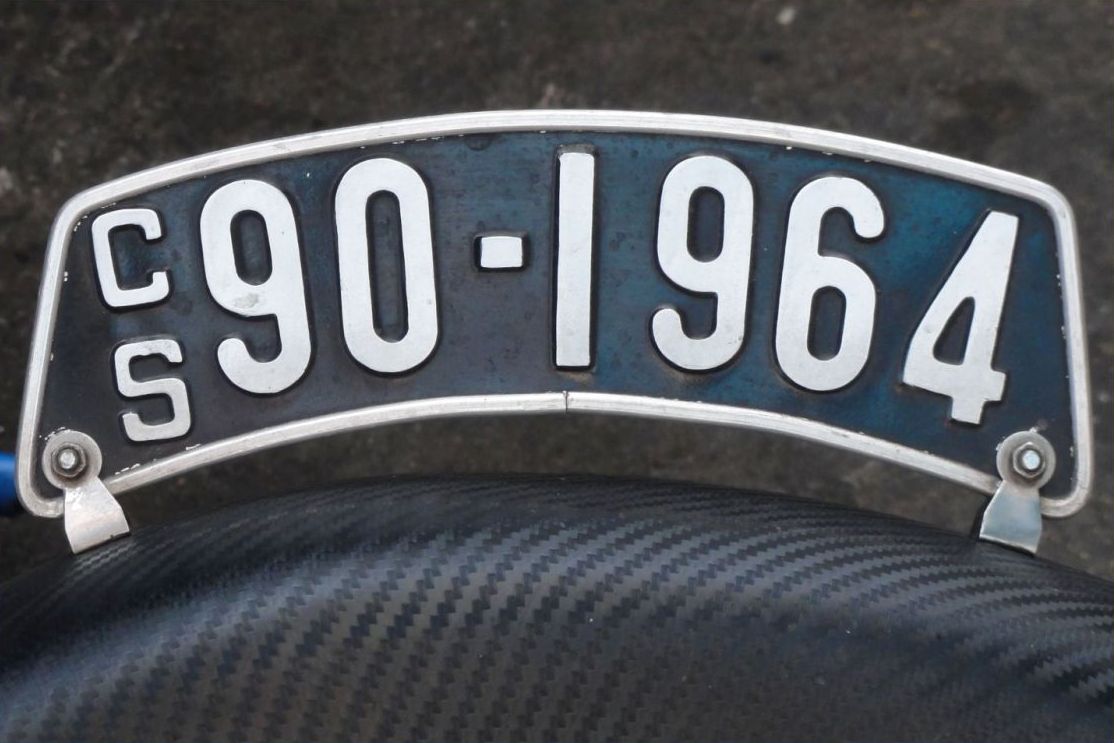
It was a rare sight to see a Skoda ai London in 1964, using Dealer plates.    A 09-17 photo by Vic Brumby.

It was a rare sight to see a Skoda in London in 1964, using Dealer plates. A 09-17 photo by Vic Brumby.

~~~~~~~~~~~~~~~~~~~~~~~~~~~~~~~~~~~~~~~


Trieste 1950

January 22, 2013

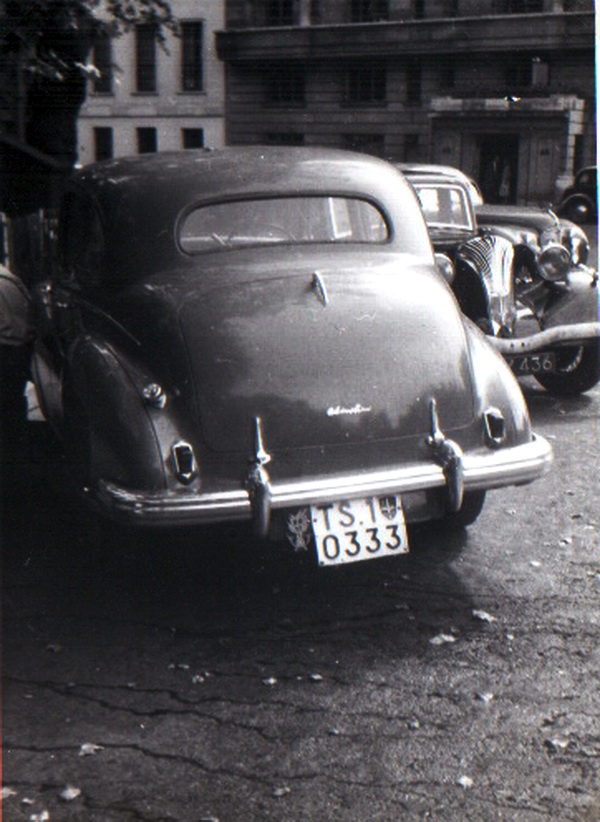
Another of John Pemberton’s  fine sightings in the late 1940s or early 1950s was this Austin A70 Hereford from the Allies-administered territory of Trieste.     A big, expensive car of the time, it was probably the private car of one of the senior British military administrators, who shared the duties with the USA until the sector was returned to Italy in 1954.

Trieste international zone seen in Britain c. 1950.  Austin A70 reg. TS 10333.

Trieste international zone seen in Britain c. 1950. Austin A70 reg. TS 10333.

Two other Italian sightings in Britain, immediately post-war, it is thought.  SV 4740 (Savona).

(I)_SV.4740_JP1939vb

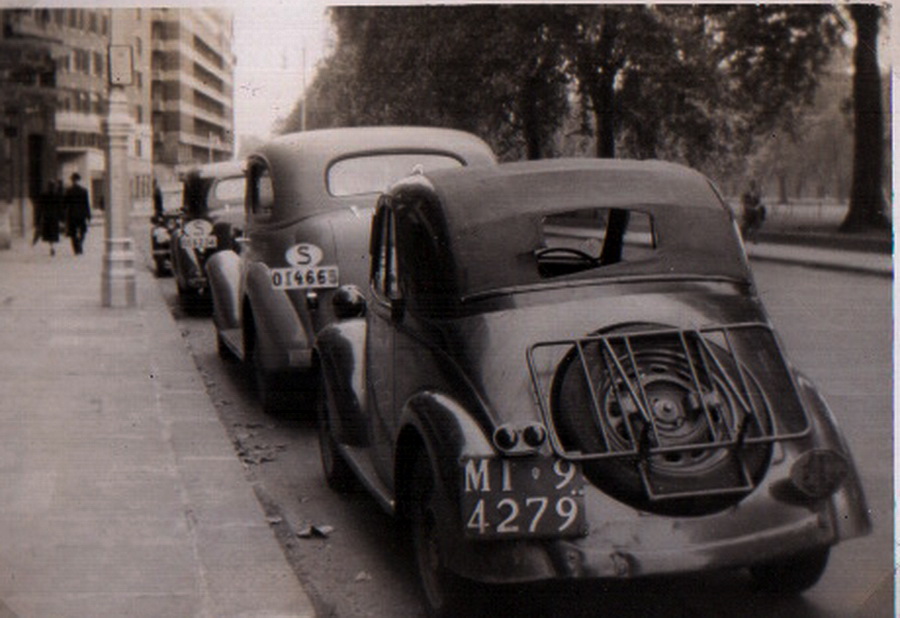
and MI 94279, a Fiat Topolino with a low Milan number….

Fiat 500 'Mouse' cabriolet behind two Swedish cars in Park Lane, London, early 1940s.

Fiat 500 ‘Mouse’ cabriolet behind two Swedish cars in Park Lane, London, early 1940s.


Some Canadian oddities

January 22, 2013

I wonder if any members can beat this 1947 date for their first photograph of a foreign plate at the start of their hobby?     John Pemberton saw this Canadian car in Oxford when at university there  after the war and its quite a good picture for the time – perhaps a decent camera?             (66 years ago!!!!)

unknown car type from 1937 British Columbia, thanks to EU83!

unknown car type from 1947 British Columbia, thanks to EU83!

(CDN)(BC47)_11.029_c_JP1947vb

~~~~~~~~~~~~~~~~~~~~~~~~

Is it not odd that John’s sighting of another Canadian was made to mount a British Temporary Visitors’ plate?    After all, Canada was surely a signatory to the appropriate conventions?      Thierry?

60.198 Quebec 1939 carrying GB 'Q' plates, too.

60.198 Quebec 1939 carrying GB ‘Q’ plates, too.

From another source, unknown, comes this 1932 Trade plate D 9,  from B.C.

1932 British Columbia Dealer during lunch-break.

1932 British Columbia Dealer during lunch-break.

1971 in Montreal.    The Quebec Liberation Group, allied to the Austin Owner’s Club Provisional Wing, had some unofficial ‘Q’ ovals made, possibly to assist them to get privileged parking….

(CDN)(Q71)_4B5204_VB1971_resize

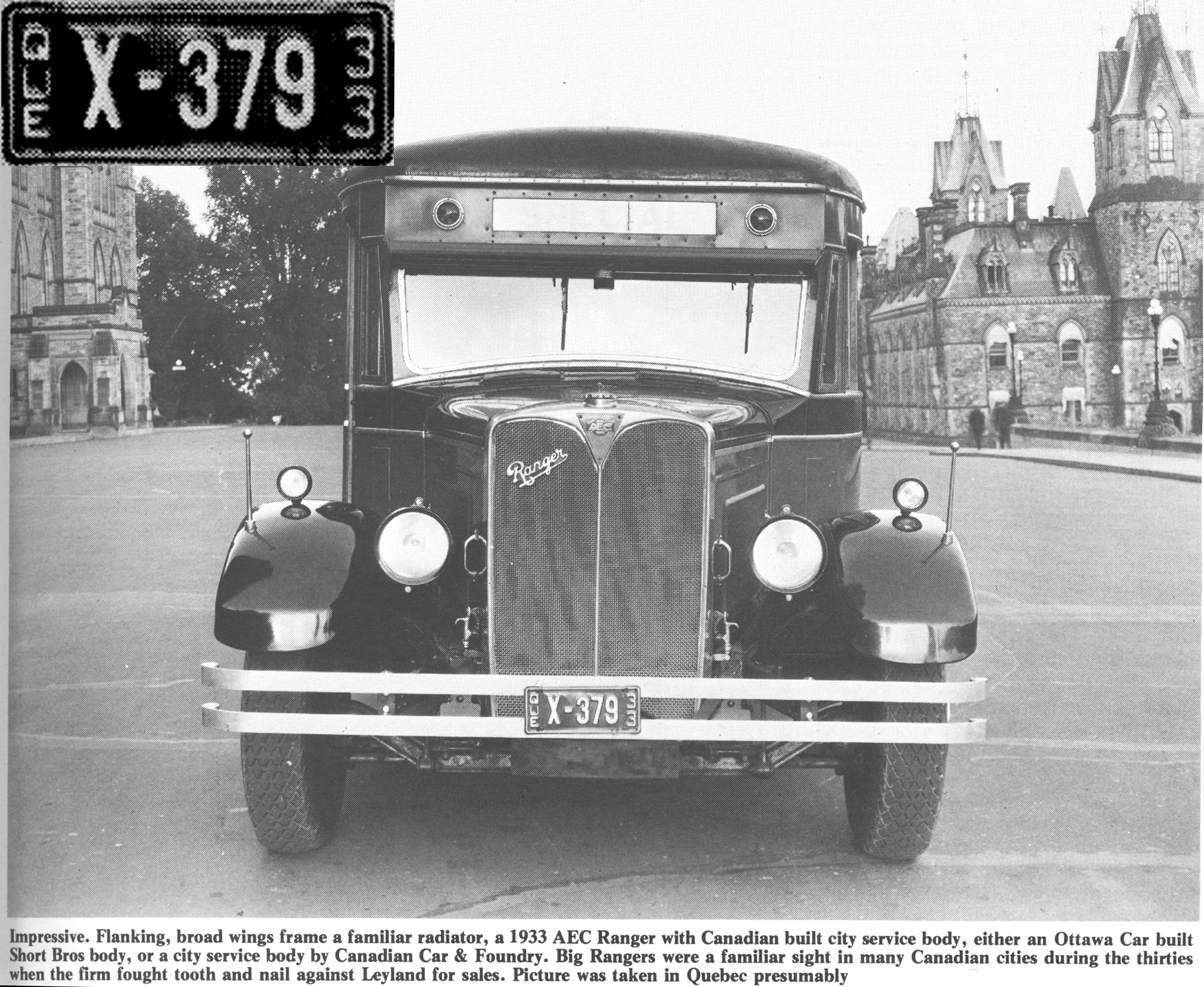
The journal Old Motor (now extinct) gives us this image of a Quebecois Dealer plate, probably from publicity pictures taken by the bus’ body-builder, before delivery to the purchaser and its regular registration.

AEC Coach Dealer plate in 1933 Quebec.

AEC Coach Dealer plate in 1933 Quebec.

~~~~~~~~~~~~~~~~~~~~~~~~~~~~~~~


QUIZ – BR

January 21, 2013

QUIZ:      What kind of plate did Brazil issue before WW2, which used no legends, above or below??

An odd Brazilian, 1938, Oxford..

P 17.36      An odd Brazilian, 1938, Oxford..


South Africa items

January 20, 2013

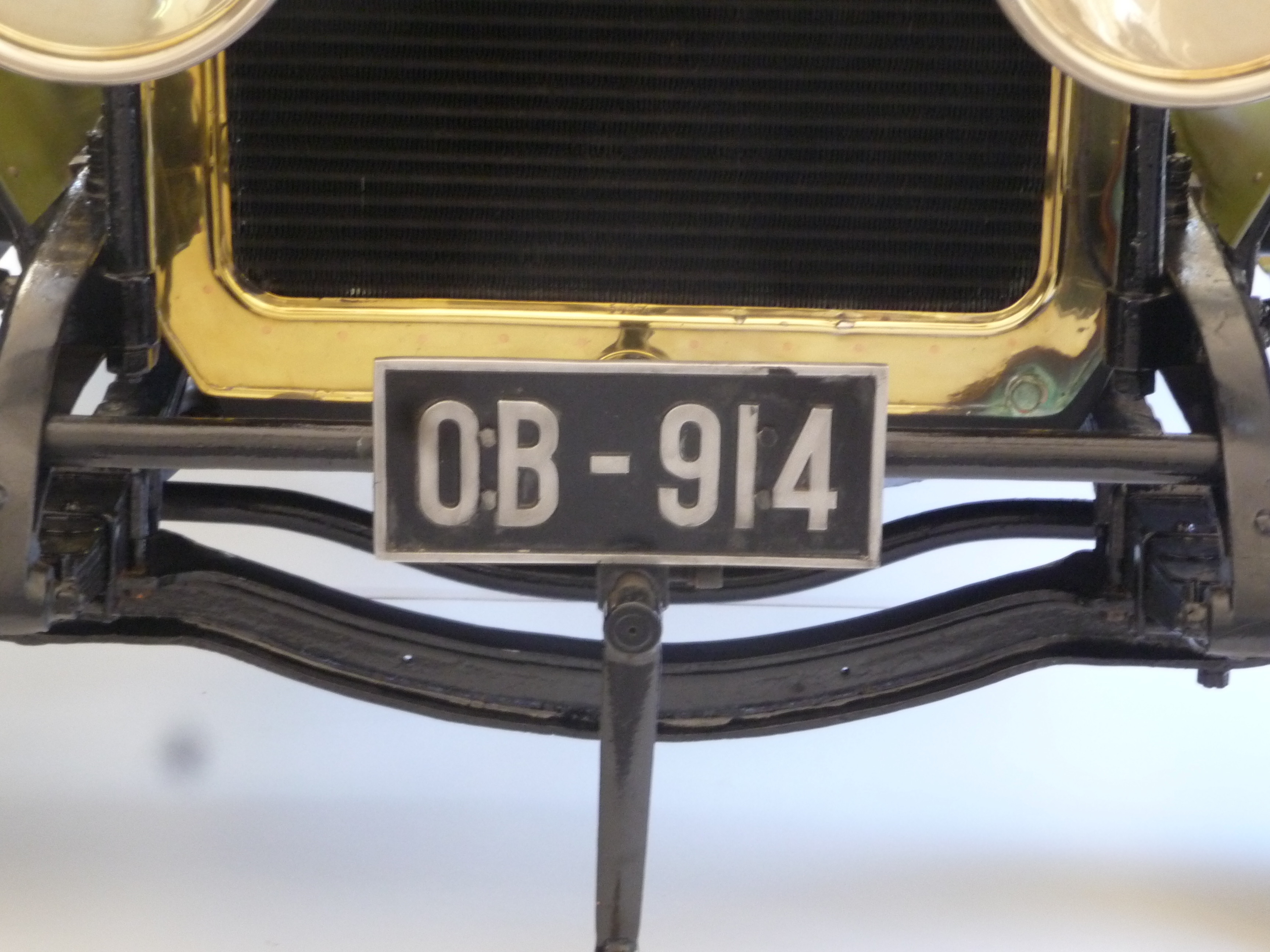
A fine motor museum outside Franschoek, Western Cape, reveals a few early plates which are now little seen. http://www.fmm.co.za

Orange Free State - Bloemfontein, circa 1910

OB-914, Orange Free State – Bloemfontein, circa 1910 at Franschoek.    This car is a Lorraine-Dietrich.         Brumby archive

Below:  Next, BDP 795 EC, a former series Eastern Cape plate re-registering a 1920s Ford model ‘A’, using the new EC-suffixed series, but on a plain yellow ground.    Soon replaced by the multicoloured background of the current type.    A handful of these are still to be seen in use.

P1070311
BDP 795 EC interim plate design for Eastern Cape Province.    These plain plates were issued from 1996 to Oct 1998.    Brumby archive

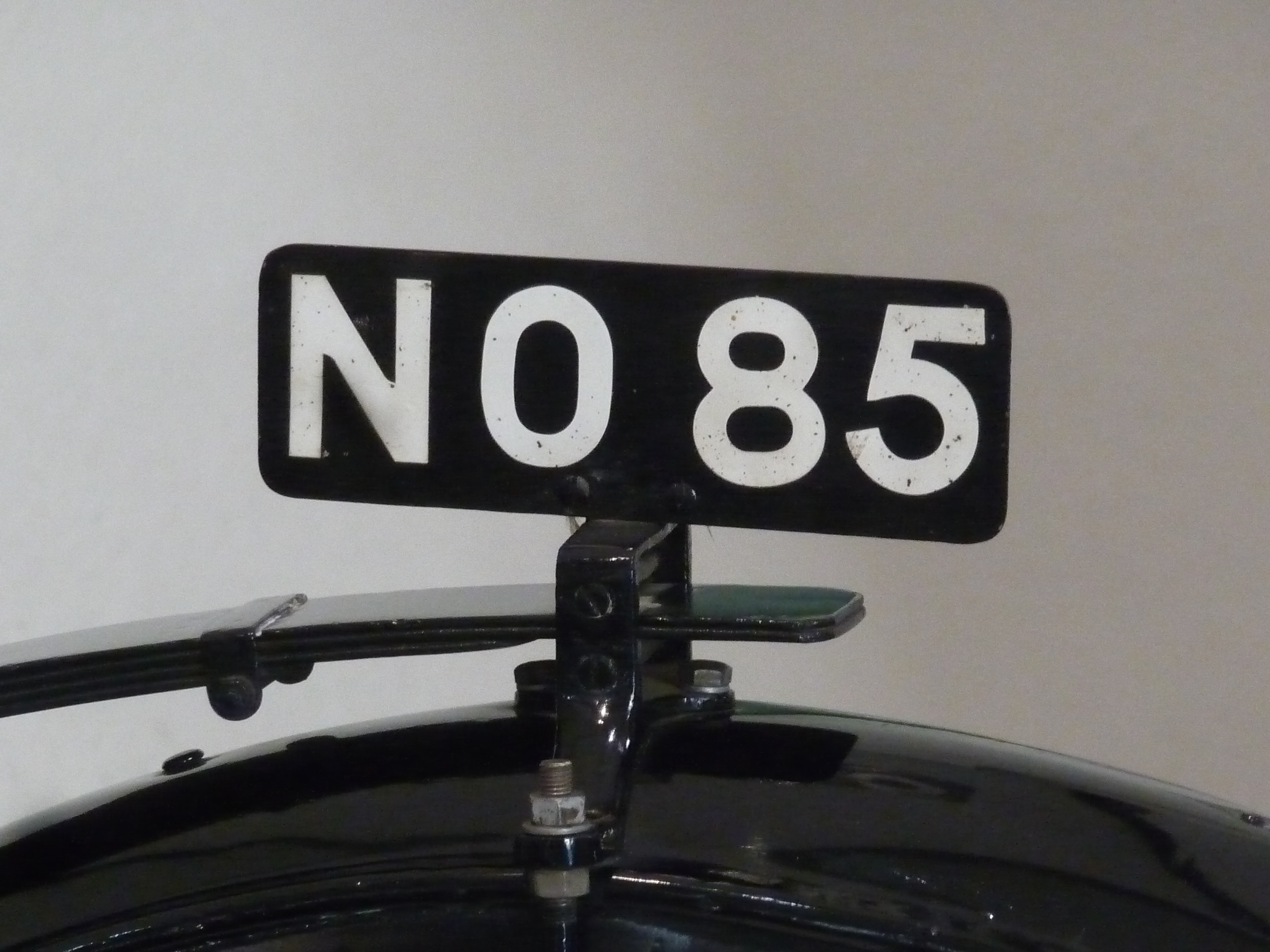
                            Below:   NO 85 from Kwazulu-Natal (then simply Natal) coded NO to Melmoth, a small place half-way between Durban and Swaziland.NO 85 on a Natal motorcycle.     NO is from Mtonjaneni-Melmoth

NO 85 on a Natal motorcycle. NO is from Mtonjaneni-Melmoth

    Below    CC 22 FL GP –  examples of the new layout of the Gauteng (formerly Transvaal) plates, showing the square version and the long.

In 2011, starting with BB 00 AA, Gauteng had exhausted its 3-letter 3-number series.  Rear size.

In 2011, starting with BB 00 AA, Gauteng had exhausted its 3-letter 3-number series and changed to LL NN LL.  Rear size example.

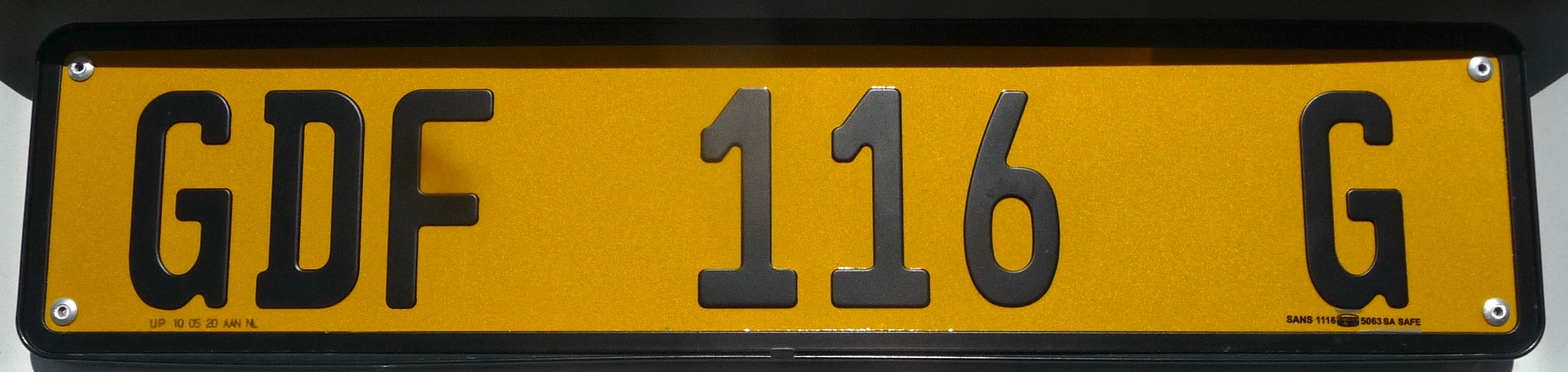
(ZA)(Tv4a)_BH 26 KD  GP_cu_VB2013                                   Below:   GDF 116 G – Here is a central government series, always plain. background. Maybe 'Government Garage'.   Seen 16-1-2013, Somerset West.

Dept. of Transport national issue.    GG codes   ‘Government Garage’.    Seen 16-1-2013, Somerset West, Cape.

      and finally an archive shot from John Pemberton’s album – Natal/Durban no. 20 during the 1940s in Oxford, UK., bearing a big Royal Automobile Club oval.    (What make/model this American car?)

Unknown American car from Durban,

Unknown 1940s American car from Durban.   ND 20   Oct. 2014 – Now identified by Andre as a 1946-8 Chrysler!

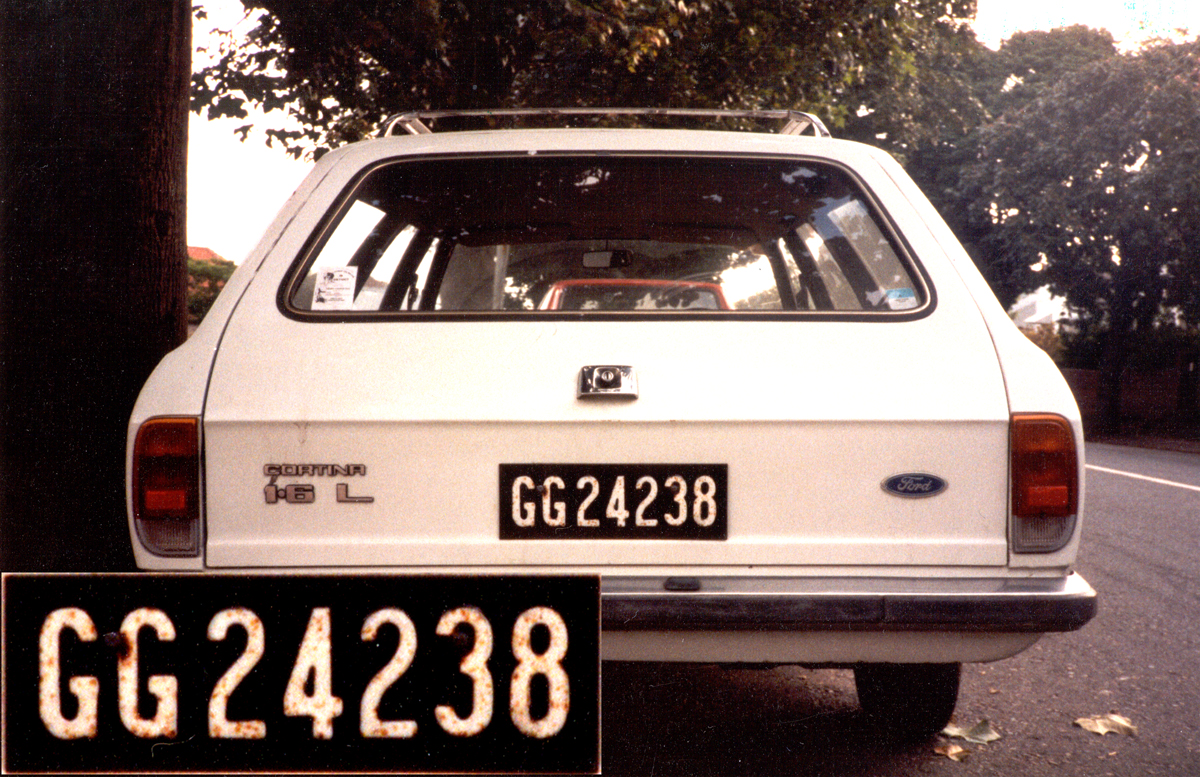
Until 1981, South African Govt. departments were allocated plates from the ' Government garage'.    Here is a Ford Cortina Mk 3 estate car in Grahamstown in those days.    Brumby archive

Until 1981, South African Govt. departments were allocated plates from the ‘ Government Garage’.      Here is a Ford Cortina Mk 3 estate car in Grahamstown in those days.                 Brumby archive

DIP 123 D is of the diplomatic style of the 1970s.
DIP 123 D is of the diplomatic style of the 1970s.


French possessions in the 1940s

January 19, 2013

To see a car from Senegal, in Britain, in about 1950, would have been a big slice of luck.   Here is John Pemberton’s sighting, on an Austin A40 Devon car – unusual to find in a French territory.

Can Francoplaque help to explain why the plate is ‘dark on light’, perhaps, as we think all were white on black then?

Note that it carries the light-alloy ‘F’ ‘oval’ which was so common in early times.   As Senegal was not independent until 1960, this car could have carried an ‘AOF’ oval, is it was part of Afrique Occidentale Francai

a 1949 Austin Devon from Senegal, 7081 1.A
A 1949 Austin Devon from Senegal, French West Africa.  
7081 1.A   (1=Dakar)

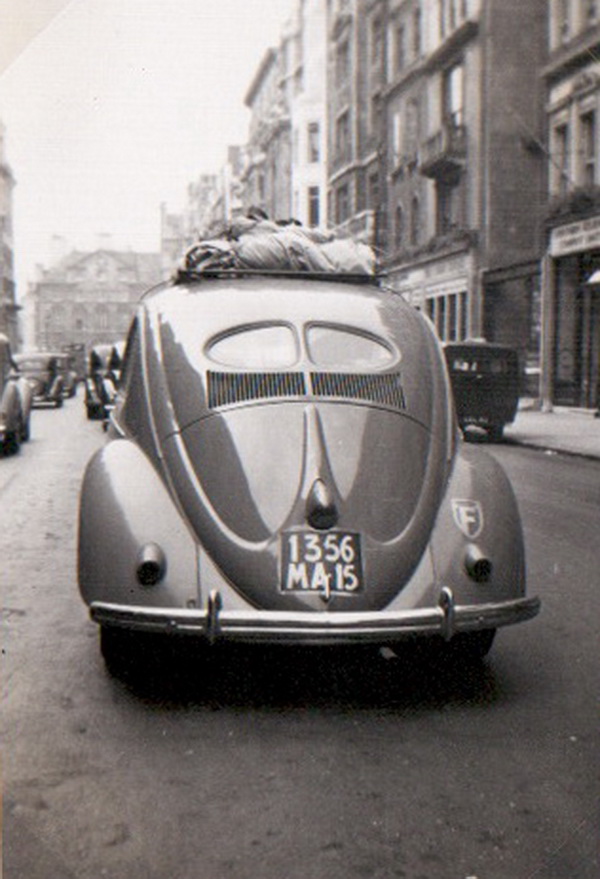
1356 MA 15 in Oxford, 1940s/50s

Odd French diplomatic, 1940s-50s.

Odd French diplomatic, 1940s-50s.

This early VW also carries the alloy ‘F’ sign, because its plate is from the pre-1956 independence, French Moroccan series – 1356 MA  15.

~~~~~~~~~~~~~~

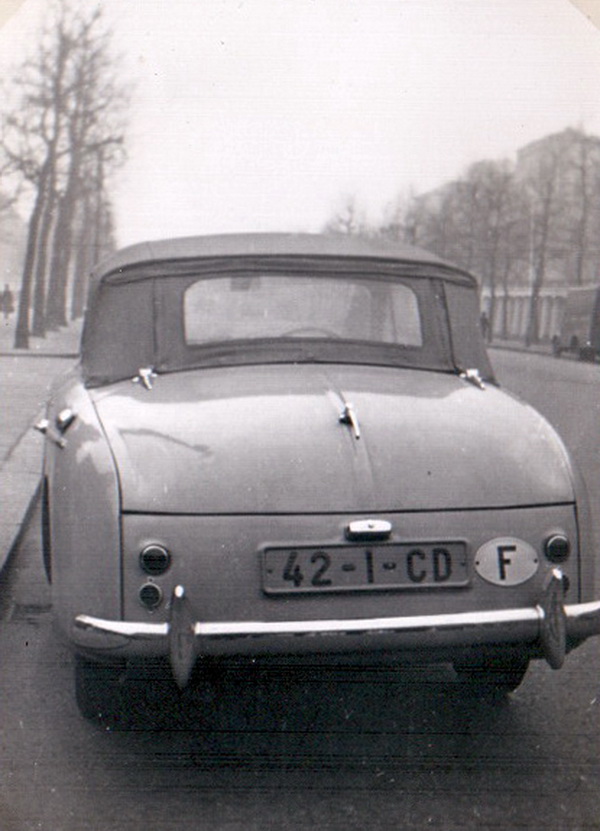
And concluding this foray into interesting French series, John captured a CD of an unknown type to me, carried on a rare Austin A40 Sports, made predominantly for the USA.

(Or is the car carrying the wrong international oval??)

Francoplaque! M’aider, m’aider!


CD symbol on Chinese and Taiwanese plates

January 19, 2013

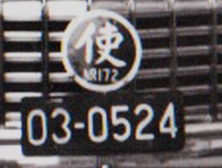
More on John Pemberton’s possible China 1940s  diplomat.

03-0524 PRC CD

03-0524 PRC CD

MR(?) 172 remains unexplained for now……


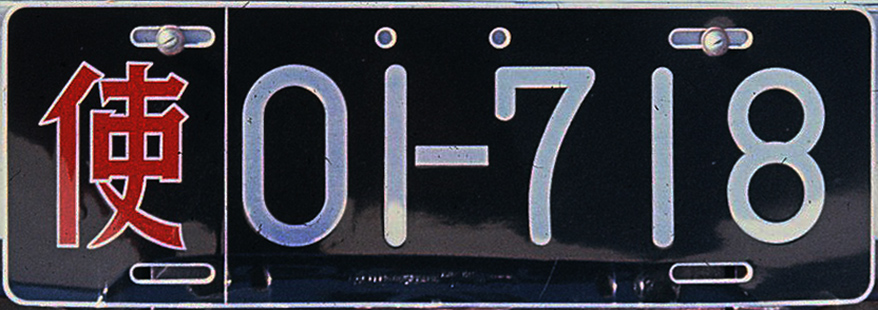
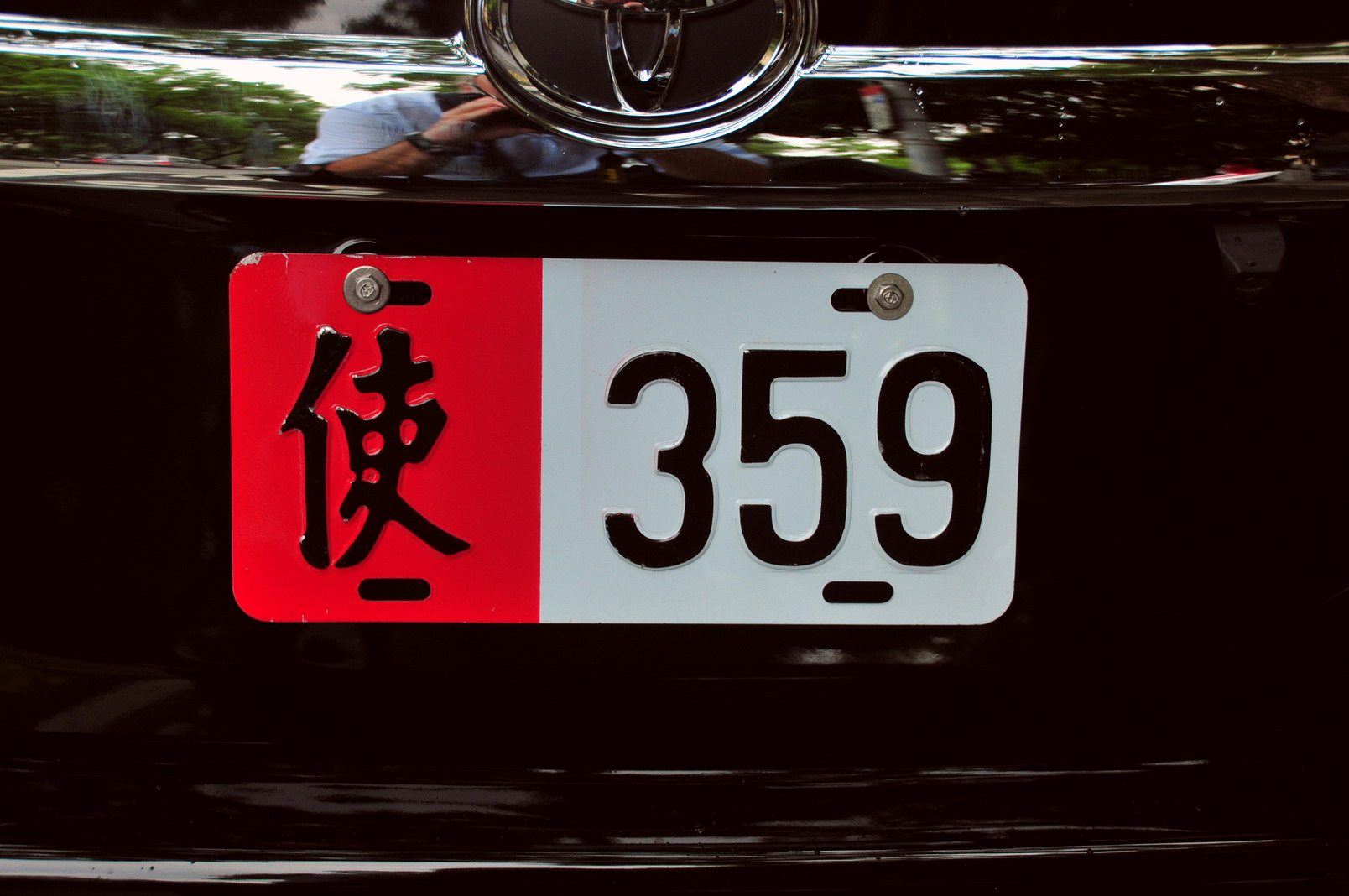
Further to the March 2013 Post  ‘Fancy a Chinese?‘  and the subsequent identification of the Chinese character on the shield, Alex Kavka sends the Blog the Chinese ideogram for ‘ambassador’, on his Taiwan diplomatic photo 359.    It is the same as that of the current PRC diplomatic corps (not necessarily ambassador)  ideogram 01-718 and another 1972-4 Taiwanese dip. 1 50 also shows the same character.       (from ‘RG’.)

Shown below are the examples from both countries, for comparison…   (Top, RC (current),  centre, PRC,  bottom, RC historic)

(RC)(cd)_359_AK2012

Peoples' Rep. China diplomatic corps from

Peoples’ Rep. China diplomatic corps from 1970s/80s.     Brumby archive
Taiwan dip.1972-4 (RG plate)

Formosa/Taiwan dip.1972-4 (RG plate)


Mystery motorcycle plate

January 15, 2013

201203687DW.unknown pe

Does anyone know what this is? I shot it on the front fender/mudguard of a (fairly modern, if I remember correctly, but I’m no bike expert) motorcycle in Bangkok at the end of April 2012. It was stuffed into a market stall, whether parked there for the day or permanently enconced, I had no idea. The stall-man and I traded smiles as he seemed to enjoy my interest in the machine, but the language barrier permitted little else. The rear was totally inaccessible so I never saw the rear plate; it was one of those hit-and-run moments, and this picture is all I was left with.    from David Wilson


Roger, Bernt & Alex quickly ran this display plate to earth!    See comments below:


Taiwan CD

January 14, 2013

Alex Kafka writes:    The Chinese “ambassador” character 使 on John Pemberton’s photo caught my attention. It seemed familiar, and in fact I had seen it last November in Taipei, the capital of Taiwan.

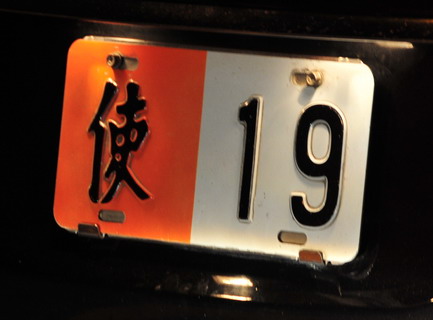
Taiwan has diplomatic relations with only 23 countries. All others have abandoned it in favour of mainland China.  Therefore diplomatic plates are rare and I was thrilled to see three: numbers 19, 299 and 359.

RC_12_Taipei42 RC_12_Taipei32a RC_12_Taipei53

Last time Taiwanese diplomatic plates were reported, they had a yellow panel with a black character 外, which means something like “foreign”. But now the panel was red and the character was 使.  This is in fact similar to the way the plates looked in the 1970’s (white on red, and 使).  Does anyone know when they changed back from yellow to red?

RC_12_Taipei43   RC_12_Taipei43B

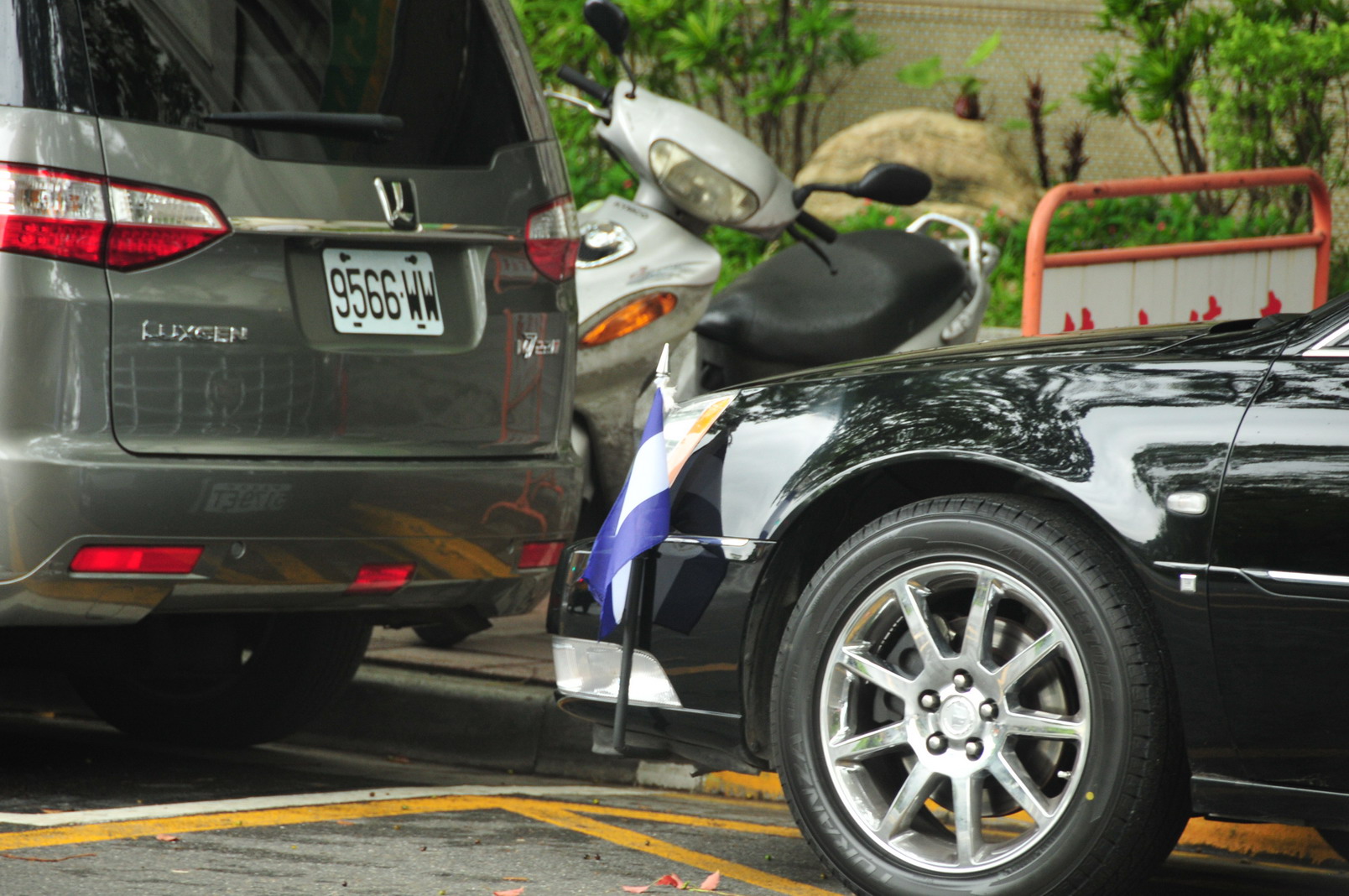
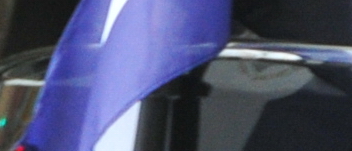
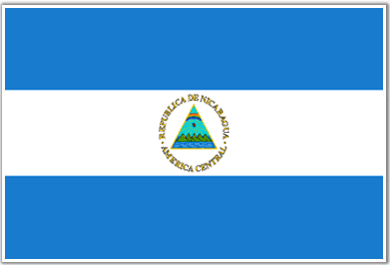
The car with 359 carried a blue-white-blue flag (see photo).  Unfortunately there was hardly any wind and the flag never quite unfurled.  Now Wikipedia has a list of the possible 23 countries:  http://en.wikipedia.org/wiki/List_of_diplomatic_missions_of_the_Republic_of_China,  very helpfully with flags.  It turns out that there are three possible candidates with similar flags: El Salvador, Honduras and Nicaragua.  Luckily, although the centre of the flag is poorly visible on my photo, part of it got reflected in the shiny bodywork of the car, enough to reveal a piece of the coat of arms of Nicaragua!  (Compare the enlarged detail of the photo with Nicaragua’s flag, from the Internet.)

nicaragua-flag

Does anyone know if the plate numbers are coded or blocked by embassy?  From the single sighting of 359 for Nicaragua it’s hard to draw any conclusions. The other cars, 19 and 299, were caught  moving in traffic;  there was no time to look for any clues.

Alexander Kavka (Eu.575)


Is the plate of the Governor of Portuguese East Africa?

January 12, 2013

Recently I came across this image (which I straightened from an angled shot and cropped) of a plate supposed to be that (until 1975, according to RPWO, although without illustration) of the Governor of Portuguese East Africa, currently known as Mozambique (or Moçambique in Portuguese). This plate was allegedly given “personally” to an American who was working there at the time. A nice looking plate with an interesting history—Portuguese East Africa number 1, surely a coup for any plate collection, and deserving of a place of prominence in a display.

MOC.PEA 1p

But wait a minute. Don’t they speak Portuguese in Portuguese (!) East Africa, and now Mozambique? According to Wikipedia, “Portuguese Mozambique or Portuguese East Africa (officially the State of East Africa upon erection and later Overseas Province of Mozambique) was the common name by which the Portuguese Empire’s territorial expansion in East Africa was known across different periods of time.” In the table accompanying the article the “languages” [sic] are given as “Portuguese” suggesting that any indigenous languages in this part of Africa were, if not suppressed, not to be considered; indeed (Wikipedia again), “Mozambique, according to official policy, was not a colony at all but rather a part of the ‘pluricontinental and multiracial nation’ of Portugal. Portugal sought in Mozambique, as it did in all its colonies, to Europeanize the local population and assimilate them into Portuguese culture.” By the way, Mozambique became independent from Portugal on 25 June 1975.

If one visits this article in Portuguese (an easy click away via the Languages sidebar to the left of the article), he finds the following introductory sentence: “Moçambique ou África Oriental Portuguesa (oficialmente Estado da África Oriental, depois elevado para Província Ultramarina de Moçambique) era o nome comum pelo qual a expansão territorial do Império Português na África Oriental era conhecida em diferentes épocas.” And there it is—the Portuguese rendering of the name of the name of the state (as in country) or province (as in part of Portugal)—África Oriental Portuguesa, which surely would have been rendered on the Governor’s plate as AOP.

Is this really the plate of the Governor of Portuguese East Africa?